




 Português
  English (UK)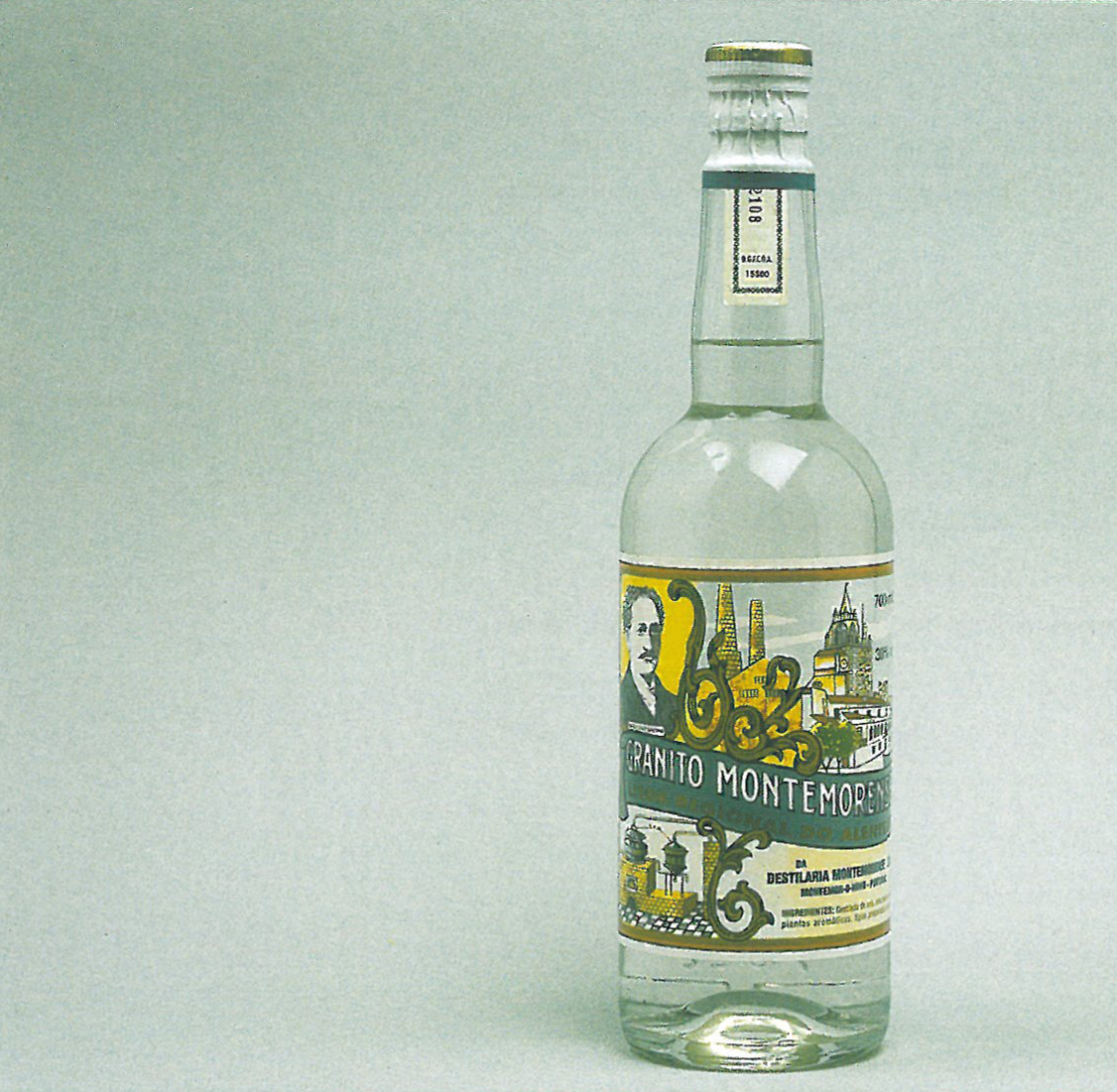
Description: Colorless liqueur, with a very characteristic aniseed flavor, presented in glass bottles, bulging, low, with a capacity of 0,75 liters.
Region: Alentejo.
Special feature: Liqueur with an intense aromatic anise flavor.
History: According to the information provided by Mrs. Ana Mota Vacas, this drink was marketed around 1898, by Mr. Joaquim Rodrigues Amaro, with reference to an aniseed brandy that was made in Évora, at that time, called Aguardente de Évora. The AGM Bulletin states that '... The aniseed drink Granite Liqueur also had its birthplace in the Alentejo, where it was made with a mixture of locally harvested plants and containing anethole, fennel, fennel and star anise. The Liqueur of Évora, which only recently came to be designated as liqueur due to the fact that its sugar content required it to be legally included in this classification, was nothing more than an aniseed brandy, slightly sweetened and formerly produced in the region of Évora by distilling a mixture of marc brandy in the presence of ane-thole, fennel, also harvested locally, is the most used plant to obtain this essence...». Gabriel Pereira states that «... the monks of Évora also made a liqueur whose recipe was followed by a companion of Gabriel Pereira and lost after the death of his friend. It was a great stomach, it would take juniper and cinnamon in doses and preparations that only the recipe would say...». João Rosa says: «... I think it was the famous Granito de Évora of such tasty memories...». It was not possible to find references in previous publications, in order to be able to relate the Granite of Eborense, the Pedrisco (now disap-peared), the Fedrisco and the Granito Montemorense with the liquor manufactured by the Carthusians of Évora. The only link is the oral reference provided by Mrs. Ana Mota Vacas, which, in fact, corroborates the meaning of the coincidence of this type of drink in the same geographical area. In the Alentejo Illustration there is an advertisement for Destilaria Montemorense, Lda., in which the following specialties appear: Montemorense Granite, Montemorense Pennyroyal and Montemorense Capilé.
Use: As a digestive, after meals.
Know-how: Montemorense Granite is obtained by direct distillation of alcohol at 90°, with an infusion of aromatic plants, of which badiana and coriander stand out. After the extraction of the "spirit", the syrup of water and sugar with the desired graduation is added.
Source: Produtos tradicionais portugueses, Lisboa, DGDR, 2001
