









 Português
  English (UK)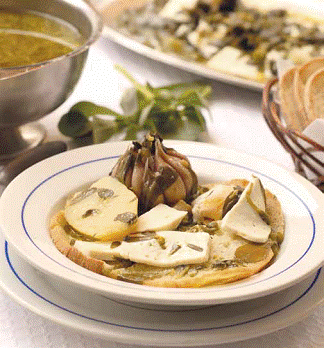
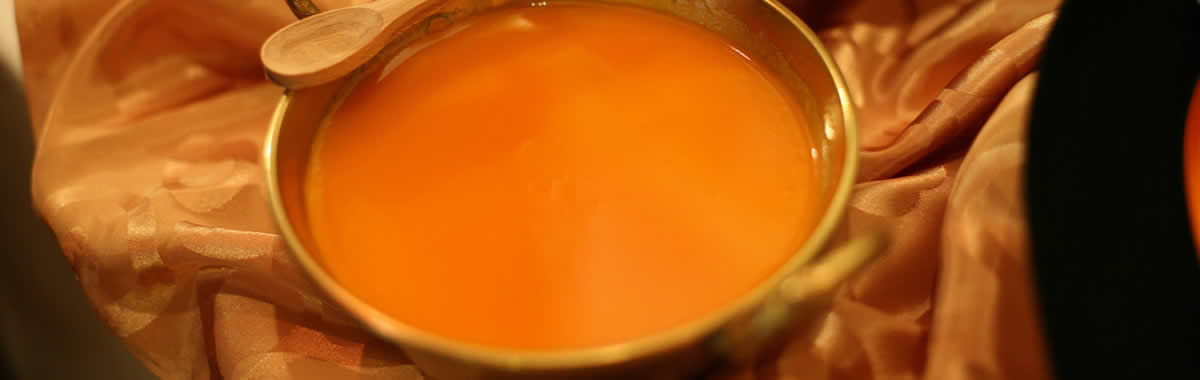
Description: Characteristic dish of the Alentejo consisting of bread-crumbed soups poached and enriched with potatoes, eggs and pieces of cheese.
Special features: Purslane soup with cheese is one of the most popular dishes in the entire Alentejo. The Alentejo diet is fundamentally seasonal, so in times when there is no purslane, this soup can be made with spinach or even lettuce. The expression "in the Alentejo, with any herb you can make a soup" is known.
Region: Alentejo.
Ingredients used: Purslane, eggs, potatoes, fresh cheese, garlic head, onion, olive oil, bread and salt.
Preparation: Purslane is prepared using only the leaves. Cut the onions into round slices and brown them with olive oil. Add the washed purslane leaves and let them sauté very well, stirring with a wooden spoon. Water is watered and boiled. Remove the white skins from the head of garlic, which is introduced whole (without removing the purple skin from each clove of garlic) into the boiling broth. Also add the potatoes cut into thick slices. Season the soup with salt and let it cook. When serving, the eggs are introduced into the broth, one by one, and allowed to be poached. Finally, the cheeses cut into the quarters are put in the pot. Place the bread cut into slices in a terrine and drizzle with the broth. Separately, potatoes, eggs, purslane and cheese are served.
Know-how: Purslane is a product of collection, born spontaneously in the gardens and was a food resource for needy families, having given rise to typical recipes such as Purslane Soup. There are variants of this recipe: fresh cheeses are replaced by boiled sheep's milk cheese or hard cheese, cut into pieces. In the region of Évora, this soup does not have onions, but a greater amount of whole garlic and without being peeled.
Forms of commercialization: Restaurants.
Product availability throughout the year: All year round.
Product history: With the arrival of Muslims to the Iberian Peninsula at the beginning of the eighth century, açorda also arrived, both among its cultural and gastronomic habits of the Arabs, and even as a custom disseminated in the emulation of the Prophet Mohammed. The Portuguese term "açorda" comes from the dialectal form of Andalusian Arabic, spoken in the Iberian Peninsula, thurda / çurda or thorda / çorda and which meant "bread soup" or "boiled bread migas". In the two known treatises on Spanish-Arabic cuisine of the time, there are several recipes for dishes classified as thurûd. In this set of recipes there is a body of common ingredients that will constitute the identity mark of what would then be understood as "açorda", such as bread, meat, vegetables and dairy products. In the Alentejo, even today, purslane, lettuce and spinach soups (technically "açordas", as they are part of bread soups) have cheese in their composition (Rei, 2016).
Representativeness in local food: Dish present in any home in the region.
Source: DGADR, based on "Cozinha Tradicional Portuguesa", Maria De Lourdes Modesto, 1982, Verbo Editora, “Cozinha Tradicional do Alentejo - a memória dos temperos", Maria Antónia Goes, 2014, Colares Editora, Receitas e sabores dos territórios rurais (MINHA TERRA – Federação Portuguesa de Associações de Desenvolvimento Local, 2013), Carta Gastronómica do Alentejo - Monumenta Transtaganae Gastronómica (Confraria Gastronómica do Alentejo, 2013), e Rei, António (2016), A Açorda. Uma sopa de pão, da Alta Idade Média à atualidade, IEM /FCSH – Universidade Nova de Lisboa.
Photo: Provided by MINHA TERRA – Federação Portuguesa de Associações de Desenvolvimento Local
