



 Português
  English (UK)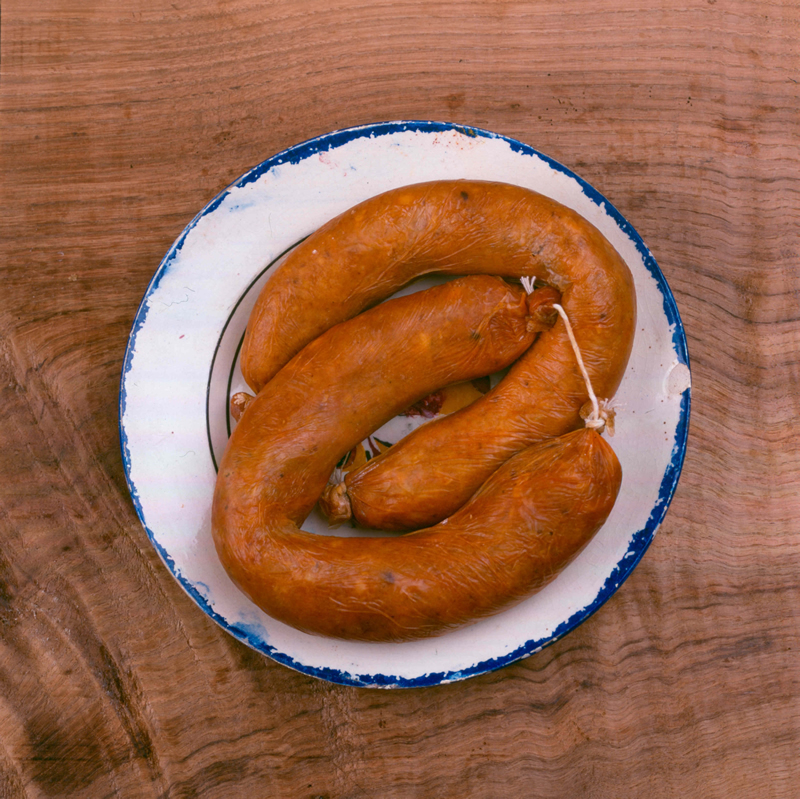
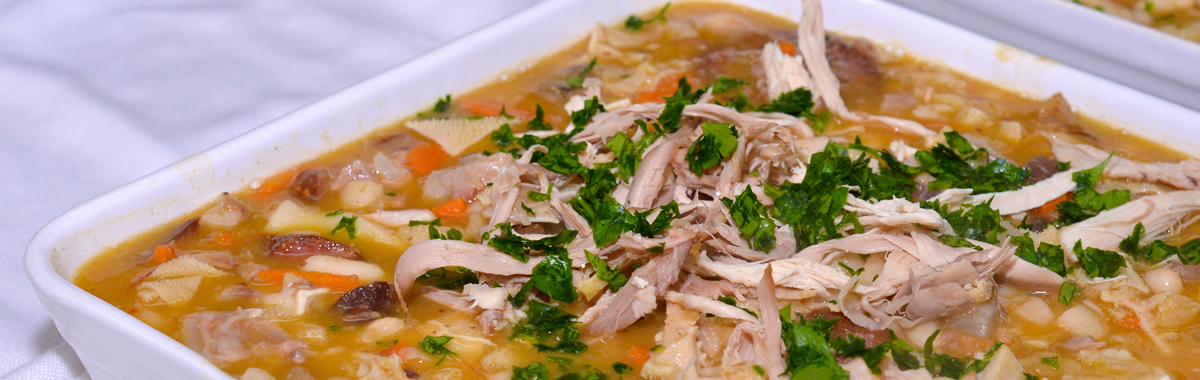
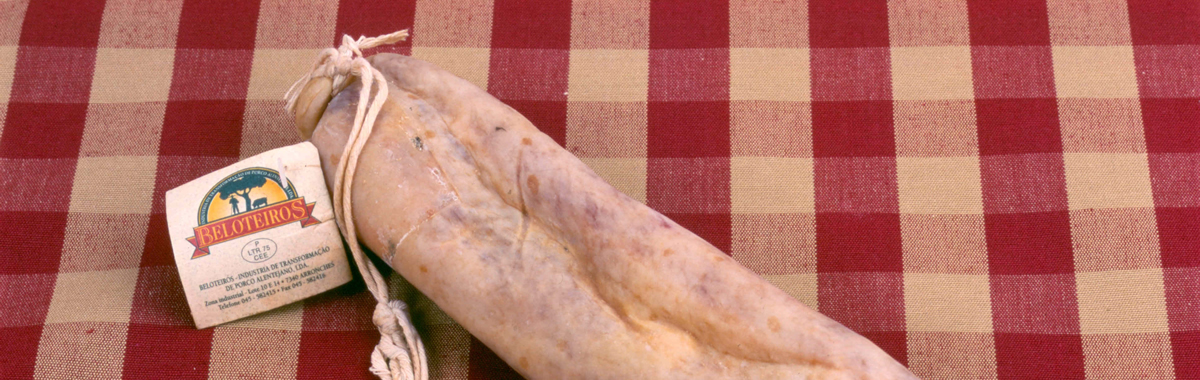
Description: Sausage based on wheat bread, cooking water for bones and meats. Pork rendered fat, condiments (salt, sweet papri-ka and chilli) and cow's gut as casing. It is about 25 to 35 cm long, 2,5 to 3,5 cm wide, and 150 to 250 g in weight.
Region: Center.
Other denominations: Farinheiro da Guarda.
Special feature: Dark orange product, horseshoe-shaped, slightly rough outer texture, relatively soft and prone to expand when cut into slices after cooking. The internal paste is semi-soft and moderately homogeneous. The outer appearance is slightly rough. It has a greasy and slightly spicy taste.
History: It is a regional product, typical of the area, and this typicity is recognized. Farinheira da Guarda is referred to in the work of Maria de Lourdes Modesto as a regional dish of value, adding the author, in addition to the recipe, that this sausage, in the region of Guarda, is designated in the masculine: «farinheiros». Manuel Leal Freire, in his ethnographic paintings, also mentions: «The bacon, the hams, the sausages, farinheiras and morcelas... they are calculated among the days of the feast and the week, taking into account the eventuality in which a guest, a relative or a passenger appears.'
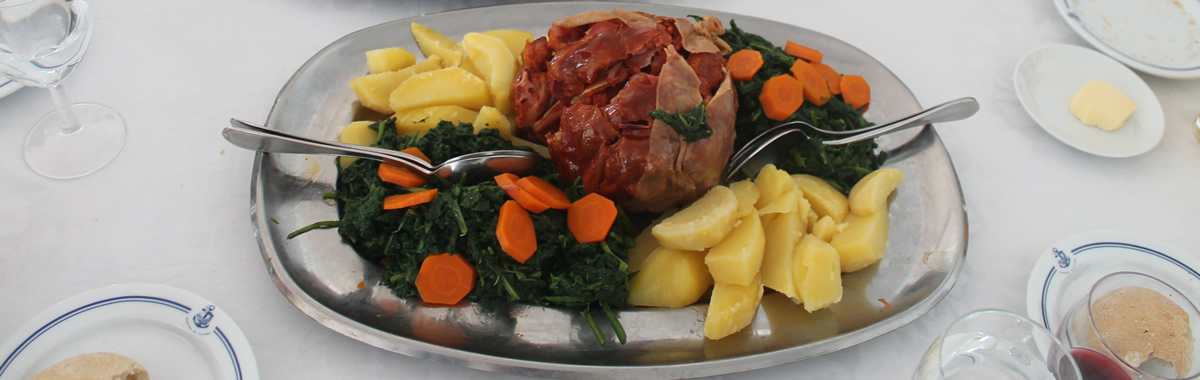
Use: Consumed in typical regional cuisine dishes.
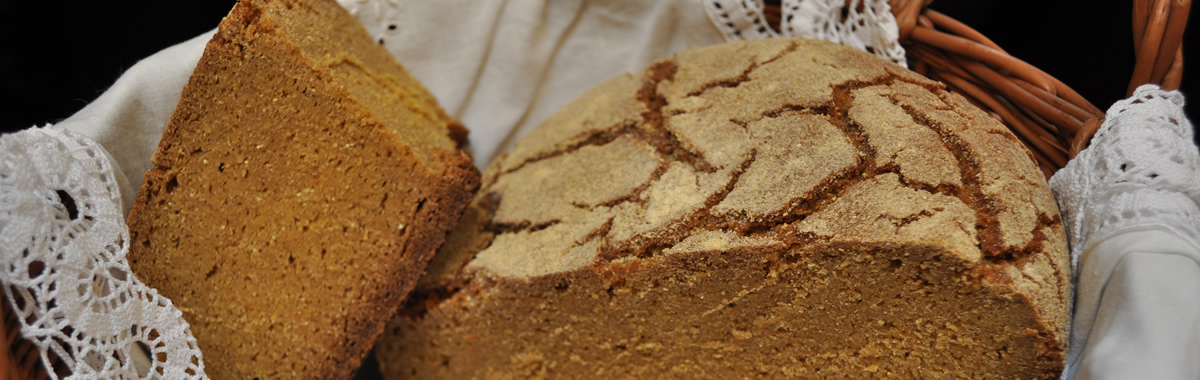
Know-how: The wheat bread is broken into thin slices and softened with the hot water from cooking the meat and bones. Add the rendered pork fat, crush the paste obtained with the hands and season with the various condiments. Fill cow casing and put it in the smoke-house (with oak and chestnut wood).
Source: Produtos Tradicionais Portugueses, Lisboa, DGDR, 2001
Bísara Pig Breed Standard: As defined in the Studbook Regulation, Bísara Breed pigs are morphologically characterized as follows:
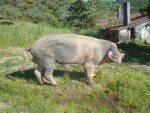 General appearance — Large animals, they reach 1 m in height and 1,5 m from the nape of the neck to the root of the tail;
Coat — White, black or spotted; usually thick skin and the bristles are usually long, thick and abundant;
Head — Thick and with a concave profile; occipital crest directed forward, thick and long proboscis, large mouth. Long, wide and pendulous ears, without covering the eyes. Poorly developed face and reduced jowls;
Neck — Long and regularly muscled;
Trunk — Thorax high, flattened and shallow, with long and slightly arched ribs Long back, convex dorsal-lumbar line. Belly saggy, with ten teats or more. Wide flank and little descent. Croup of good length but narrow, drooping and not very muscular. Medium-set and thick tail; Limbs — Of regular uprightness, long, bony and little muscled. Feet well developed but soft.
Fontes:
ANCSUB – Associação Nacional de Criadores de Suínos de Raça Bísara
Agroquisa – Ciências para a Qualidade de Vida
Ruralbit – Fotografias de Raças Autóctones
