


 Português
  English (UK)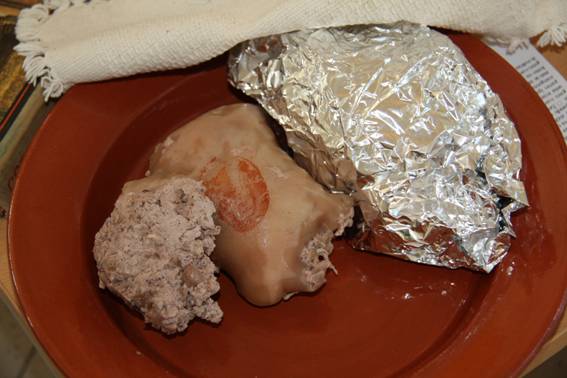
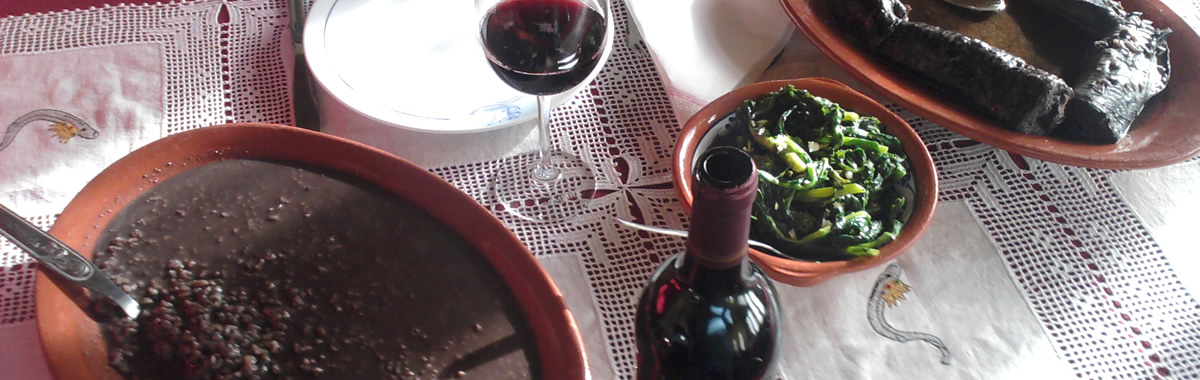
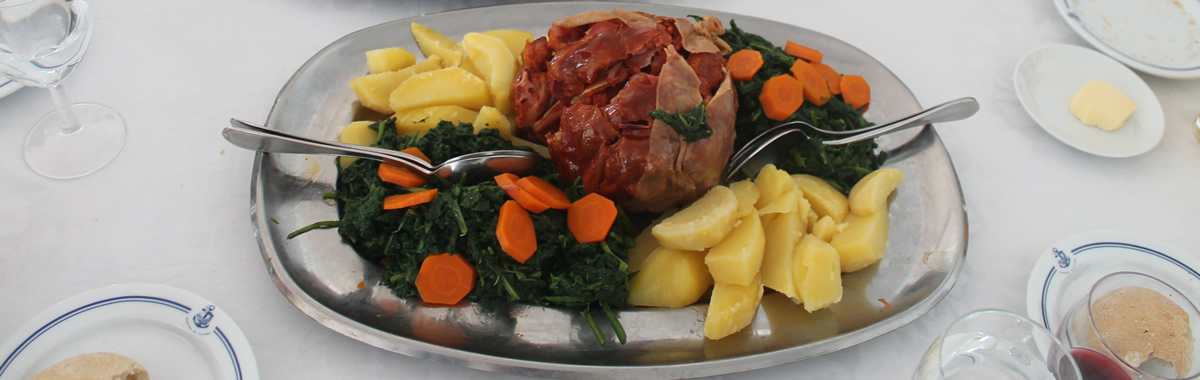
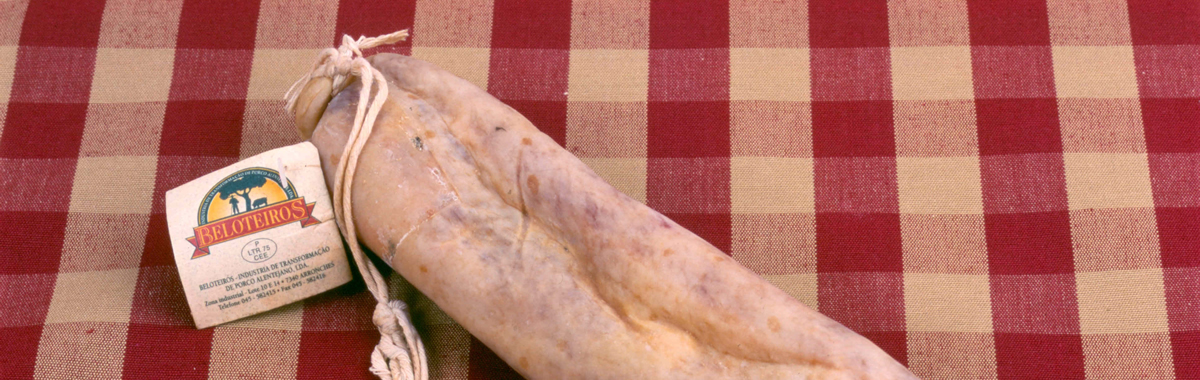
Description: It is a cylinder-shaped sausage, brownish-red in color, weighing approximately 1 kg. The skin of the pig's horn is used as a wrapper. It has a unique aroma and spicy flavor.
Special characteristics: Sausage made of boneless pork horn and stuffed with kidney, ear and loin, which is cooked in water and white wine and later dried, in the oven or smokehouse.
Region: Alentejo.
Ingredients used: 2 kidneys, 1 ear, 2 boneless horns and 1 kg of Alentejo pork loin; nutmeg, white wine, vinegar, onion, salt and black pepper.
Preparation: Remove the skin from the horns, very carefully, so as not to tear them. The kidneys and pig ears are cleaned and cut into small cubes. Cut the loin in the same way and mix. Season every-thing with salt and ground black pepper. It is allowed to stay like this from one day to the next. Sprinkle the skins on the inside with salt and pepper and sew them with a needle and thread on one side. The next day, fill these bags with the drained meats seasoned with peppercorns, and sew them so that they are well closed. Then, dip the Mangotes in a pan that is on the fire, with a mixture of water and white wine in equal parts, which should cover the sausages. Let it cook. Drain the Mangotes and take them to dry, in the oven or in the smoker. Mangotes are eaten as cold meats, cut into round slices.
Know-how: Genuine and unique product, handmade, linked to local culture and tradition.
Forms of commercialization: Restaurants and commerce in the region.
Product availability throughout the year: All year round.
Product history: Product obtained from the slaughter of the Alentejo pig with a high tradition in the wealthiest families.
Representativeness in local food: It was traditionally served at Christmas and during the slaughter of pigs.
Source: DGADR, on the basis of evidence provided by Câmara Municipal de Serpa and in "Cozinha Tradicional Portuguesa", Maria De Lourdes Modesto, 2012, Verbo Editora, e “Cozinha Tradicional do Alentejo - a memória dos temperos", Maria Antónia Goes, 2014, Colares Editora.
Photo: Provided by Câmara Municipal de Serpa
