




 Português
  English (UK)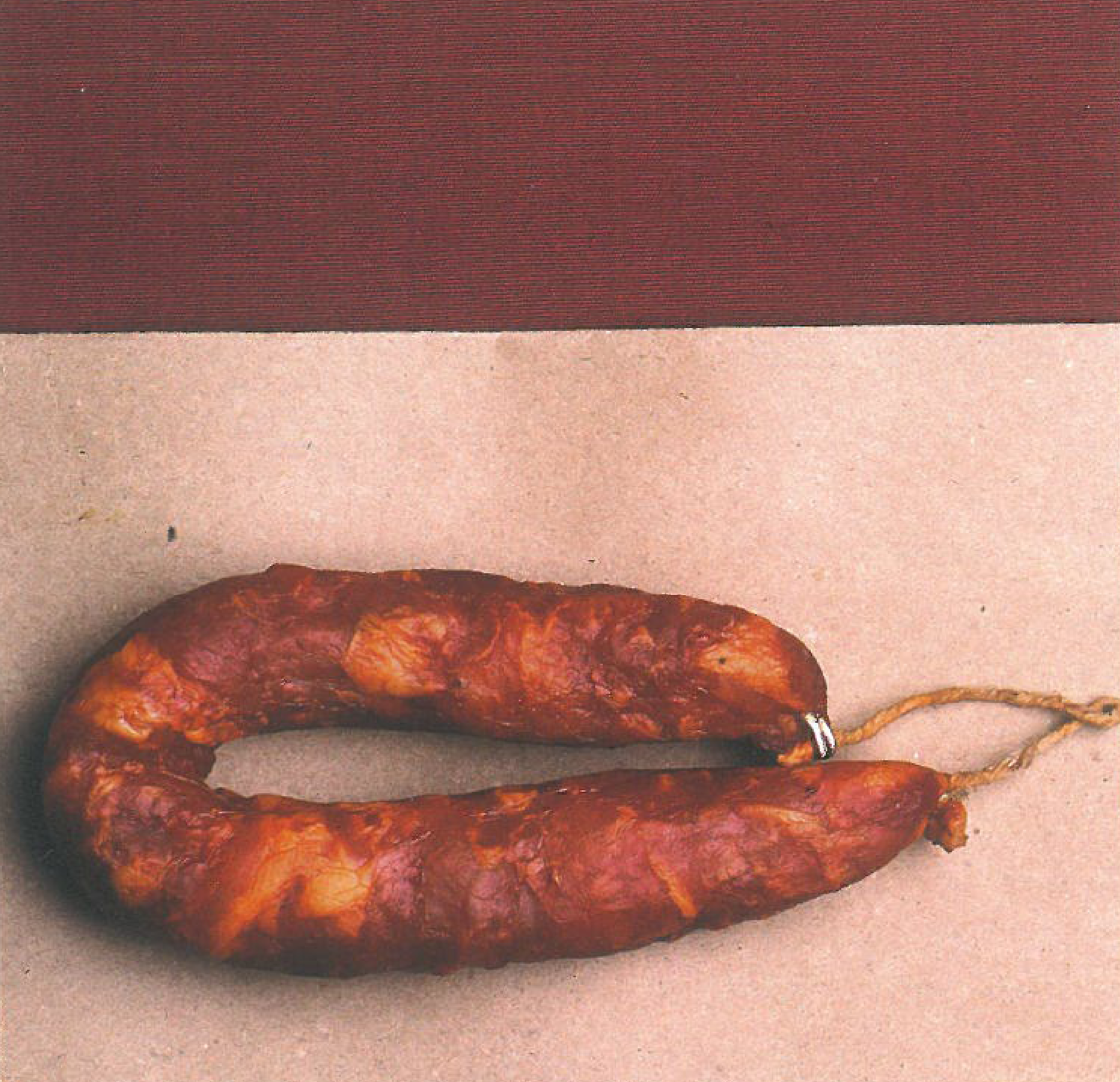
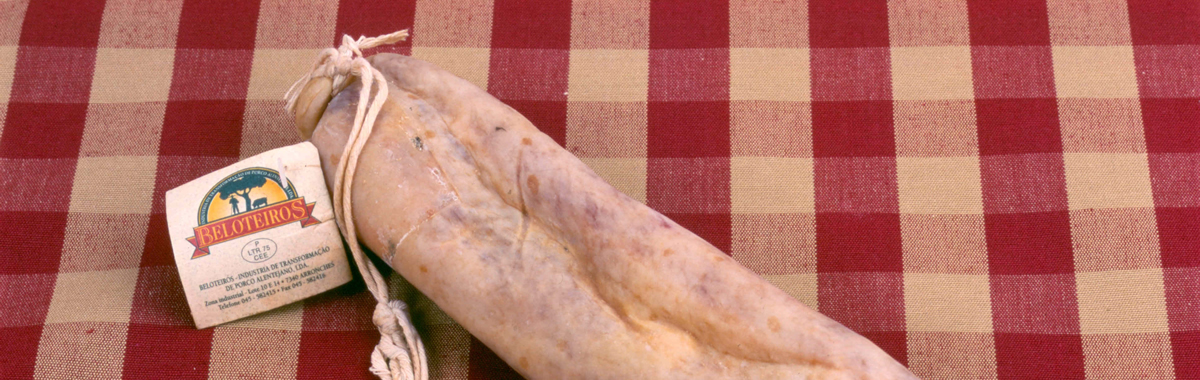
Description: Sausage of thick pork casing, with fatty pork, seasoned with salt, crushed garlic, red pepper paste, white wine and liquid pig blood. It takes less garlic than sausage.
Region: Alentejo.
Variants: There are variants in Moura, Borba, Estremoz, Alvito and Vendas Novas whose differences are manifested in terms of spices, blood and smoking time.
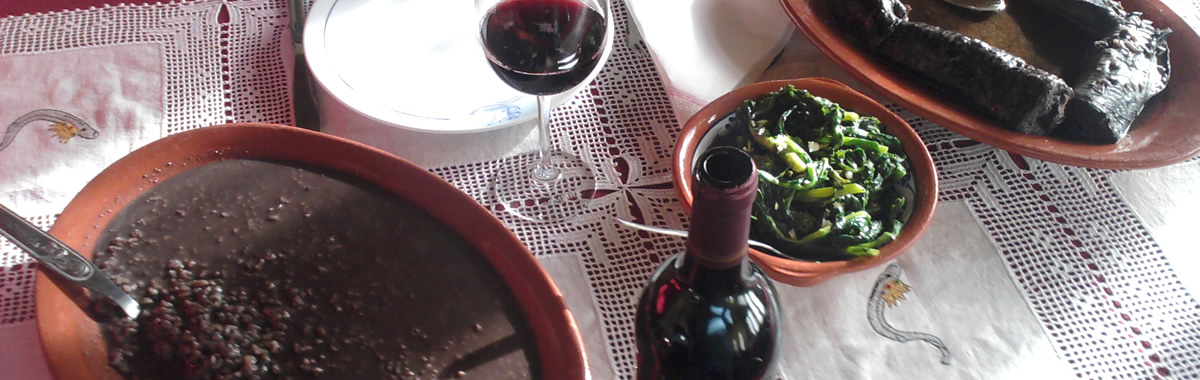
Particularity: Filled with a very dark color, almost black, due to blood, about 4 cm in diameter and 10 to 30 cm (or more) long, knot-ted at the ends and forming an arch.
History: Sausage was born from the need to use bloodstained meat and meat with some nerves, which had to be consumed and preserved for some time (although the shelf life of this sausage is short-er than that of the others). In Lisbon and in the rest of the country, what in the Alentejo is called sausage is called chorizo. In the Alentejo, chorizo is a sausage with blood. Its excellent quality depends very much on the breed of pig from which the meat is obtained, as well as on the acorn-based diet to which it has been subjected.
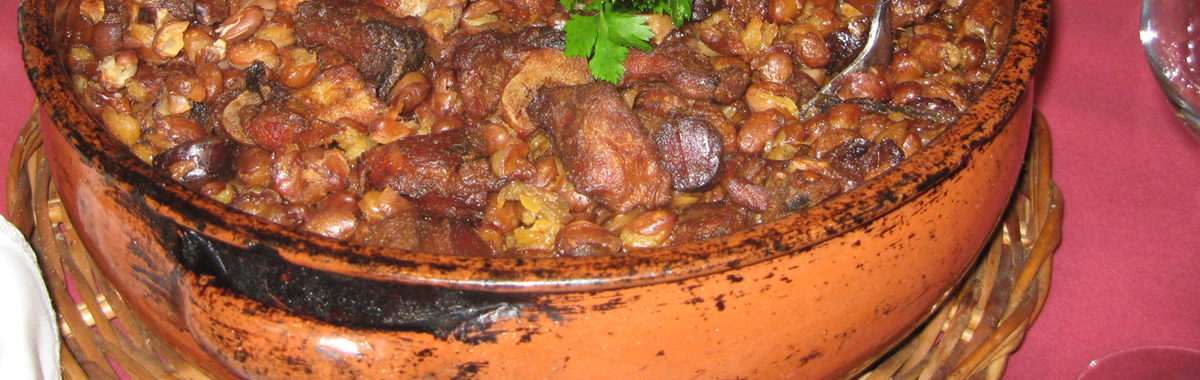
Use: As a snack, consumed fresh or smoked and dried. As a seasoning in typical dishes of the region, namely with broad beans.
Know-how: For chorizo, meats with some nerves, bloody streaky meats and belly meat are used. These meats are cut into small pieces and seasoned with a garlic porridge, red pepper paste and salt (it does not take water) for 1 to 2 days. After this period, add a little white wine and the liquid blood of the pig (collected at the time of slaughter in a container with vinegar). It is filled with thick pork casing. The meats are squeezed well, the casing is chopped to get the air out, the ends are tied together with a wire of a few centimeters to form an arc and they go to the smokehouse between 8 days to 5 to 6 weeks. They then go to a cool and airy place.
Source: Produtos Tradicionais Portugueses, Lisboa, DGDR, 2001
