










 Português
  English (UK)
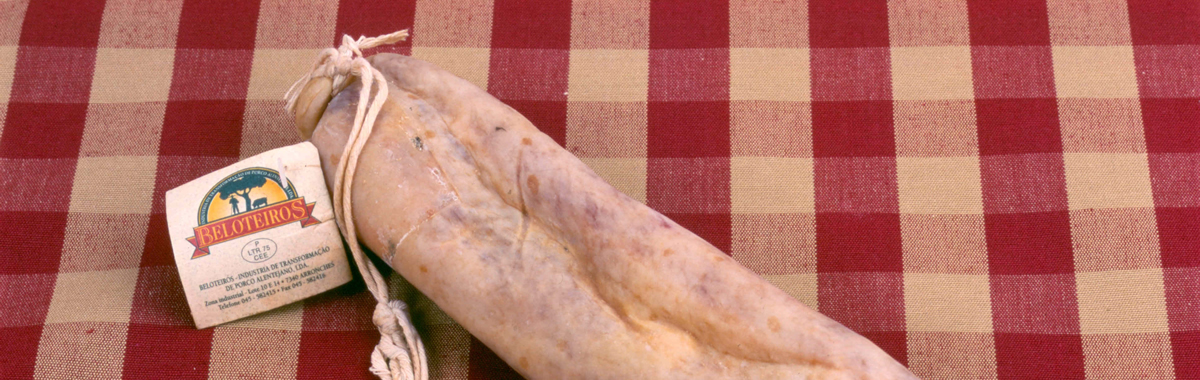
Description: Sausage made with selected pork and very little fat from the meat itself. The meat and fat are chopped with special knives, which allows the traditional cut to be maintained. It is about 3 cm in diameter and between 30 to 35 cm long.
Region: Alentejo.
Particularity: It is the most typical sausage of the Barrancos region. It can be considered exclusive to this region, as there is no other area or place where it is manufactured. It is cylindrical in shape and is manually knotted at both ends.
History: This sausage was brought to Barrancos by refugees from Catalonia during the Spanish Civil War. Hence the name "Catalan". Its manufacture is limited to the parish of Barrancos.
Use: It is consumed raw, roasted or fried.
Know-how: The meats, after being minced, are seasoned with the following products: salt, peppercorns, ground white pepper, ground nutmeg and wine from the region. Inside vats, it is left to ferment for 24 hours. The tripe is pork and fresh, washed, turned inside out and seasoned with orange slices. After being filled, they are hung and displayed in rooms, prepared for this purpose, where they are sub-jected to a natural curing process. The meat is from Alentejo pork, obligatorily castrated in suckling pig, slaughtered between 12 and 16 months of age, with a carcass weight of around 120 kg. The final fe-ed is montanheira (acorn).
Source Produtos Tradicionais Portugueses, Lisboa, DGDR, 2001
