











 Português
  English (UK)
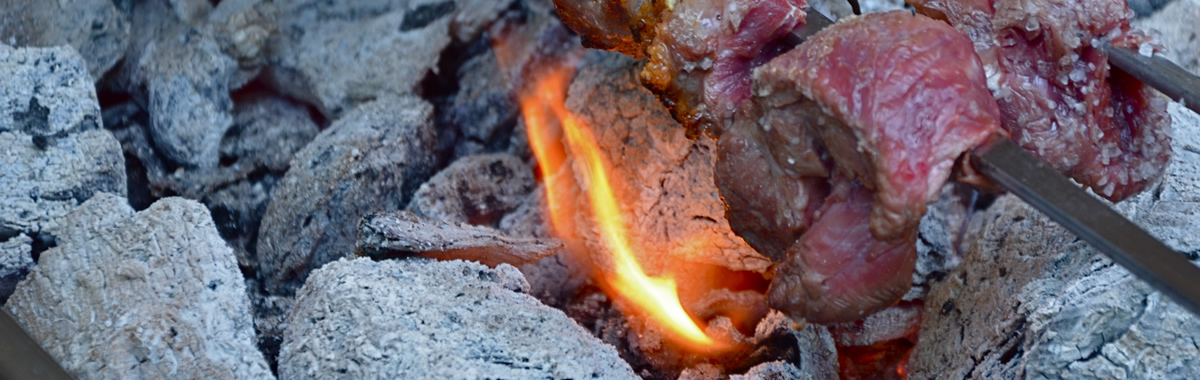
Description: Ramo Grande Beef is obtained from cattle of the Ramo Grande breed. It is a bright red meat, with a tendency to be more intense in contact with the air and with the age of the animal, with a firm consistency due to the presence of interfascicular connective tissue in variable proportion and with an intrinsic aromatic smell of the species. The fat is well distributed, pearly white in color and firm consistency after cooling the carcass. It does not leave unctuosity to the touch.
Production Method: The animals are fed according to traditional breeding patterns. The basis of the diet is pastures, natural or improved, used by direct grazing and consisting of intercropping of grasses and legumes. Calves are fed with their mother's milk at least until they are three months old. Weaning occurs at 6-7 months of age and until then the calves accompany their mothers on trips to the pastures, so they also feed on pastures and fodder. Adult cattle feed on fresh grass and are supplemented with grass silage, hay, green corn or corn silage or other feed from the farm (e.g., corn grain, dried corn bracts, sweet potato branches, incense) or from other farms in the Azores Archipelago.
Particular characteristics: Five age classes can be defined:
Calf - meat from carcasses of cattle aged 8 months or more, but less than 12 months, classified as category Z and with a minimum carcass weight of 110 kg;
Steer - meat from carcasses of cattle aged 12 months or more, and less than 24 months for whole males (category A) and equal to or greater than 12 months for females (category E) and with a minimum carcass weight of 130 kg for category A and 120 kg for category E.
Whole male (Bull) - meat from the carcasses of whole male cattle aged 24 months or older (category B) and with a minimum carcass weight of 200 kg.
Neutered - meat from the carcasses of castrated male cattle aged 12 months or older (category C) and with a minimum carcass weight of 130 kg.
Cow - meat from the carcasses of females that have already calved, classified with category D and with a minimum carcass weight of 200 kg. Carcasses with the following characteristics are allowed:
• Steer; Whole male (Bull); Neutered - classes S, E, U, R and O.
• Other age classes - Due to the specific morphological and functional characteristics of the Ramo Grande breed and the management practiced, namely in terms of sex, age and weight at slaughter, it is justified to admit, in addition to the classes already mentioned, carcasses of class P.As carcasses with fat status 1 are not admitted.
Production area: The geographical area of CARNE RAMO GRANDE is the Azores Archipelago, consisting of nine islands: Santa Maria, São Miguel, Terceira, Graciosa, São Jorge, Pico, Faial, Flores and Corvo.
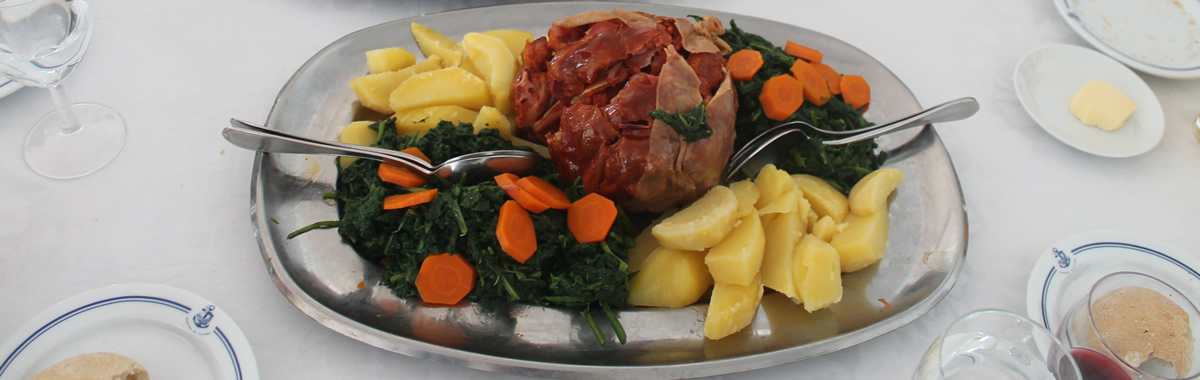
History: The genetic characteristics of the native Ramo Grande breed were conditioned by the natural conditions of the Archipelago and by the use that was traditionally given to the animals of this breed. The producers used the Ramo Grande males to cover the females during one or two mating seasons and then they were castrated and taught to carry out the tillage of the land as well as to transport loads. They met the needs of the producers for these functions and cumulatively provided the meat and milk essential to their food. The rearing of these cattle in subsistence farming conditions provided great proximity between the producers and their animals, ensuring the animal welfare conditions resulting from the extensive system to which the cattle are subject and the specific know-how of the producers linked to both feeding and handling/driving of the cattle that contribute to distinguishing the quality of the products obtained. The breeders of the Ramo Grande breed are the guardians of an unparalleled genetic heritage, which over several generations and in sometimes difficult conditions, they insisted on maintaining as a legacy of their ancestors, in the eagerness to preserve the heritage they had received and which they always cherished as if they were family members. In the traditional festivals of the Azores Archipelago on the various islands, namely those of Espírito Santo, the meat of these cattle has always been preferred to make the typical dishes of the "functions" of this festive season that involve a set of know-how and recipes specific to each island and within these of each locality, which have been passed from generation to generation, giving peculiar and inherent flavors and aromas to the meat of this breed.
Product specification (pdf)
Producer group
Associação de Criadores de Bovinos da Raça Ramo Grande
Control and certification body
IAMA, IPR. - Instituto de Alimentação e Mercados Agrícolas
