








 Português
  English (UK)
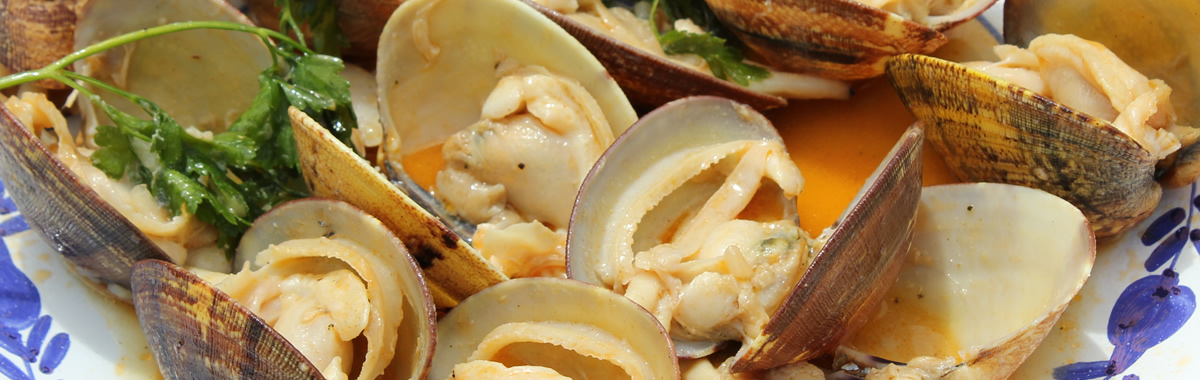
Description: Mollusk of the genus Patella, which appears in the in-tertidal zone, on rocks. There are mainly two distinct varieties: the Lapa Brava (Patella aspera or P onlissiponesais) and the Lapa Mansa (P. candei). Lapa Brava is caught up to 6 m deep, and can oc-casionally reach 15 m. It can reach 10 cm and has a yellowish color. This is the most commercialized variety. The Lapa Mansa is usually smaller and is caught at low tide. It has grayish flesh.
Region: Autonomous Region of the Azores.
Particularity: Shell mollusk in the shape of a flattened cone.
History: Carreiro da Costa states that «... another mollusk of wide consumption in the Azores is the limpet whose dimensions vary considerably... The girls eat them stew... both constitute a much appreciated snack, and even a highly esteemed condiment both on the part of the people of the countryside and the maritime class ...». Currently, Regional Legislative Decree No. 14/93/A, of June 3, regulates the capture of Limpets on all islands; Capture is limited to peo-ple with a license and a minimum size is established, in addition to the existence of protected areas on all islands.
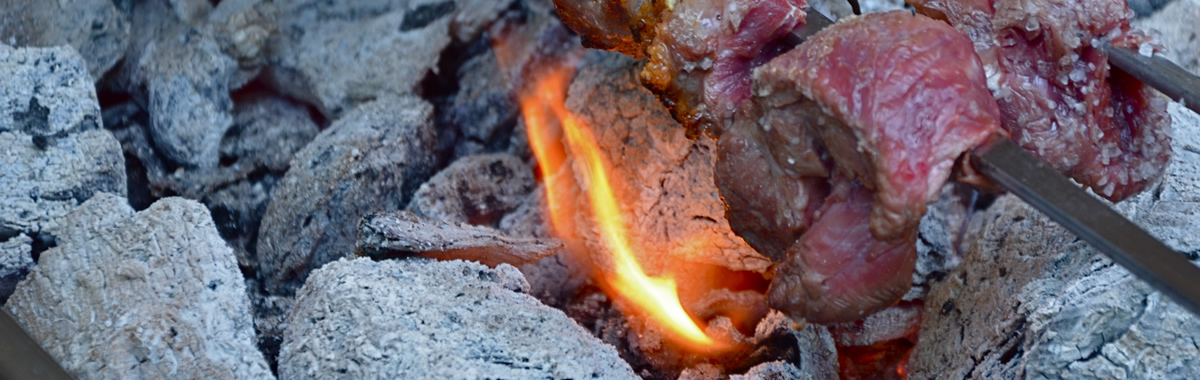
Usage: Augusto Gomes says that the Limpets, when they are cooked in Afonso de Lapas, are cooked in two different ways: either the Lapas Mansas are chosen coated with moss, with a size approximat-ing that of a tablespoon and which roast directly on the fire and are eaten in the shell, or else the Limpets are stuck in reeds, whose ends are thinned and cracked, thus going to the fire.
Know-how: Harvested at low tide or in intertidal waters, up to 6 m deep.
Source: Produtos Tradicionais Portugueses, Lisboa, DGDR, 2001
