



 Português
  English (UK)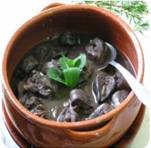
Description (dimensions, colour, aroma, texture): Fish of about 80 cm; Colour - dark grey; Texture – smooth and slippery.
Special characteristics: Dish produced by lamprey specimens from the geographical area, between the Douro and the Tâmega. The species is only edible during the spawning season.
Species, varieties or breeds: There are 6 species of lamprey in Portugal, this one located in this geographical area is the Marine Lamprey.
Additional information on species, varieties, breeds: Edible species only at spawning time. The lamprey lives in the sea, and at the time between January and May it comes to the river, to the fresh water to leave its eggs. Running for miles against the current, leading you to lose weight and fat. At this time, after spawning is the ideal time for the lamprey harvesting technique. After harvesting, it is necessary to be in running fresh water for about 3 to 4 days, so that it loses all the "garbage" that is next to its scales. It also serves to purify the meat, since the lamprey's diet is not very selective. It is also called "beating the lamprey"... “.. Is the lamprey well beaten?!" – a frequent question when buying copies.
Delimitation of the geographical area of production: Region between the Douro and Tâmega.
Connection to the natural landscape: Characteristic and abundant animal in the region, coming from the long journey it makes from the sea along the Douro River and Tâmega upstream.
Ingredients used: For lamprey cabidela: medium lamprey (1 to 2 kg); red green wine vinegar; onion; olive oil; salt; white pepper; garlic; parsley; water; rice; For lamprey à Bordalesa: medium lamprey (1 to 2 kg); red vinho verde vinegar; onions; olive oil; salt; white pepper; garlic; parsley; toasts; white rice.
Preparation: Its preparation begins the day before, the lamprey is blanched in boiling water. Then scrape lightly with a knife, wipe with a dry cloth in order to remove the skin from it. After cleaning, the head is cut off and a small nerve that is next to it is removed, a small blow is given to the upper part of the lamprey and another near the navel in order to extract the gut along with the gall. After dawn, break the steaks and add a clove of garlic, a glass of red wine vinegar, salt, pepper and blood, and let it rest. On the day of cooking, a sauté of olive oil and onion is made. When the onion has a transparent hue, strain the excess olive oil and reject it. In the remainder, add the previous day's preparation of red vinegar and lamprey and season with salt, white pepper, garlic and parsley to taste. Let it sauté slowly, about 30 minutes. For the lamprey cabidela rice, add hot water to the previous preparation and pour the rice, as much as is enough. For the lamprey à Bordeaux, the refugado is ready to pour on top of toasted bread or toasts, and serves it together with white rice.
Know-how: The secret of the flavour of the dish lies in the quality of the lamprey, which must be well beaten (to "purify") and which must be picked from January to May.
Forms of commercialization: It is sold by the dose in restaurants.
Product availability throughout the year: From January to May.
Product history: When the time came for carnival and then Easter, when the Christian people fasted and abstained from meat for religious reasons, it was from these beliefs that led the villages that lived near the river to fish more intensely at these times. Spawning season for lampreys, this fish is found in greater quantity, taking advantage of this characteristic to become an abundant dish at this time since then. Currently, due to construction issues of the Crestuma dam, the number of lamprey specimens has decreased, which increases the costs of its acquisition, and consequently of confec-tion and tasting.
Representativeness in local food: It is one of the gastronomic dishes of the municipality, which leads many tourists to look for it in the months between January and May.
Product availability: From January to May.
Source: Confraria do Anho Assado com Arroz de Forno
Photo: Apresentação final de Lampreia à Bordalesa
