


 Português
  English (UK)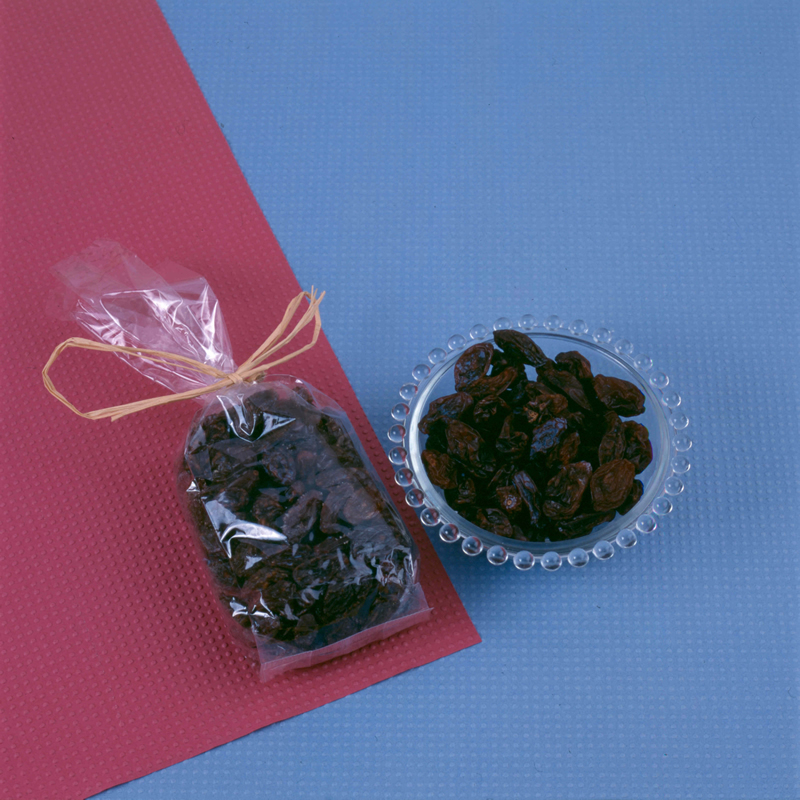
Description: The raisins are produced from the traditional D.ª Maria grape variety. They are dark brown in color and are large in size. They have a high sugar content and have a characteristic taste of dried grapes.
Region: Alentejo.
Special feature: Raisins of the traditional D.ª Maria variety.
History: The transformation of grapes into raisins comes from the beginnings of the vine culture which, in Portugal, dates back to Roman times, at least. The fact is due, as always, to the need to preserve food in a land where it is not abundant.
Use: As an aperitif and, above all, at Christmas time and on the feast of Bread for God (All Saints' Day — November 1).
Know-how: The Raisin of Amareleja is prepared in a small region in the interior of the Alentejo, with a climate very conducive to the cultivation of vines. Allied to this climate is added the grape variety from which they are prepared — D.ª Maria — and the centuries-old know-how of the populations. The bunch is large, moderately touched and cylindrical-winged. The berries are medium, golden yellowish-green in color, very ripe, elliptical and with abundant sprinkle. The berries have strong adhesion to the pedicel, the film is very resistant and the pulp is fluxing. It has seeds in a rudimentary state of development, barely noticeable The transformation process begins in August, the harvest time of the D.ª Maria grape in this region, and lasts until the end of September. Then the bunches are peeled, an operation that is done with great care so as not to hurt the skin of the grapes. The quality of the final product will depend on the care taken in the execution of this task, which is why it is handed over to personnel properly trained for the operation. This is followed by the washing of the grapes, which are placed in trays that will enter the solar dryers where they remain for a time that varies with the weather conditions. In any case, this time does not vary more than 5 to 10 days. During this period the grapes are inspected daily so that the optimal degree of dehydration is not exceeded. At this point, the raisins are removed and calibrated. They are finally packed in cardboard boxes.
Source: Produtos Tradicionais Portugueses, Lisboa, DGDR, 2001
