

 Português
  English (UK)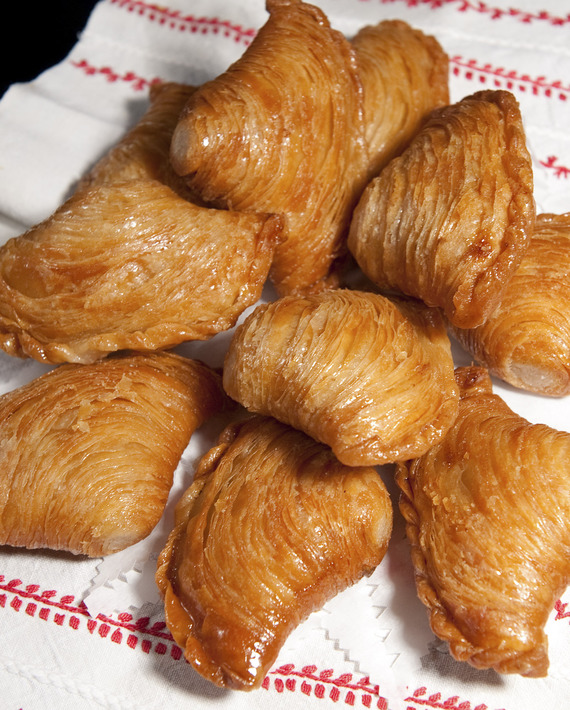
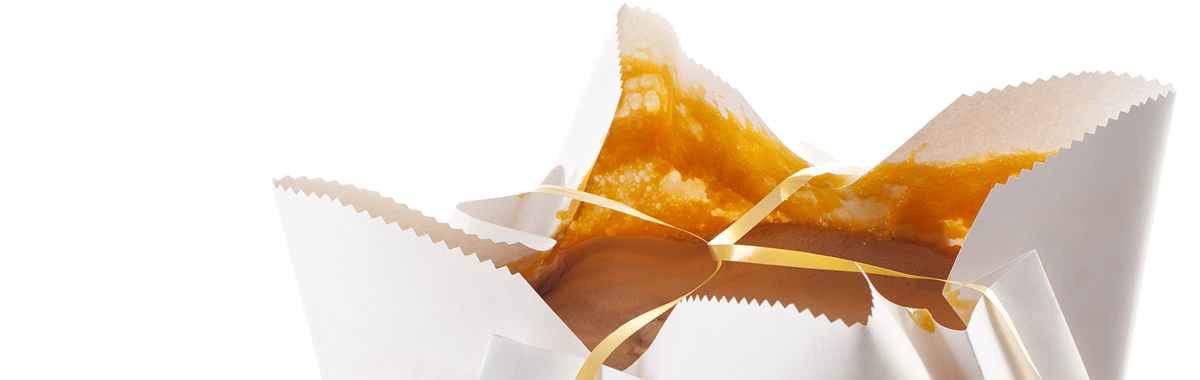
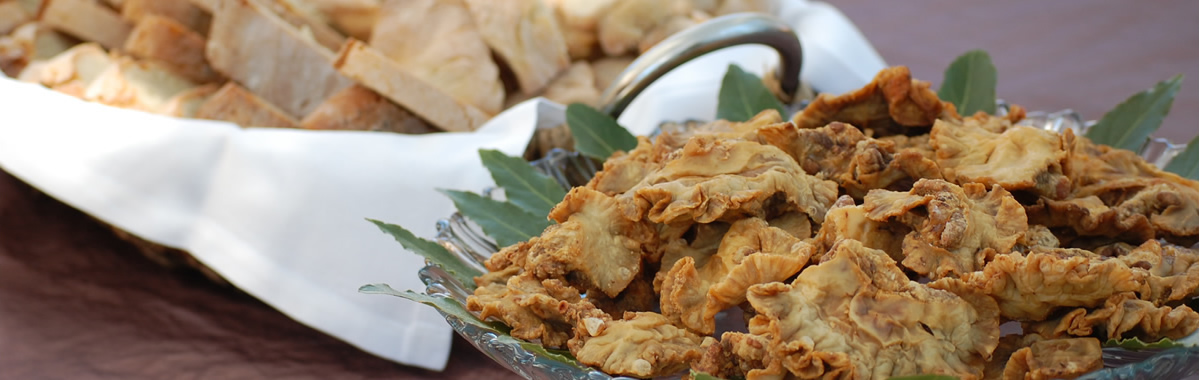
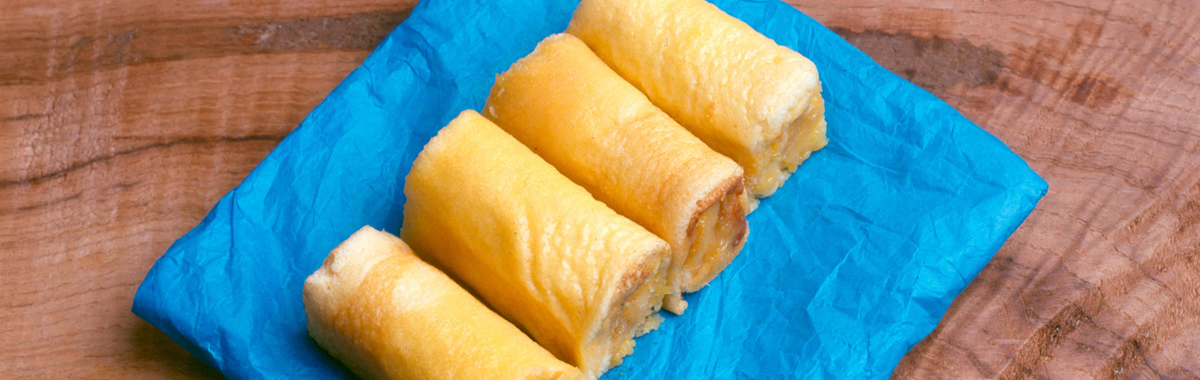
Description: (dimensions, color, aroma, texture): The pies of Guimarães do not have the typical shape of pies, it resembles pastries in the shape of a half moon. They are not a pie in the true sense of the word, resembling more some of the conventual pastries that are still made all over the country today.
Special characteristics: (signs that show the uniqueness of the product): The originality in the preparation of the pie dough, the confection work associated with it, the symbiosis between lard, baking in the oven, bathing in sugar syrup and the characteristic crunch they acquire, make this sweet a divine delicacy, unique among Portuguese sweets.
Geographical area of production: Guimarães.
Ingredients used: Flour, salt, pork ping, sugar, cinnamon, almonds, eggs, lemon balm.
Preparation: Knead the triga flour in cold water seasoned with salt, so that the dough is hard. After the flour has been kneaded in this way, which can be done inside a bowl, it is placed on a very smooth board and worked on, kneading and rubbing it, as one washes clothes, until it begins to make bubbles. At this point, a roll is made of it, which is greased on all sides with pork pings from the rojões, cold, and the roll is left to rest on the board for two hours. After these two hours, one person takes the roll on one side, and another takes it on the opposite side, and with a wooden cylinder it begins to be rolled out in tape, little by little; Like a piece of ribbon, it is widened, pulling it sideways with your hands as far as you can. When it is thus en-larged, it is greased with a hot ping, and it is begun to be wrapped very carefully; and so on until the dough is finished. In this way, the dough is again in a roll, formed from the dough that has been rolled out in wide ribbons. This roll, thus formed, is greased on all sides with ping, and rests for a night or a few hours.
After this time, the roll is cut into finger-width slices and these slices are started to be widened so that the leaves are well separated from each other; Add the filling and fold the dough so that it is in the shape of pastries.
Bring a pan with sugar to the boil, put the pies in and take them out with a slotted spoon. Once cool, they are sprinkled with sugar and cinnamon.
Filling for the pies: Pour a sugar arrátel and a pint of water into a saucepan, and let it come to the point of swordfish low. Then remove it from the heat and start to cool. Add a quarter of crushed almonds, 20 beaten egg yolks, a cinnamon stick and a piece of chopped lemon balm and put the pan back on the heat until it thickens, and the point should not be too high.
N.B. Before getting into the sugar, the pies are put in a leaflet and put in the oven to bake like the other pastries.
Product history: It is a sweet whose origin of manufacture is attributed to the Convent of Santa Clara de Guimarães, and which today is considered one of the specialties of Guimarães confectionery.
It is true that the Abbot of Tagilde, who rigorously studied the convent of Santa Clara de Guimarães, already in 1892 refers to the importance of the sweets made by the Poor Clares, citing, among the sweets that gave them name, the pies: "we refer to the sweet, dry and syrup industry, in which the nuns became excellent, deserving their products famous renown, not only in Guimarães and in the country, but even abroad. The toucinho-do-céu, the pies and other species of sweet, manufactured in this convent, have kept this name to this day" (GUIMARÃES, 1892: 203-204 in Doçaria Tradicional Vimaranense, 2011).
Source: Doçaria Tradicional Vimaranense, Guimarães City Council, 2011.
Fonte da imagem: Câmara Municipal de Guimarães
