









 Português
  English (UK)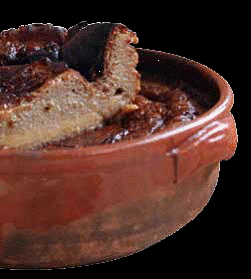
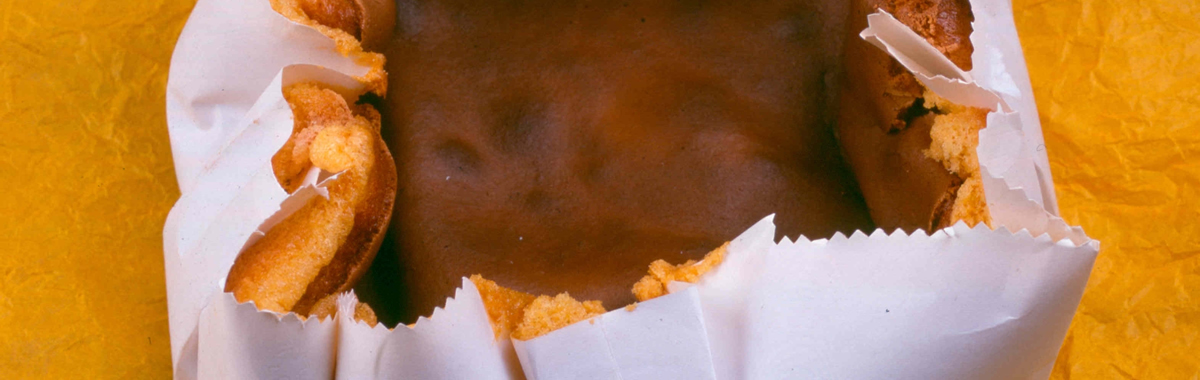
Description: Spoon jam cooked in a wood oven, inside a medium or large glazed clay pot, dark brown on the surface and yellow interior. Its aroma is essentially cinnamon and citrus fruits and the texture is similar to that of a pudding.
Special characteristics: The use of goat's milk and heather honey are characteristic of this Tigelada, as the surrounding area is extremely rich in flora, especially heather, broom and rosemary, which makes the honey of the area very characteristic. In turn, since cattle production is mostly goat cattle, there is a great availability of goat's milk.
Region: Pinhal Interior Sul Area, Proença-a-Nova.
Ingredients used: Eggs, goat's milk, brown sugar, honey, lemon zest, flour, cinnamon and salt to taste.
Preparation: Mix the flour with the sugar, salt and cinnamon. Then add the eggs, honey, lemon zest and warm milk. Stir everything very well and place it in clay pots/containers greased with olive oil. Place the mixture in the wood oven. Serve cold without sprinkling with any condiment or spice.
Know-how: In addition to the honey and goat's milk essential to achieve the characteristic flavor, cooking is done in clay pots. Another secret is in the temperature of the wood-fired oven, which is in-tended to be well heated. This is lit with holm oak wood, along with rockrose, which will provide a characteristic aroma in the final product. In addition, after the oven is very hot, the caçoilos are placed empty directly in the oven and let it be heated well, so that when the mixture is poured into them, the thermal shock is obtained that will create a sweet grayish layer at the bottom of it. After the bowl is cooked on top, cover each bowl with paper, so that it does not burn on top and let the cooking time end. Usually, they have a cooking time of about three hours.
Forms of commercialization: Restaurants of typical regional cuisine.
Year-round product availability: Available year-round.
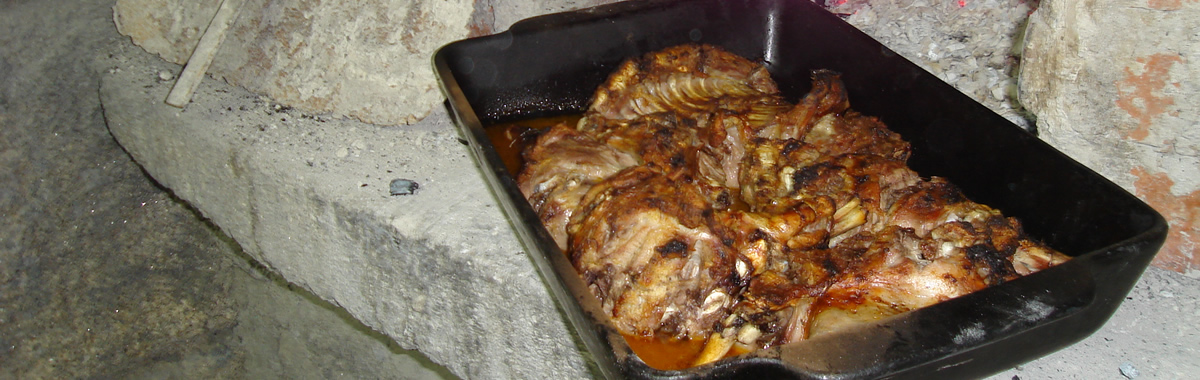
Product history: The tigelada was traditionally made at festive times and its origin is lost in time. It was done mainly from the beginning of summer, which is related to the fact that it is at this time of year that the hives begin to grow. The cooking of the traditional honey bowl is done in a wood oven and, with all the villages having a community oven, the women's lives were made easier. Thus, after the bread was baked, or after roasting the best kid, the "solemn entry" of the clay pots was made, where the bowl was cooked in the very hot oven.
Representativeness in local food: It is the most typical sweet of Proença-a-Nova, always made at festive times, namely in pilgrimages, for example.
Source: Confraria Gastronómica As Sainhas de Vagos
Photo: Provided by MINHA TERRA – Federação Portuguesa de Associações de Desenvolvimento Local.
