






 Português
  English (UK)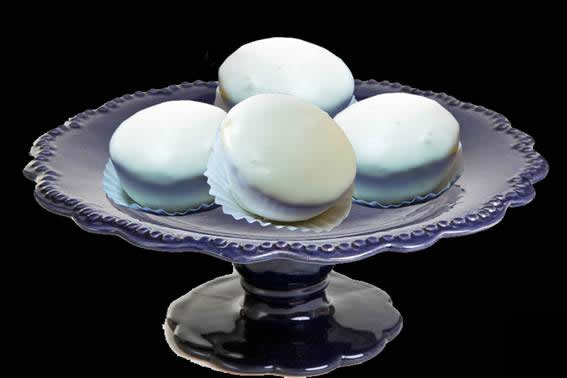
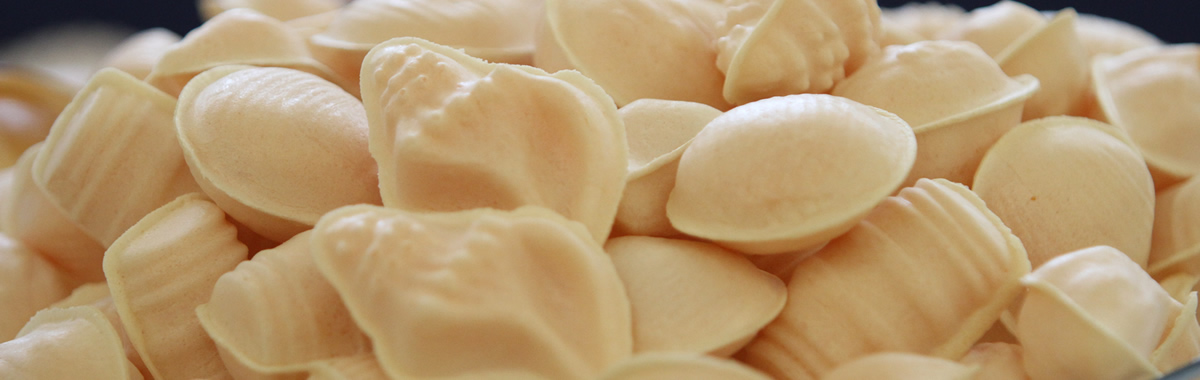
Description: Nevadas de Penacova are small cakes of fluffy dough, with creamy egg filling and sugar coating, also known as "Palermos Cobertas".
Special characteristics: Conventual sweet, based on eggs and sugar.
Region: Center.
Ingredients used: Sugar, flour, eggs, baking powder.
Preparation: Beat the sugar well with the egg yolks and add the flour and egg whites whipped into a stiff vein. Place the dough in small molds previously greased and sprinkled with flour and bake in the oven, without letting it toast. Once ready, remove a lid-shaped wheel and dig it out, removing the core carefully, so as not to break the walls of the cake. To make the filling, 3 egg yolks are crumbled in the crumb previously removed. To this mixture is added a syrup of water with sugar. Beat well without carving and bring to a boil the egg, not letting the cream become too thick. Once warm, pour a little of this sweet on each cake, cover it with the small lid that was left. Then it is covered with a thick topping of egg whites and sifted sugar.
Know-how: The icing that gives the white color to Nevadas de Penacova and which is responsible for its name, is the result of a delicate and time-consuming process, carried out in two phases: af-ter the base of the cake is covered, there is a drying period, after which the cake is turned over, with the base down, and covered the top.
Forms of commercialization: Pastry shops in the region, fairs and exhibitions.
Product availability throughout the year: All year round.
Product history: The Nevadas de Penacova were originally pro-duced by the nuns of the Monastery of Lorvão, where they were called "Palermos Cobertas". After the extinction of the religious orders, the recipe was adopted by the local people, having received the name of "Nevadas de Penacova". Currently this sweet is available in pastry shops and other establishments in the region.
Representativeness in local food: Much appreciated in snacks and desserts.
Source: DGADR, based on elements collected in ON CENTRO an in the Municipality of Penacova.
Photo: ON CENTRO
