

 Português
  English (UK)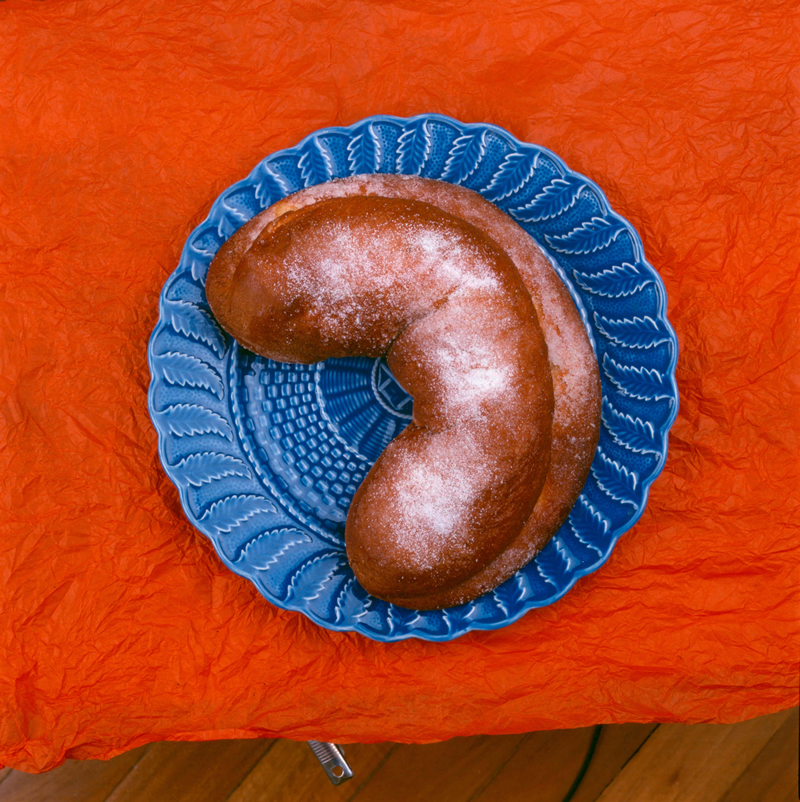
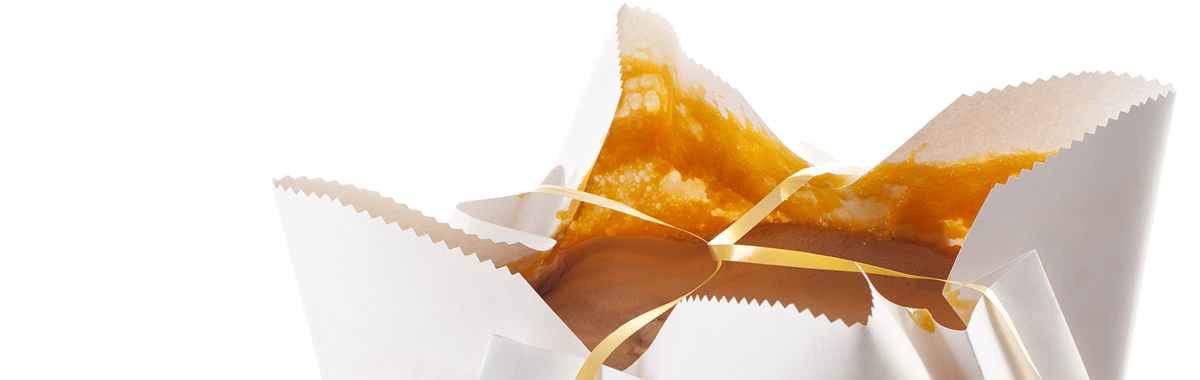
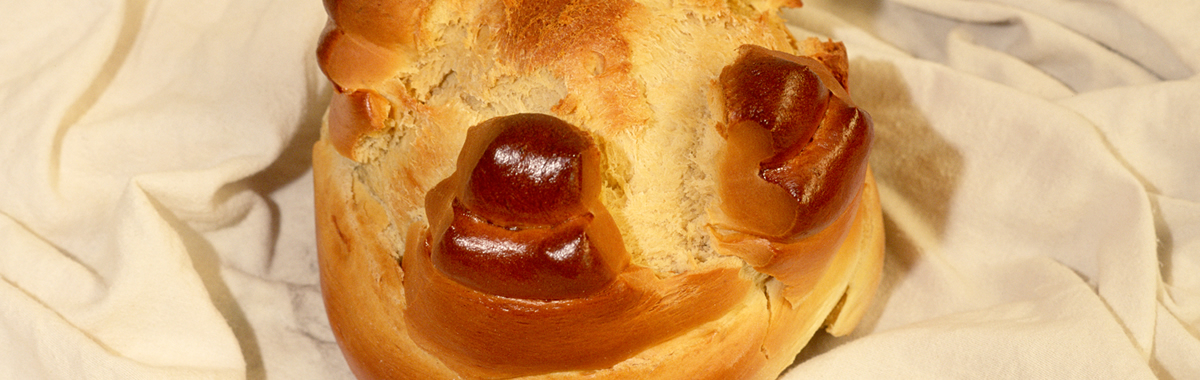
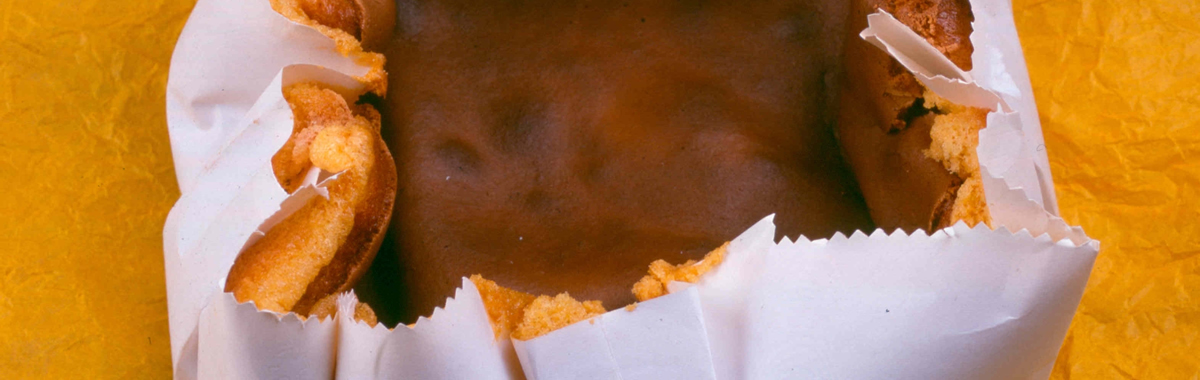
Description: The Folar de Vouzela is a sweet yeast dough cake, in the shape of a horseshoe. The crust is thin and golden and the inside is fluffy, with a filling of butter and granulated sugar.
Special characteristics: Folar type cake, with a dough rich in eggs and butter and an intense filling of granulated and caramelized sugar.
Region: Vila de Vouzela and other nearby locations.
Ingredients used: Flour, eggs, sugar, butter, baker's yeast.
Preparation: Place the flour on a table and make a hole in the middle. Add the butter, sugar, whole eggs and baking powder. Knead the dough, without it being too hard and let it rise for two hours. After the dough has rested, it is rolled out all at once or divided into equal parts (depending on the size or weight that is desired for the folares). The rolled out dough should be in the shape of a circle. In the center of the dough, there are mounds of sugar and butter (to taste) that will form the filling of the folar. The dough is folded in half without flattening, leaving the bottom slightly larger, and the folar horseshoe shape is given. You can brush the folar with a little water and distribute sugar on top. He rests again, for an hour. The cooking time will depend on the oven and the size of the folar. The cooked folar should have a dark golden appearance.
Know-how: It is a sweet, kneaded cake, whose main characteristic is the units, after being rolled and elongated, creased and folded in half, interspersing sugar between them.
Forms of commercialization: Bakeries and pastry shops in the region.
Availability of the product throughout the year: Although demand increases during the Easter season, folar is regularly consumed throughout the year.
History of the product: Its manufacture and consumption have been known in the region since the century. XIX, not ruling out the possibility of existing before that date. It is believed that the original recipe originates from the recipes of the convent of Poor Clare nuns, located in the old Rua das Eiras, in the city of Porto.
Traditionally, the folar de Vouzela was made during Easter week, by local confectioners, at the request of the wealthiest families. The confectioners were paid for by labor and the ingredients were provided by the family that ordered them. The folares were intended to be offered by the godmothers to the godchildren on Easter Sunday, in return for the bouquet offered by them on Palm Sunday.
Representativeness in local food: In addition to being a mandatory presence at the Easter table, it can be part of a light meal or served as a dessert, plain or accompanied by cheese or butter.
Source: DGADR, based on elements provided by the FPCG and the book Produtos Tradicionais Portugueses, Lisboa, DGDR, 2001
Photo: Produtos Tradicionais Portugueses, Lisboa, DGDR, 2001
