






 Português
  English (UK)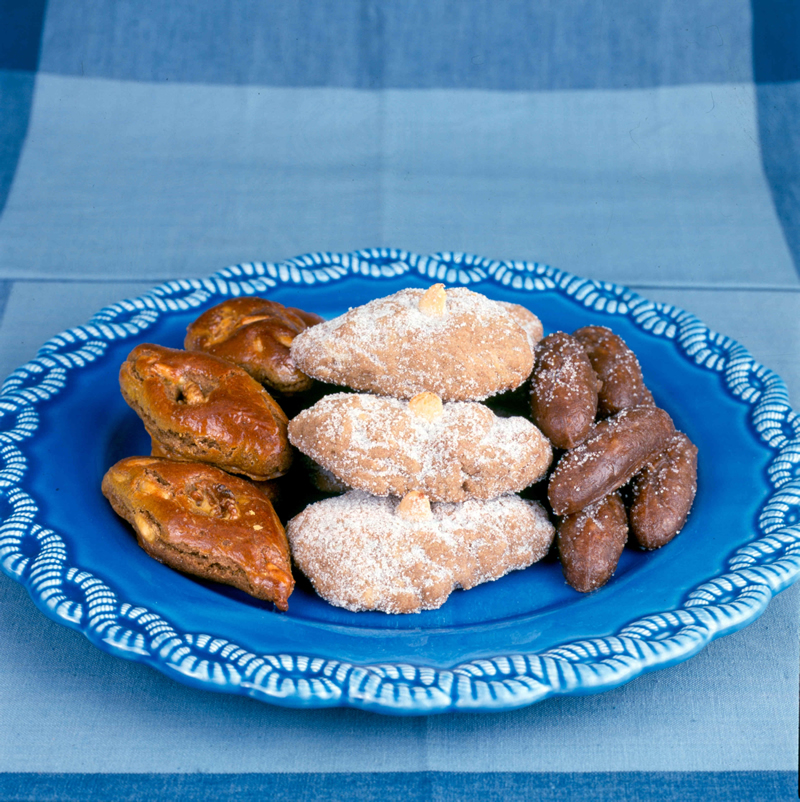
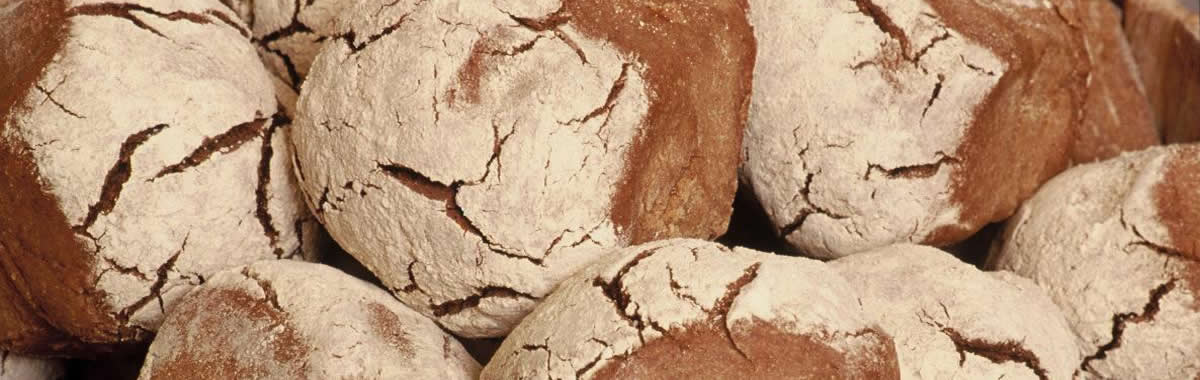
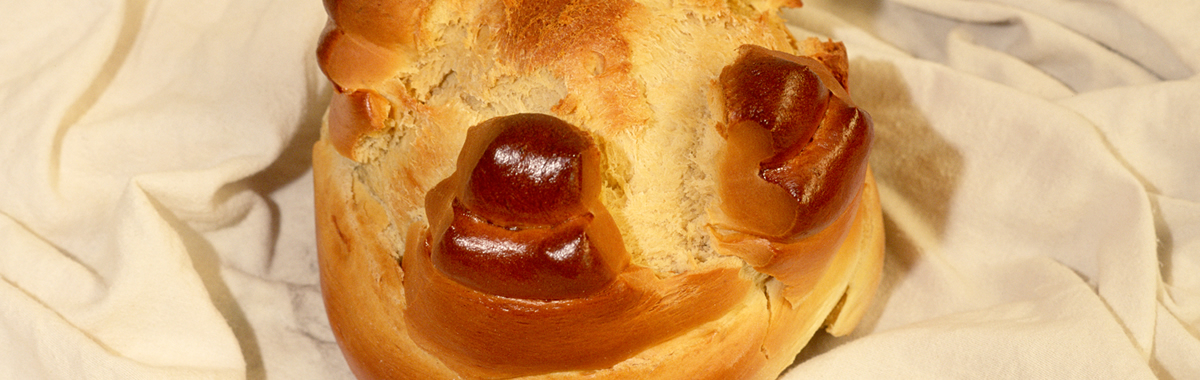
Description: The Broas de Almeirim are oval, weighing between 10 and 30 g, with a bright brownish color and a compact and soft texture. They are made with wheat flour, eggs, honey and/or sugar, olive oil, pine nuts, sweet wine or coffee, salt and spices (cinnamon, cloves and fennel). In the Broas de Torres Novas and Abrantes the dried fruits are usually walnuts and/or almonds and the sweet wine is replaced by coffee. In some of them, too, the flour consists of a mixture, in various proportions, of wheat and maize flour.
Region: Lisbon and Tagus Valley.
Variants: Broas de Torres Novas. Broas de Abrantes. Broas de Almeirim. Honey Bread.
Particularity: Small, oval, dark cakes, decorated with half an almond. They take sweet wine from the region and pine nuts.
History: Broas are cakes of special tradition at Christmas, and in some regions they are also cakes of All Saints' Day. Its name has a double meaning, because «receiving the breads» or the expression «que ricas broas» are ancestral phrases that actually mean, in relation to the former, to receive a gift that is usually money and, in relation to the latter, there is an irony since the expression means that, at a time when you should be receiving a gift, If there was any kind of accident or problem that will make you spend money, making the festivities poorer. At the national agricultural fairs of Ribatejo and at regional fairs, the broas are always present in a stall of products from the region.
Use: Consumed mainly at the time of the Easter, All Saints and Christmas festivals, they are still present in all fairs and pilgrimages in the region.
Know-how: Add the olive oil, sweet wine, sugar, honey, cinnamon, fennel and pine nut or walnut kernels or almonds, and bring to a boil. In a bowl is wheat flour with enough salt and scalded with the boiled mixture. Knead and tend the bread by hand, placing half an almond in each one to garnish (optional and can be replaced by a cherry). Spread with egg yolk and take to the hot oven for about 10 min.
Source: Produtos Tradicionais Portugueses, Lisboa, DGDR, 2001
