

 Português
  English (UK)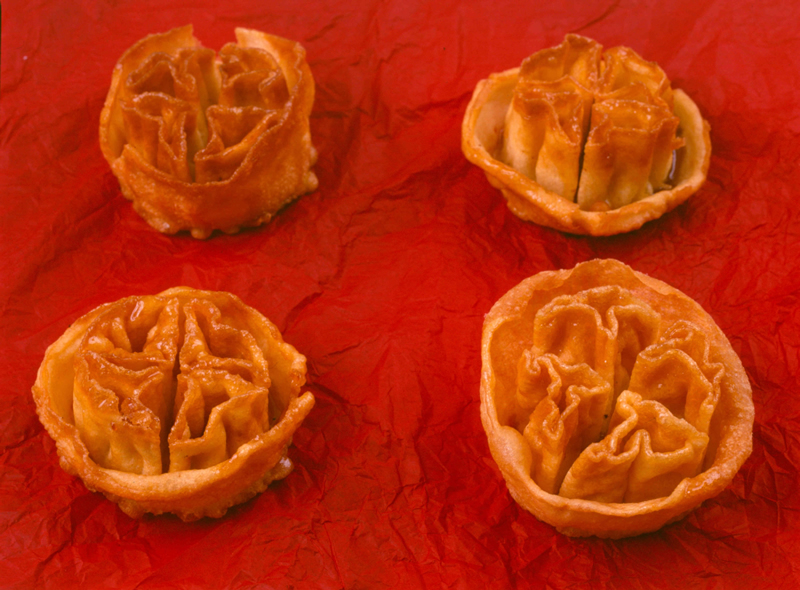
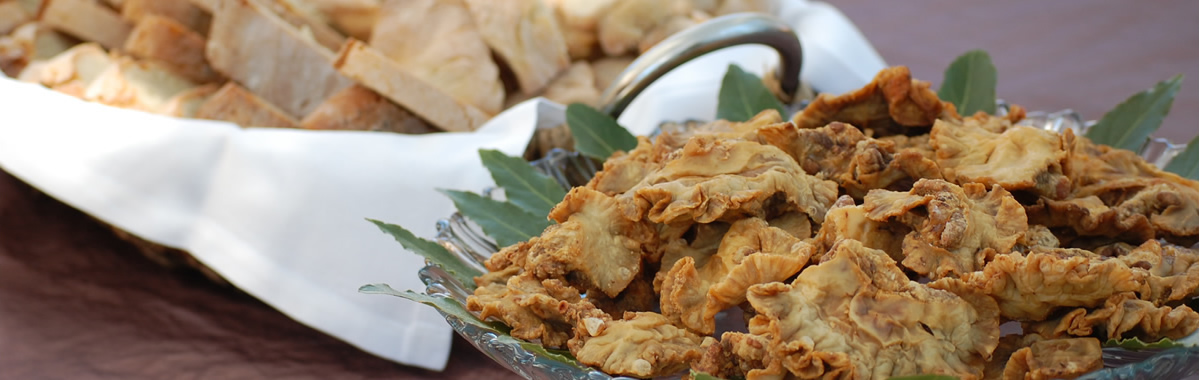
Description: These are cakes made with flour, eggs, sugar, Port wine, orange juice, salt and water, whose mixture is fried, using a metal mold with varied designs.
Region: Alentejo.
Variants: Floreta Doughnut.
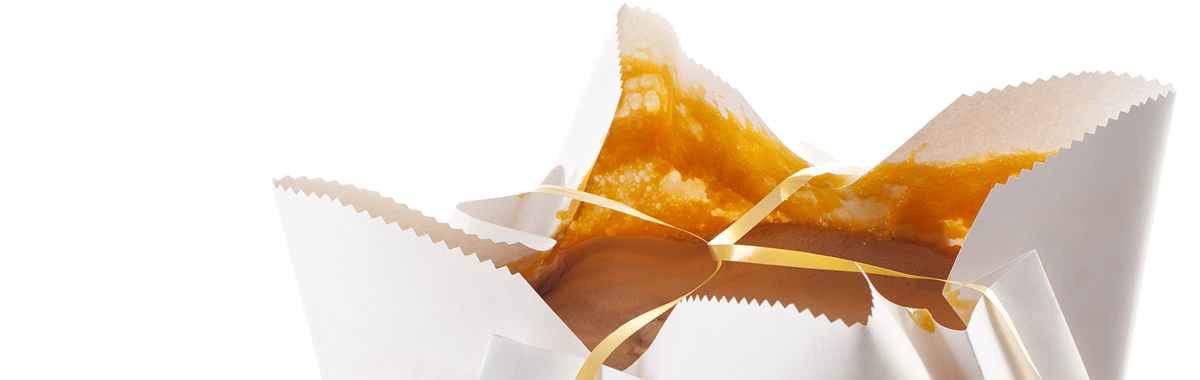
Special feature: Fried cakes (filhós), very thin and lacy, in the shape of flowers, animals or other geometric shapes, covered with sugar and cinnamon.
History: Sweets and fried cakes are typical of Christmas and Carnival in Alentejo. It is a popular tradition that filhós were made in the Alentejo on the Thursday of the comadres (Thursday before Carnival) to give gifts to comadres, family and friends. The Filhós de Forma are the ones that are made in greater abundance. After being fried, they were formerly drained in metal sieves, today replaced by white paper. The florette is an ornament in the shape of a flower. The shape consists of a thin, metallic stem, which ends in a base about 2 cm high and which has a round, quadrangular or any other shape, cut and laced, so that it looks like a flower or a butterfly, etc. Mrs. Joana Sobral, from Alcarias, Castro Verde, about 90 years old, He continues to make these and other doughnuts according to recipes he inherited from the family.
Use: As a treat. Widely used to gift friends at the time of Carnival.
Know-how: Add the ingredients and water until you get a soft dough that lets it rest. When frying, heat the oil, dip the pan in the hot oil and then in the dough but without letting it cover the top of the pan. Introduce it in the oil, shake if necessary for the donut to loosen and let it fry until golden brown. Serve sprinkled with sugar and cinnamon.
Source: Produtos tradicionais portugueses, Lisboa, DGDR, 2001
