






 Português
  English (UK)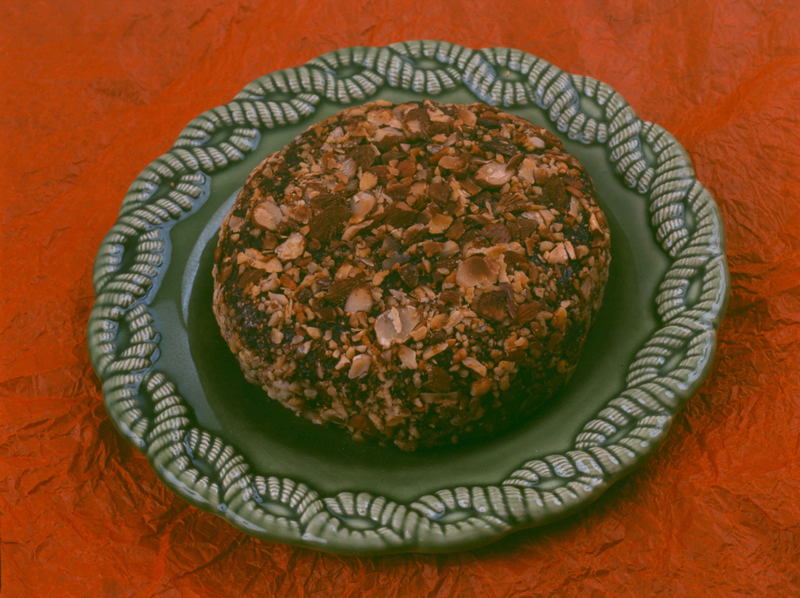
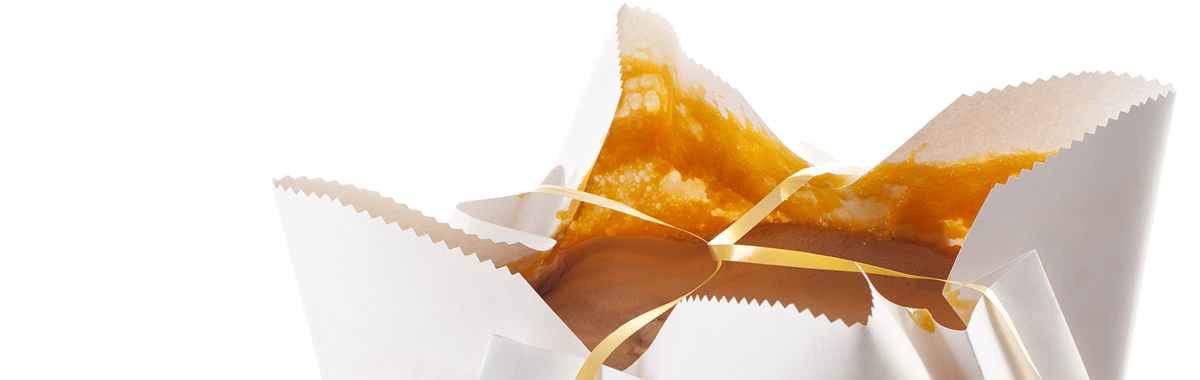
Description: Fig Cheese is prepared with layers of flattened figs, interspersed with layers of skinless almonds. It has a dark color (when cut it appears speckled with white) and weight and dimensions vary with the shape.
Region: Algarve.
Other names: May Cheese.
Particularity: Cake in the shape of a large cheese, made with figs and almonds, in layers.
History: Silva Lopes writes: «as well as several figures tinted with the same fig, almond kernels and pine nuts», which we believe to be a reference to the fig paste with almonds from which Fig Cheese is made. Thomaz Cabreira says that «this, like the other fig jams with the exception of Morgado de Figo — seems to us to be of popular origin and is justified by the traditional production of figs in this region». It is a common sweet in the Algarve's mountainous regions.
Use: As a treat, at any time of the day. Traditionally, it was eaten on May 1st, the day on which by tradition one went to the countryside.
Know-how: Figs and almonds are not roasted. Cut the dried figs flat horizontally and the peeled almonds into slivers. Inside a leaf belt or a strip of empreita, set in a slice on the floured bench, a layer of figs is arranged, covered with almond shavings and sprinkled with brandy. Continue like this until the mold is filled, ending up in a layer of figs. You put a weight on top and stay that way for months. Tradition-ally, it was made in the form of small cheeses of about 10cm in diameter, but, being a moldable dough, it can appear in the most var-ied forms: boat, map, stove, etc.
Source: Produtos Tradicionais Portugueses, Lisboa, DGDR, 2001
