


 Português
  English (UK)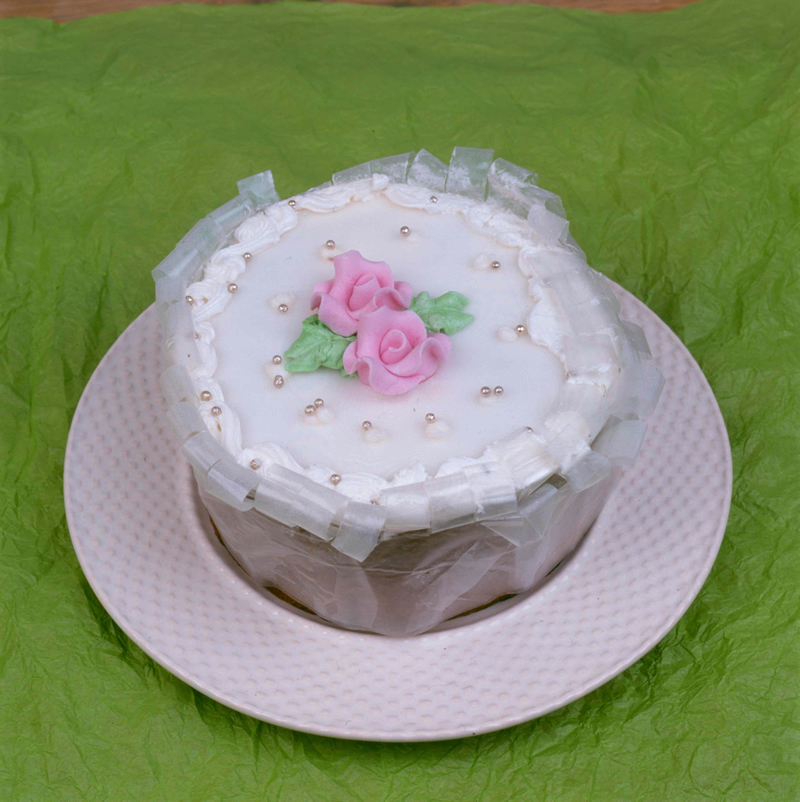
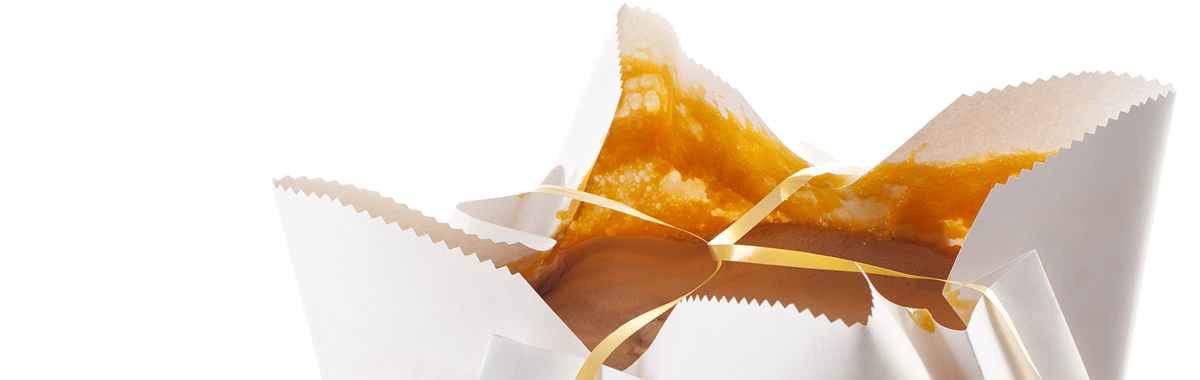
Description: The outer dough is made with almonds, sugar and water. The gila jam is made with pumpkin-gila and sugar in a 4/3 ratio. Egg jam is made with egg yolks and sugar in equal parts. The egg threads are made by boiling egg yolks in a sugar syrup. The cake is snow white or slightly golden if it is not frosted. It is about 22 cm in diameter and can be embellished with flowers or fruits made of the same dough, silver pearls and tissue paper fringes. It is usually 22 cm in diameter by 6 to 7 cm in height.
Region: Algarve.
Variants: Morgadinhos — Small cakes, of identical confection.
Particularity: Cheese-shaped cake, with almond dough filled with gila jam (chila), egg threads and soft eggs.
History: In the fifteenth century, the Infanta D. Maria of Portugal took with her, when she married Alexandre Farnese, a compilation of useful recipes. Among these recipes, although without mentioning the Algarve, the Infanta kept the recipe for the dough of the «Alcofa». The so-called fine sweets (very elaborate sweets, made from almonds and eggs) are characteristic of the coastal area of the Algarve, as opposed to the more rustic sweets of the mountain areas, made from bread dough or figs. By tradition, pastry shops did not manufacture these sweets themselves, ordering them from the socalled private confectioners. Thus, in Lagos, Mrs. Amélia Taquelim was one of the most famous confectioners and, out of curiosity, it is reported that her husband was the one who made the sweets. Later this lady opened a pastry shop with the name of Casa de Taquelim Gonçalves. The house is still owned today by the descendants of this family.
Use: Although it is used with a certain frequency, it is above all a party cake, the object of mimosa gift on certain occasions and, above all, at weddings and baptisms, where it is the central cake.
Know-how: With the finely grated almonds, sugar and water, a dough is made. About 2/3 of the dough is used to make the "carrycot", with a diameter of 22 cm and 3 fingers high. This carrycot is filled with 1/2 cup of gila jam, 1 cup of egg threads and 1 cup of ovos moles. Gila jam needs its own know-how. Thus, the gila is broken without the use of metal utensils and scraped with the hands so that it does not acquire a fishy taste. When the carrycot is stuffed, turn the edges inwards and, with the rest of the dough, make a lid for the carrycot. The union is disguised and the morgado is outlined with a strip of cloth (as is done for cheese). After two hours, brush with egg white and bake in a smart oven to acquire golden color. Traditionally, it was then covered with a powdered sugar porridge to make it very white. Even today, such a practice is used when the cake is intended for engagement or baptism parties. The cake is usually richly decorated with pastry flowers and silver pearls.
Source: Produtos Tradicionais Portugueses, Lisboa, DGDR, 2001
