

 Português
  English (UK)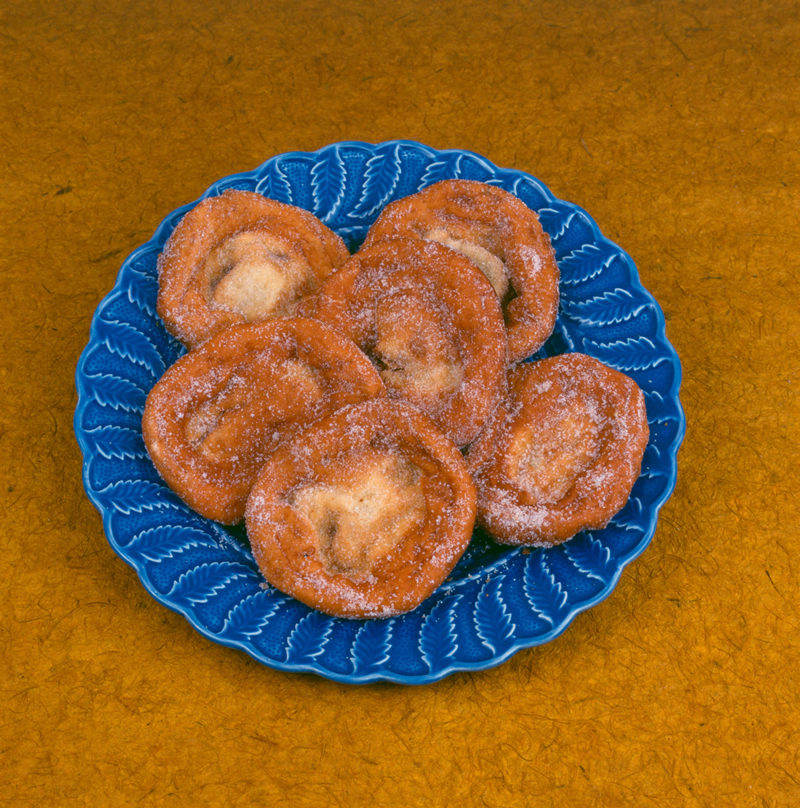
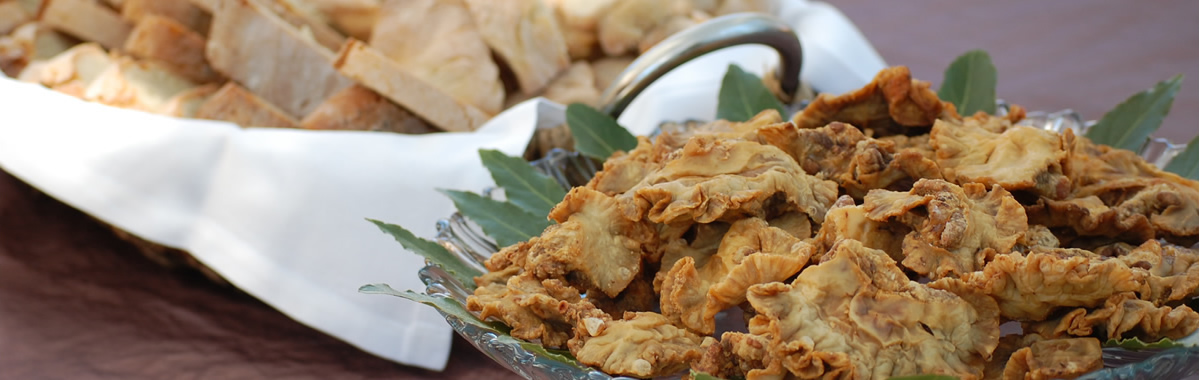
Description: The dough of this fried sweet is very light due to its preparation technique: well kneaded or kneaded, in a clay bowl. They consist of a dough of flour, beaten eggs, sugar, milk and baker's yeast. After being fried in hot oil, they are served sprinkled with sugar and cinnamon or a sugar syrup.
Region: Autonomous Region of the Azores.
Other denominations: Mal-Assadas. Melassadas.
Special feature: Fried cakes, with a cylindrical shape and a hole in the middle.
History: Malassadas are a specialty of São Miguel, typical of the carnival season. There are references to these fried foods in Augusto Gomes and in an article by Carreiro da Costa. About its name there are two versions: according to some they should be called Melassadas because in the past it was included in its composition sugarcane molasses, in this case the most correct spelling being that of Melaçadas. Others, a version that seems more accurate, argue that the name Malassadas originates from the process of making the sweet. Also in the traditional Carnival songbook there is reference to Malassadas: «The filozes that you put us / Bring them in a razoila / That we will put ourselves in them / Like pigs in poppy.»
Use: They are eaten and offered to friends during the Carnival season. At the Carnival balls and robberies, Malassadas were always served. Dr. Carreiro da Costa, in the aforementioned article, states: «... in cities and towns, the ostentatious gifts of malassadas and dreams are a very fashionable custom». Nowadays, Malassadas is still served during the Carnival festivities, on the island of S. Miguel.
Know-how: Mix the sifted flour with the sugar, make a hole in the middle, add yeast diluted in milk, beaten eggs and knead well, gradually adding the milk necessary to obtain a soft dough. It rises, then pieces of dough are stretched with the fingers, giving them the desired shape, after which they are fried. After frying, sprinkle with sugar and cinnamon.
Source: Produtos Tradicionais Portugueses, Lisboa, DGDR, 2001
