


 Português
  English (UK)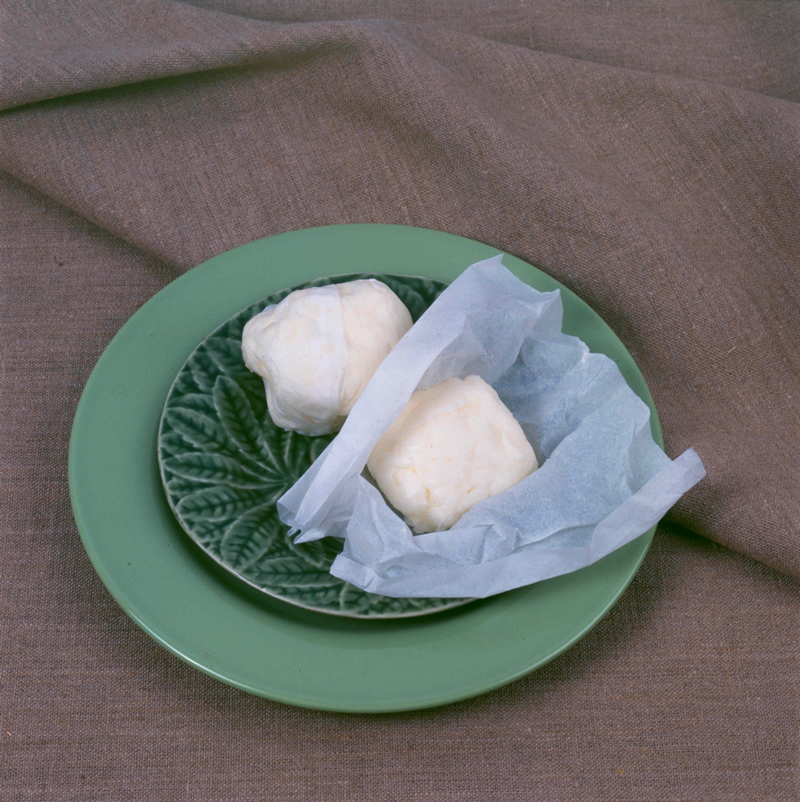
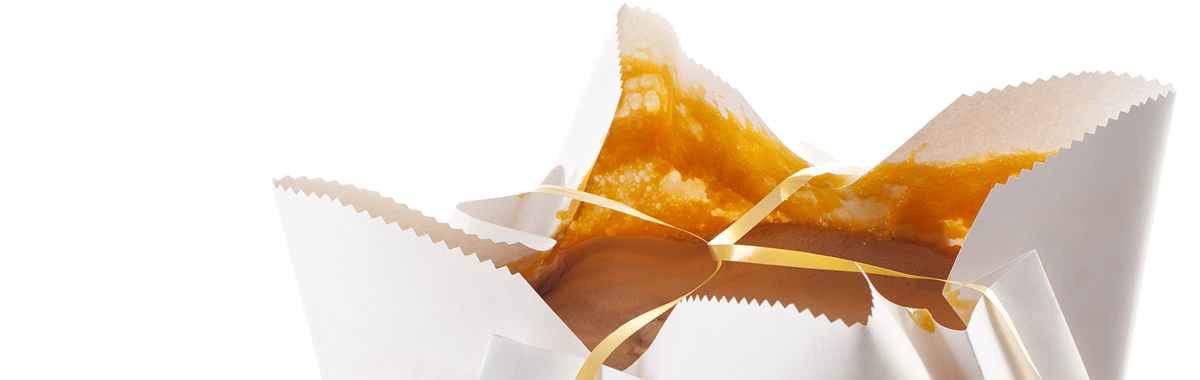
Description: Sheep's milk butter, very light yellow in colour and which owes its characteristic flavour to the qualities of the region's milk and the manufacturing process. This butter is a by-product of the manufacture of Azeitão Cheese — PDO.
Region: Lisbon and Tagus Valley.
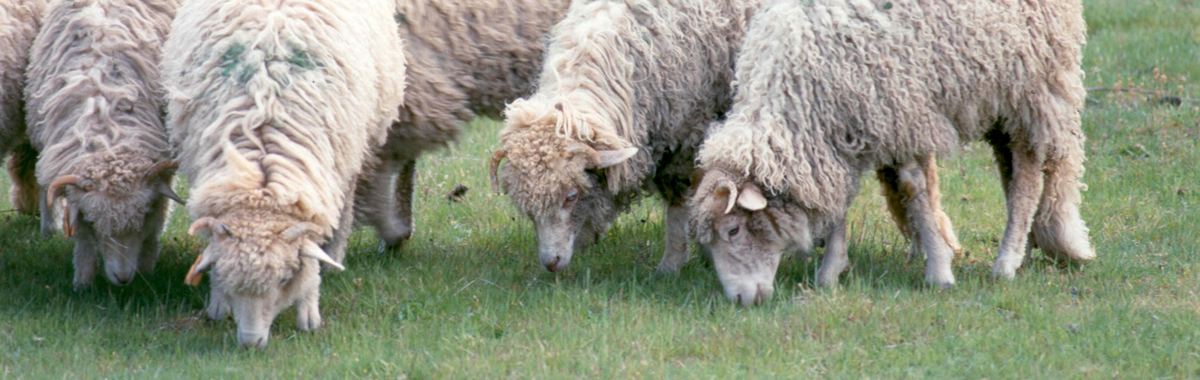
Particularity: Butter of very light color and characteristic flavor, resulting from the animal species and the pasture.
History: Owing, perhaps, to the process of making Azeitão Cheese, namely the salting of milk, the use of whey in the region of Azeitão has always been done through the production of butter from the fat obtained by skimming the whey. Rasteiro (1905) pointed out the originality of such a procedure compared to other cheese-making regions, as well as the unique characteristics of the product. Throughout the history of the production of Azeitão Cheese, sheep's butter has always been a constant, and there was even a place of concentration of the region's whey for the production of butter. The reduced production, combined with the recognized reputation, prevented its expansion to other regions of consumption.
Use: The usual of a butter.
Know-how: Sheep's Butter from the Azeitão region has always been produced from the fat obtained by skimming the whey from the manufacture of the cheese. It is, therefore, produced from raw milk coagulated with thistle flower extract, which gives it the characteristic flora that will act in the subsequent maturation of the cream. Originally, skimming was done by collecting, with a skimmer, the cream that emerged when the whey rested, after the cheese was made. Then the cream of two or three days was added and the butter was made. With the appearance of centrifugal creamers, some small cheese dairies started to use them in the skimming of whey.
Source: Produtos Tradicionais Portugueses, Lisboa, DGDR, 2001
