







 Português
  English (UK)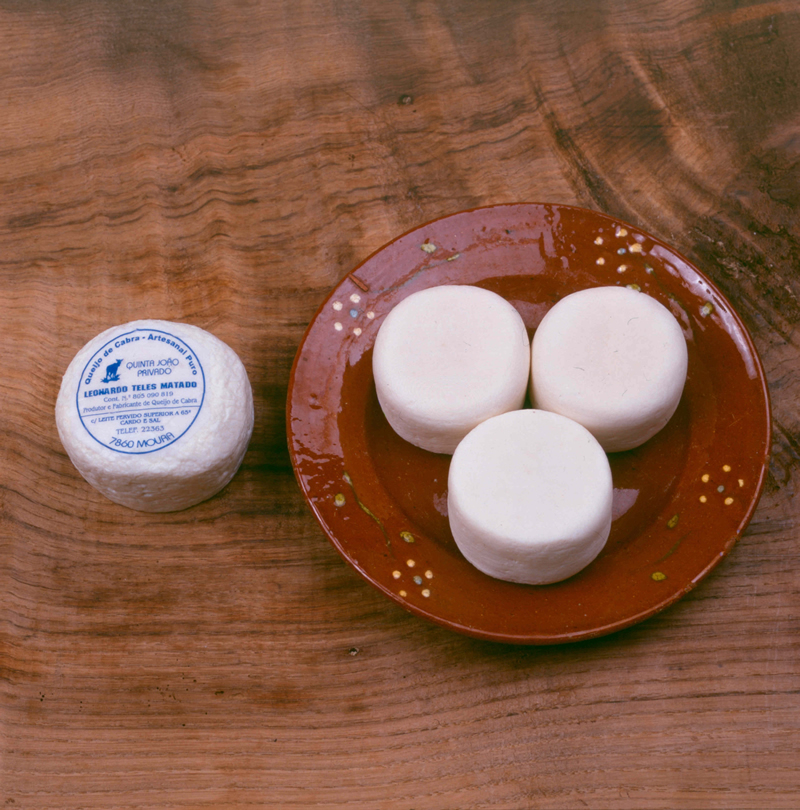
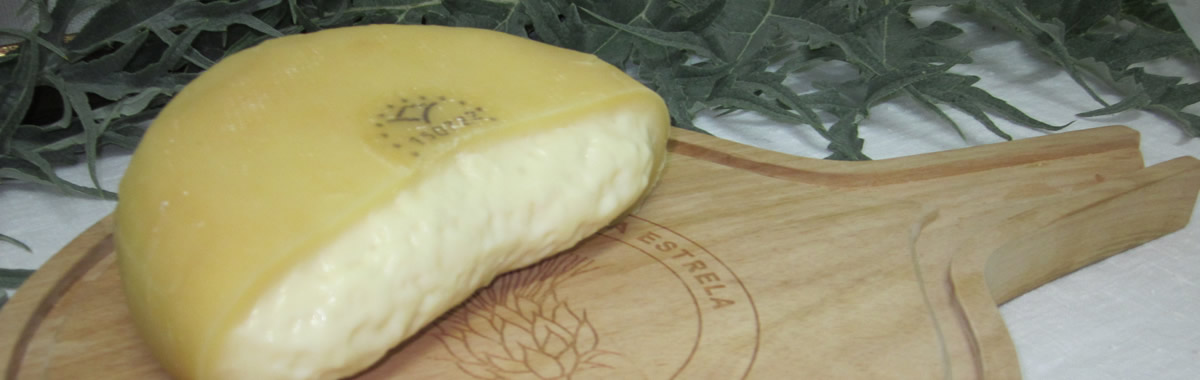
Description: Fresh Guadiana Goat Cheese has a white color and a cylindrical shape. The mass is more or less desorate and without eyes. It has a variable height between 3 and 5 cm and an approximate diameter of 8 cm, and the weight can vary between 150 and 250 g. Dry Guadiana Cheese has a brownish or grayish color and a cylindrical shape. Its dough, when cut, is as closed as possible, and the color is uniform. It has a height that varies between 2 and 3 cm and a diameter between 5 and 6 cm, with a weight ranging between 90 and 150 g.
Region: Alentejo.
Variants: Fresh cheese (75% of production) and dry cheese.
Particularity: It is a fresh or dry cheese made with goat's milk and of reduced dimensions. It has a white color, and may appear with a grayish or brownish hue in the dry variant.
History: Guadiana Goat Cheese has been manufactured since time immemorial, and has long been linked to the rural economy of the farms of Baixo Alentejo, since these cheeses were consumed either fresh (in nature or cooked — the traditional cheese soups) or after drying (being used in this form in certain agricultural houses as a supplement to the salary of the chieftains — shepherds — and other permanent employees of the farm). The surpluses of the dry cheese produced were sold on the occasion of the most important fairs in the Alentejo, such as Vidigueira (summer), S. João in Évora (end of June), etc. In the diary of a farmer from Serpa, dated 1886, he refers to the production of a dozen cheeses per week, in the period from March 26 to July 30, and more than 300 for deposit and consumption on the estates (the dry ones). Of note is the testimony of «Ti» Bule, a cheese producer in the Serpa region and born in 1900, published in a regional newspaper in 1971, who stated that «the production of goat cheese in the Serpa mountains (next to the Guadiana River) is still abundant».
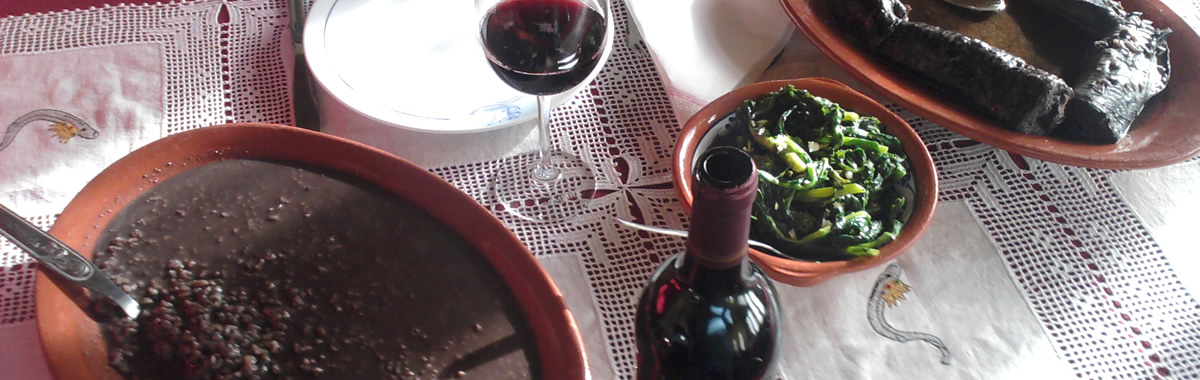
Use: Guadiana Goat Cheese is consumed not only at its origin but also in large cities, and fresh cheese is consumed up to 72 hours after its manufacture. Dried cheese is consumed mainly in the sum-mer and is traditionally preserved in olive oil or salt and placed in clay containers. It is used in the preparation of numerous regional dishes, especially in the preparation of the aforementioned soups, such as cheese broth with spinach, purslane, etc. Fresh cheese can also be used in the confection of salads (based on lettuce, tomato and other vegetables) or constitute an excellent starter, accompa-nied by the famous regional bakery. As for dry cheese, it is usual to consume it as a snack in the late afternoon or even at late suppers, taking advantage of the good wines of the region.
Know-how: Fresh cheese — The milk, after careful filtration, is boiled. It is then allowed to cool to about 38-40 ºC, at which point the thistle (Cynara cardunculus), which is the coagulant traditionally used, is added. After some time, draining is carried out with the help of porous cloths, and then the putty is placed in the cinchos. The addition of salt is made partly to the milk, at the time of placing the thistle, and partly outside, after removing the belt. Certain producers, however, choose to salt the cheeses only on the outside.
Dried cheese — The technology used in the production of this variant is identical to that of fresh cheese, the difference being that a little more salt is added and the cheeses are dried for about 30 days in cool, well-ventilated places called 'reeds'. Conservation is done in olive oil or clay pots, and the cheeses are covered with salt. Cheese is currently stored in glass containers, containing olive oil and, for ex-ample, some aromatic herbs from the region.
Source: Produtos Tradicionais Portugueses, Lisboa, DGDR, 2001
