







 Português
  English (UK)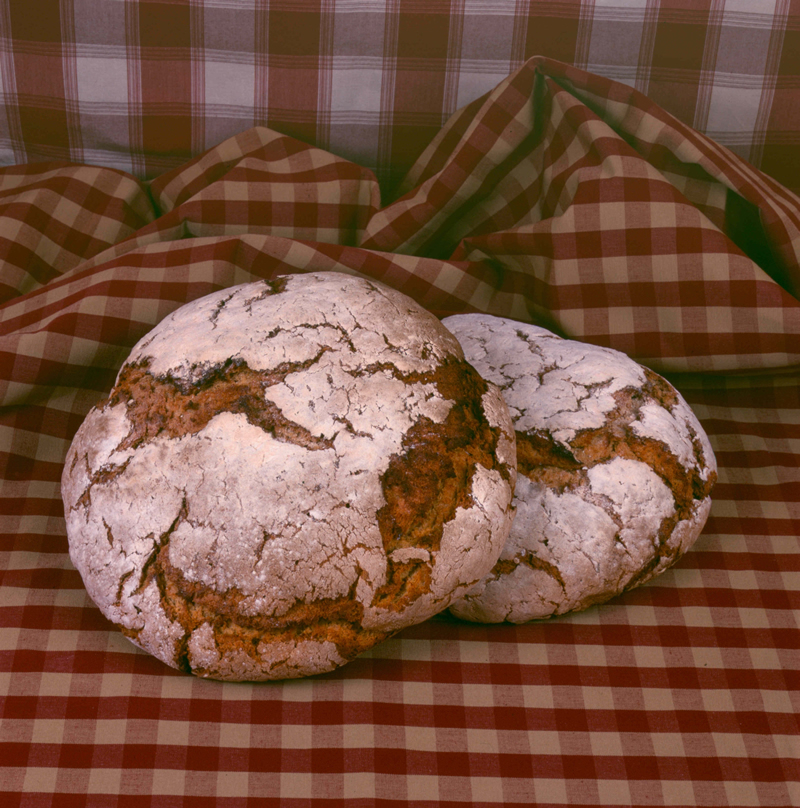
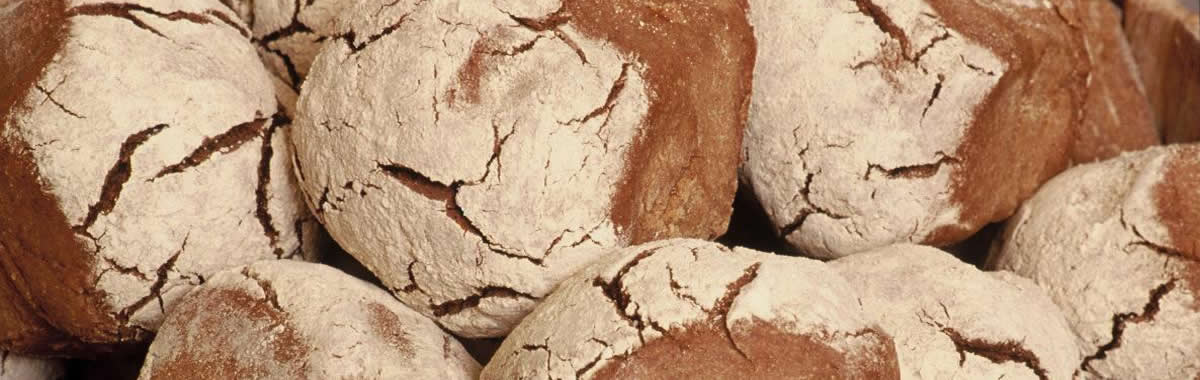
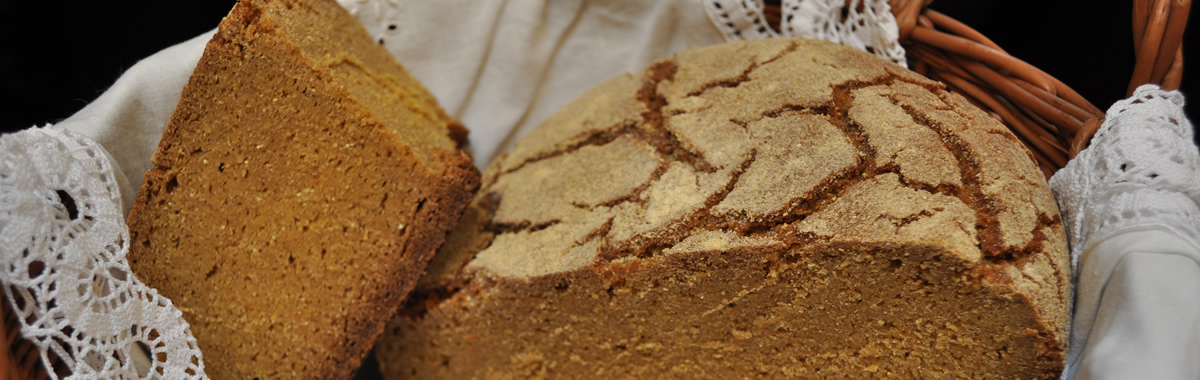
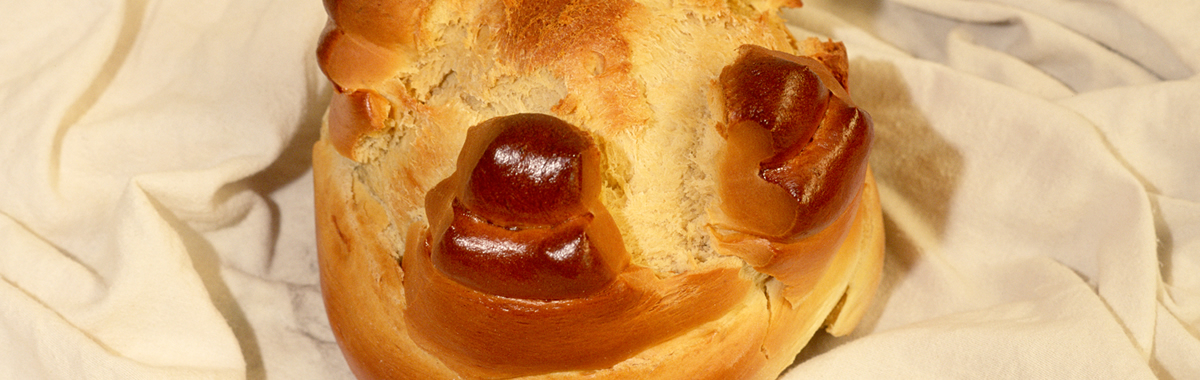
Description: Bread made with rye, wheat or corn flour, yeast and salt (1 handful). It is dark in color, acidic, slightly moist, with a thin crust and weight between 3 and 4 kg. It is cooked in a communal wood-fired oven. It has a rounded shape.
Region: North.
Special feature: Rye bread, dark and very acidic.
History: Father M. A. Bernardo Pintor states that D. Sancho 1 granted a charter to Castro Laboreiro «... when he went to Castro Laboreiro, the King received 2 loaves of bread from each house...». Maria Lamas says «... the same black bread is as large as the wheel of a cart, baked in the common oven once a month, and kept out of the reach of rats on the shelves of the "camboeira", suspended from the ceiling, on one side of the kitchen». The liturgy of bread is recognized in the type of "prayers" pertaining to the making.
Use: The bread is consumed with a meal, as a complement to the shepherd's or pegureiro's snack, and is also used in the preparation of «água de unto» (a kind of soup).
Know-how: The preparation of rye bread is based on a ritual with prayers for each phase, which are considered by the castrejas as fundamental. Locally, the preparation of bread is described as follows: «Sift rye flour. Sift the flour mile or triga. Mix the flours by hand. Make a "volcano" and fill with water and salt. Add the yeast. Move with your hand. Knead and fold the dough (straw).' As yeast, dough prepared in advance and left to rise for 12 hours is used. Legend has it that «the water or dew of St. Peter, when used to make yeast, does not let the bread go sour». Once the dough is ready, it is left to rise for 4 hours, covered with a linen sheet and a woolen blanket, with the following prayer: "S. Vicente add to you — S. Mamede let you know — Immaculate Conception make good bread with you." While the bread is rising, the communal oven is heated using heather wood in particular. When the oven is very hot, the coals are removed and with these on the shovel crosses are made saying: "Let the bread grow in the oven — The Good of God throughout the world — For sorceresses a horn — and for the grill of the oven", and the embers are thrown on the floor. Finally, we tend to bread that is placed in the oven. Traditionally, the oven door was sealed with beef manure to prevent heat loss. The baking time is 2 hours, after which the bread is stored in the 'camboeira'.
Source: Produtos Tradicionais Portugueses, Lisboa, DGDR, 2001
