



 Português
  English (UK)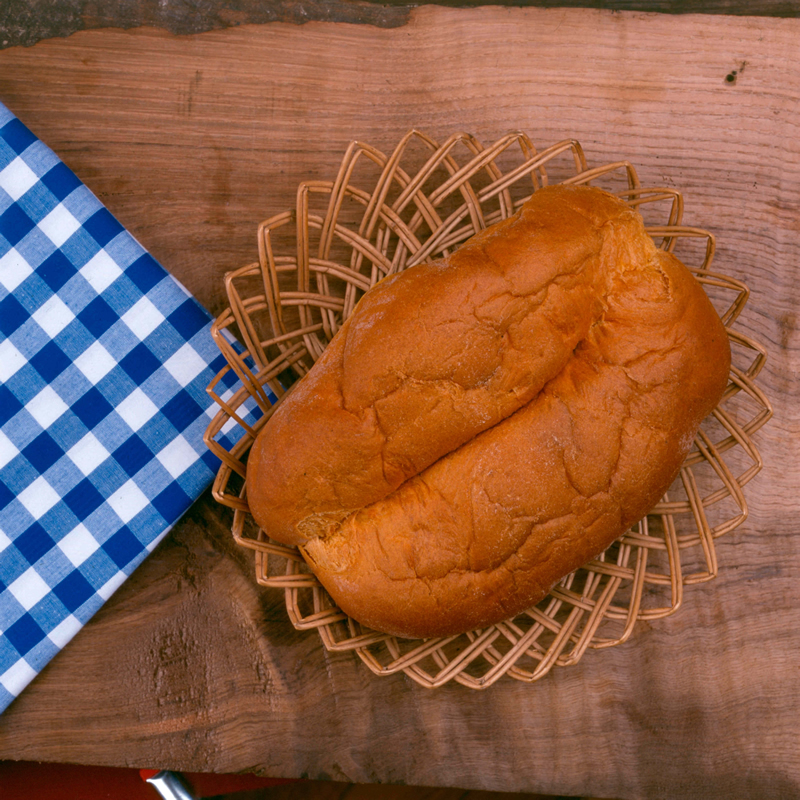
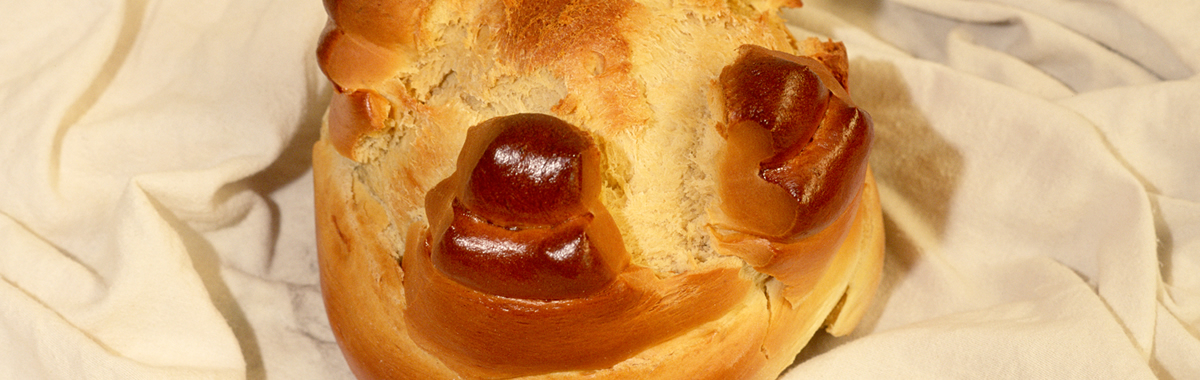
Description: Cake made from wheat flour and eggs. Its ingredients are flour, eggs, baker's yeast, brandy, olive oil, ascorbic acid, salt and water. It is manufactured with 0,5 kg, 1 kg, 1,5 kg and 2 kg and therefore with different sizes:
Length (cm) Width (cm)
large 45 to 55 45 to 55
medium 30 to 35 10 to 12
small 20 to 25 8 to 10
Region: Centro
Particularity: Cake that can be presented in three different sizes and has a long shape and fold. When cut into slices, they have the shape of an imperfect heart.
History: This folar cake is another variant of the gift usually offered by godparents to their godchildren at Easter time, in addition to Santoro Bread. In a memoir he says: «Godparents always give their god-children egg cakes... this tradition happening throughout the district of Guarda». Aquilino Ribeiro also goes along with this tradition, stat-ing ‹‹... on the toweled chest of the purest linen is presented the folar...».
Use: As a food, especially of a regional nature, as it must be consumed before 48 hours after its manufacture.
Know-how: In this region the bread is mainly made of corn or rye. In ancient times, wheat flour was mainly used in the manufacture of cakes. The folar cake is a cake that also has baking traditions. Mix the ingredients and knead with water for a long time to obtain a very elastic dough; Cover the kneading container and place it in a warm place. Then it is allowed to rise and tend to cakes that are placed on trays to feign (leaven) and then bake in a wood oven, like bread. When tendering, long cakes are made with a fold, which will give the slices their characteristic shape — an imperfect heart. They can be brushed with egg. The oven temperature, which should be 250 °C, has a lot of influence on the final appearance of the product.
Source: Produtos Tradicionais Portugueses, Lisboa, DGDR, 2001
