


 Português
  English (UK)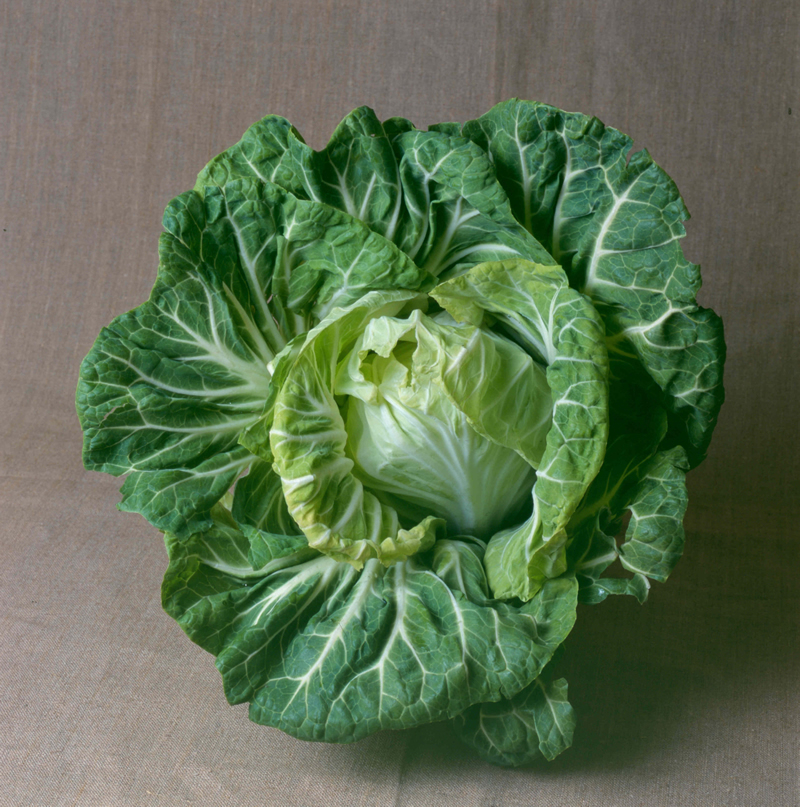
Description: Cabbage is the edible part (foot, leaves and eye) of the Portuguese cabbage, Brassica oleracea, Tronchuda variety. It is a large plant, weighing 8 to 10 kg, with a diameter of less than 90 cm, thick to medium and long stem, large leaf scar, 10 to 12 petiole leaves and large rounded, elliptical or reniform leaf, green to light green in color, with a subwhole or crenate margin, with many white veins on both pages and very large central pseudo-cabbage, ellipti-cal or irregular. It's a very tender kale.
Region: North.
Other denominations: Cabbage Tronchuda. Toncha cabbage. Cabbage butter.
Particularity: Central pseudo-cabbage, surrounded by well-developed open leaves, with recognized sapid and aromatic characteristics.
History: For a long time, the production of this cabbage has been carried out in the floodplains of the rivers that cross the Alto Tâmega region. It is not affected by frosts, but takes advantage of them, as the texture changes and makes it less fibrous. Canon Dr. António Figueiredo says: «... the leaves grow in large rounds like a corolla, involving other layers of leaves that overlap, curled in the form of a long shell, mimosa and whitish, closing in a large and blind eye» and also: .the importance comes not only from the high and proper quality of these plants but from the scarcity of horticultural food in the area of constant and strong frosts». J. Manuel Cotelo Neiva also writes: «It is the day of Christmas Eve. On this day everyone fasts, or rather, pretends to fast, because they eat the usual dinner and in the evening they supper the cod with potatoes and the stewed cabbage, a dish that can never be missed.
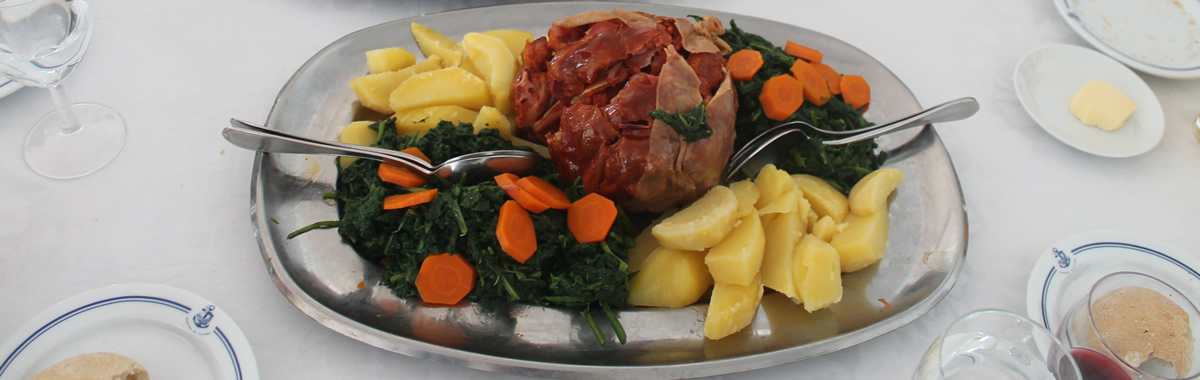
Use: Widely consumed throughout the year meals, being of special appreciation on Christmas Eve, where you cannot miss to accompany cod and boiled potatoes.
Know-how: Grown in all backyards of homes and also in vegetable gardens, for sale. This cabbage is very influenced by the climate: the best yields are obtained at low temperatures and in fertile, humid soils. The indicated soils must have a high water retention capacity but also sufficient drainage to avoid excesses. The date of sowing (from August to December) and the length of the growing period interfere with the nutritional properties of cabbage. Traditionally, sowing was done in alfobre, and then moved to a permanent place in October. Irrigation was done with the help of «storks» (noras or buckets) to remove water from the wells.
Source: Produtos Tradicionais Portugueses, Lisboa, DGDR, 2001
