

 Português
  English (UK)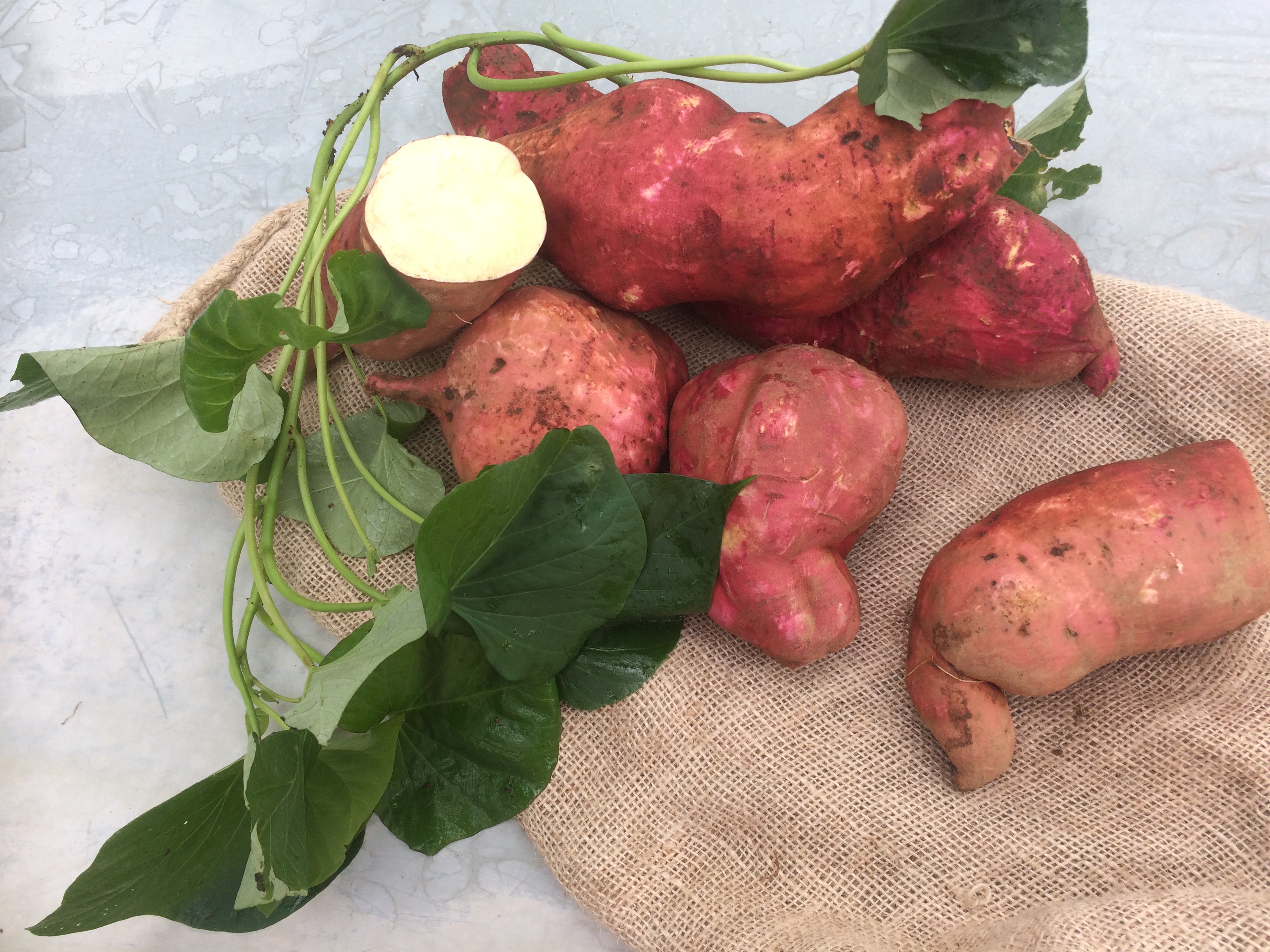
Description: It is the tuberculous root, edible and sweet-tasting of the Ipamoea Batata (L.) Poir, also called the island potato.
Region: Autonomous Region of the Azores.
Particularity: Piriform, elongated, purplish in color.
History: The cultivation of sweet potatoes in the Azores was introduced from the beginning of the settlement, as can be concluded from an article by Gaspar Frutuoso in Saudades da Terra, which reads: «... There are also many potatoes on these islands that are raised underground in beds... which began on this island in the caza of the said Sebastião Pires, by the way in which the sugar canes began; because when a ship from the Indies of Castella came to the said Vila Franca, and some passengers took to his house, and gave his wife some small, slender and withered potatoes... From there some people began to take some branches that they planted in the backyards, with which they will soon multiply...».
Usage: Sweet potatoes are eaten cooked, in soups and broths, or baked in the oven, in which case they can be served as a dessert. It is customary to make the so-called sweet potato jam, with the potato cooked with sugar, which is a much appreciated recipe. In an article by Gaspar Frutuoso in Saudades da Terra we can read about the use given to potatoes: «... and in the same land it serves as food for the poor people, and as a delicacy for the rich by eating roasted or boiled potatoes."
Know-how: Sweet potatoes are propagated from brolhos that develop on the adventitious buds of tubers or pieces of tubers. The tubers are harvested on clear sunny days, when well ripe, and then cured at a temperature of 26 to 32 ºC for a time that depends on the variety. After curing, it will be stored between 7 and 13 °C.
Source: Produtos Tradicionais Portugueses, Lisboa, DGDR, 2001
