







 Português
  English (UK)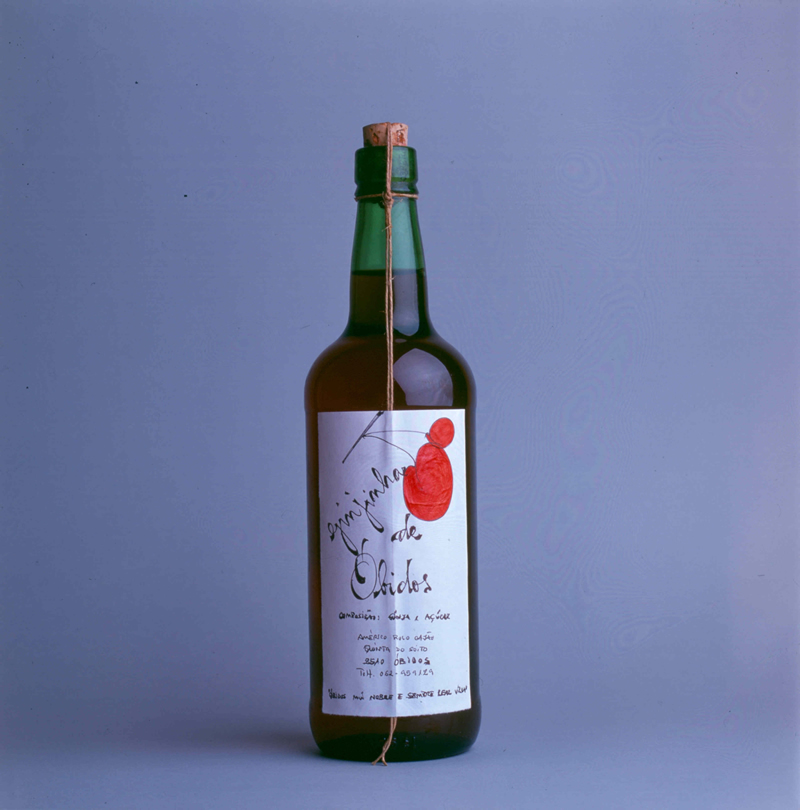
Description: Fruit liqueur, dark red in color, usually with visible fruits.
Region: Lisbon and Tagus Valley.
Other denominations: Ginjinha de Óbidos.
Variants: Sour cherry with them (liqueur with the sour cherries) and sour cherry without them (liqueur only), sometimes flavoured with vanilla or with a cinnamon stick.
Special feature: Liqueur with a strong flavour, intensely scented with the special, bittersweet flavour of sour cherries.
History: It is believed that its origin dates back to the seventeenth century and may be the result of the research of some alchemist friar who, in the culinary cult and the like, fertile in the various convents that existed in the region, took advantage of the large quantities of fruit that existed and arrived at the refinement of the liqueur known today. It didn't take long for the liqueur formula to spread and from the outset the Obidenses began to make it competitively, at a family level, making a point of presenting the most illustrious guests with the best sour cherry. With the awakening of Óbidos to tourism, about 30 years ago, a born storyteller and with great commercial vision, named Montez, opened the first bar in the village, which soon became the meeting point of a wealthy class, with the ginja being catapulted into the commercial circuit as a house drink. With the passage of time, new bars opened and then began the competition between them for the possession of the best sour cherry. More or less alcoholic, more or less sweet, more or less acidic, the Ginja de Óbidos is an ex libris of the town of Óbidos that lends fame to the famous «Óbidos nights». As a curiosity, a fanciful recipe that made the liqueur famous. «The following ingredients are placed inside a castle surrounded by walls: 11 churches; a significant number of whitewashed houses with bars of various colors; a few Moorish chimneys; 2 dozen cobbled streets; 1/2 dozen squares and a pillory. It is stirred continuously, sprinkled with flowers. After creating a certain consistency, a set of traditions is added that is enough and a few historical acts to taste. It finally stirs very well and is allowed to rest for eight centuries. It must be drunk in the appropriate place, with or without them, at room temperature.
Use: As an aperitif or digestive, at any time of the day or night.
Know-how: Being made by private individuals and each one keeping its secret, the following can only be indicated: it takes very ripe sour cherries, from the region — especially from the village of Sobral da Lagoa — sugar and brandy of very good quality.
Source: Produtos tradicionais portugueses, Lisboa, DGDR, 2001
