

 Português
  English (UK)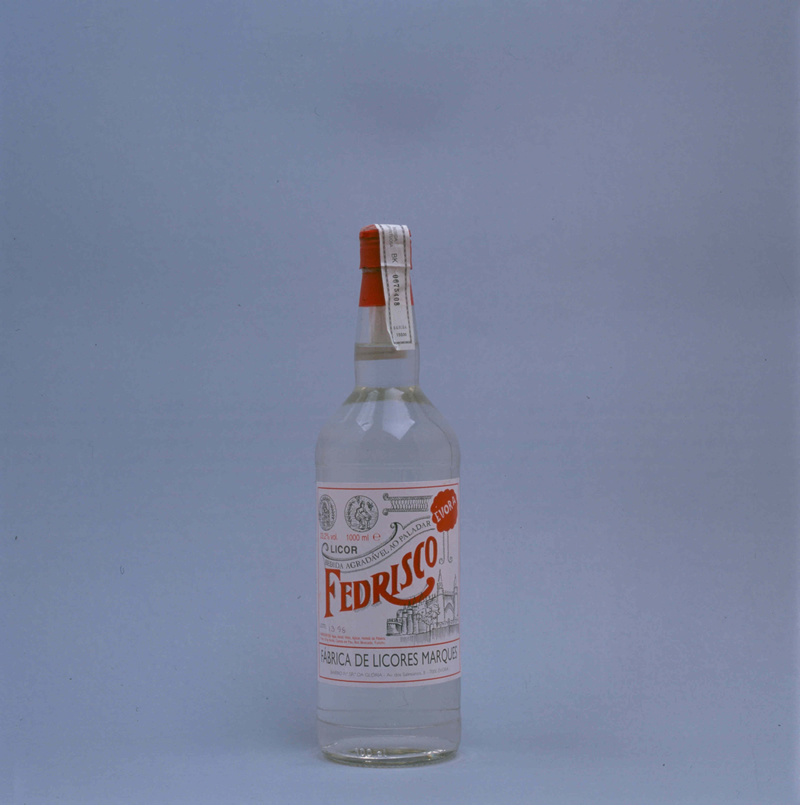
Description: Liqueur prepared with wine brandy, alcohol, aromatic plants and sugar syrup. White colour, very specific aroma and taste, characteristic of the plants that compose it and which are its secret. Presented in clear glass bottles, containing 1 litre, labelled with the name of the product.
Region: Alentejo.
Particularity: Liqueur of white color and specific flavor, slightly anised.
History: Conceived by Mr. Adelino Marques Brandão, one of the last workers of the factory of the late Fausto Mourão, «father» and manufacturer of the disappeared «Pedrisco» and businessman in the city of Évora in times gone by. «Every Eborense knows (pass the claim) the Fedrisco Liqueur which, in addition to the similarity of flavor and even name, is a substitute for the disappeared "Pedrisco", whose registered and noncommercialized trademark made it impossible to continue this drink after the death of its manufacturer, Fausto Mourão.» Curiously, the «Pedrisco» appeared, it seems, in identical circumstances, as it originated from the famous «Granito», which began to be manufactured around 1882, due to the initiative of a great industrialist from Évora. It was in 1873 that it all began, when the firm Ramos & Carvalho was established in Évora. A few years later, the already appreciated «Granito» won an honorable presence at the Lisbon Agricultural Exhibition, when it was awarded a silver medal, which gave credibility in the country to this great stomach that, according to the Alentejo journalist João Rosa, the friars of the Charterhouse already offered, as an exquisite treat, to the visitors of the convent. Although oral tradition (as cited by Mrs. Ana Mota Vacas) refers these liqueurs to the one previously made by the Capuchin friars of Évora, it was not possible to find written references. The notice granting registration of the trade mark 'Pedrisco' (No 12185) is published in the Government Gazette No 113 of 24 May 1910.
Use: As a digestive, after meals.
Know-how: It is the product of the direct distillation over a mixture of alcohol at 90°, brandy and aromatic plants to which common syrup (water and sugar) is later added. The liquor is then filtered and bottled.
Source: Produtos Tradicionais Portugueses, Lisboa, DGDR, 2001
