










 Português
  English (UK)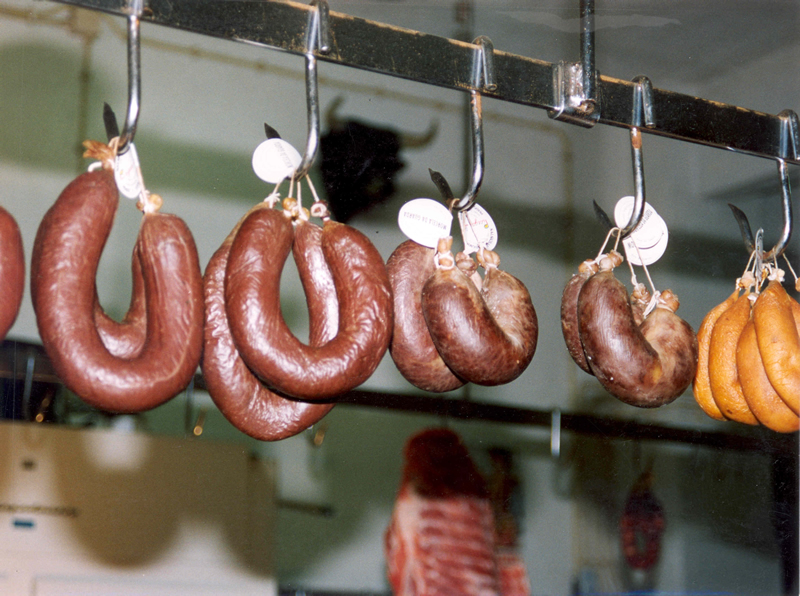
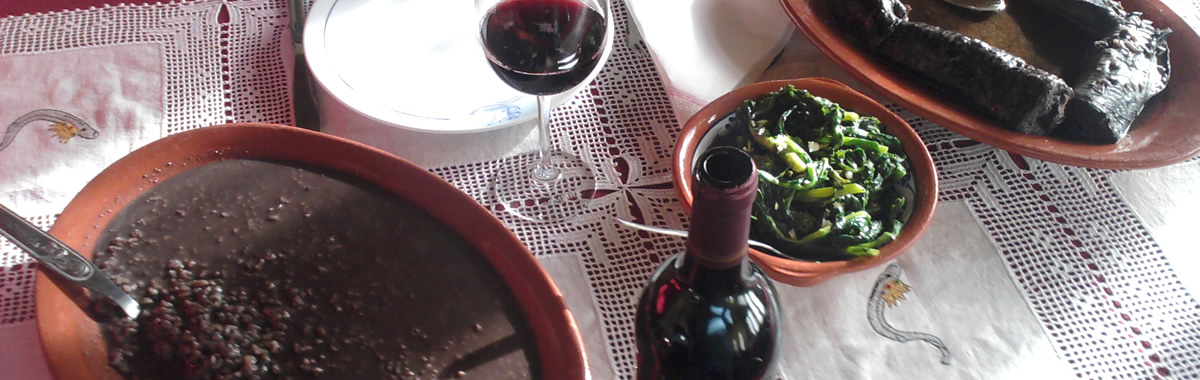
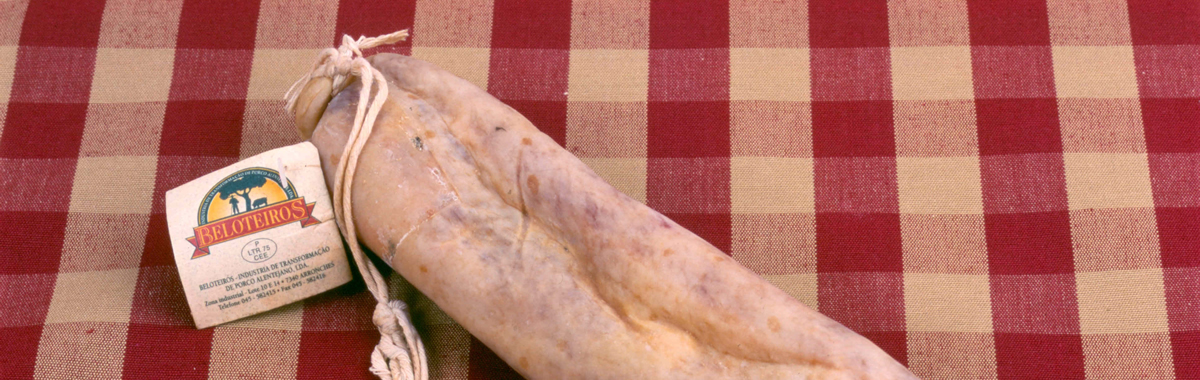
Description: Traditional sausage made from pig's blood, bread, on-ion, rendered pork fat and condiments (salt, parsley and sugar or honey). It comes in two formats: longitudinal, 20 to 25 cm long, 5,5 to 6,5 cm in diameter and 350 to 450 g in weight, and horseshoe-shaped, 35 to 45 cm long, 2,5 to 3,5 cm in diameter and 300 to 400 g in weight.
Region: Center.
Particularity: Sausage in pork casing, with a very dark color, very smooth exterior texture and sweet flavor. It has a longitudinal or horseshoe shape. When cut into slices, it has a homogeneous and compact appearance.
History: This sausage is traditional and intended for regional consumption. The format, the sweet taste, the homogeneity of the paste, etc., allow connoisseurs to assess the genuineness of the product. The Sweet Black Pudding are typical of Beira Alta, as in cookbooks of recognized suitability some of them are mentioned, as is the case of the Sweet Black Pudding of Oliveirinha. Jarmelo is closely linked to the «loves» of D. Pedro and Dª Inês de Castro, as it was «Senhor de Jarmelo» a friend of the king who was one of the perpetrators of the crime. D. Pedro could not have him killed but or-dered the village to be razed, which was only repopulated by D. Fernando.
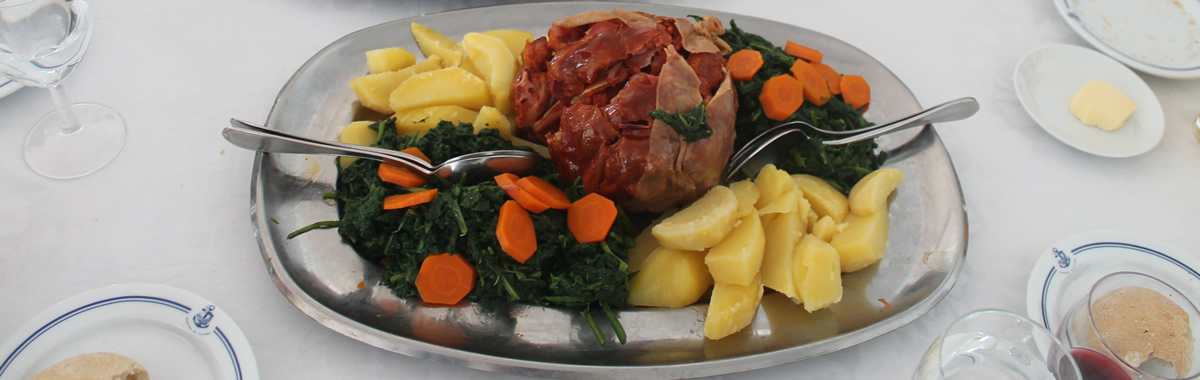
Use: Cooked and toasted on the fireplace grill or fried serves as a snack; when accompanied by vegetables or potatoes it serves as a starter or main course.
Know-how: The bread is cut into slices and crushed with the blood. This pasta is joined by brownish onions, chopped parsley and rendered pork fat. Season with salt and sugar or honey. Fill pork guts, which are tied at the ends, and go to the smokehouse (with oak and chestnut wood) until cured.
Source: Produtos Tradicionais Portugueses, Lisboa, DGDR, 2001
