





 Português
  English (UK)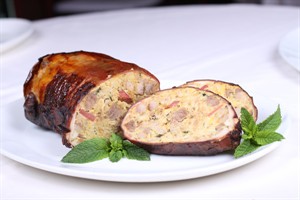
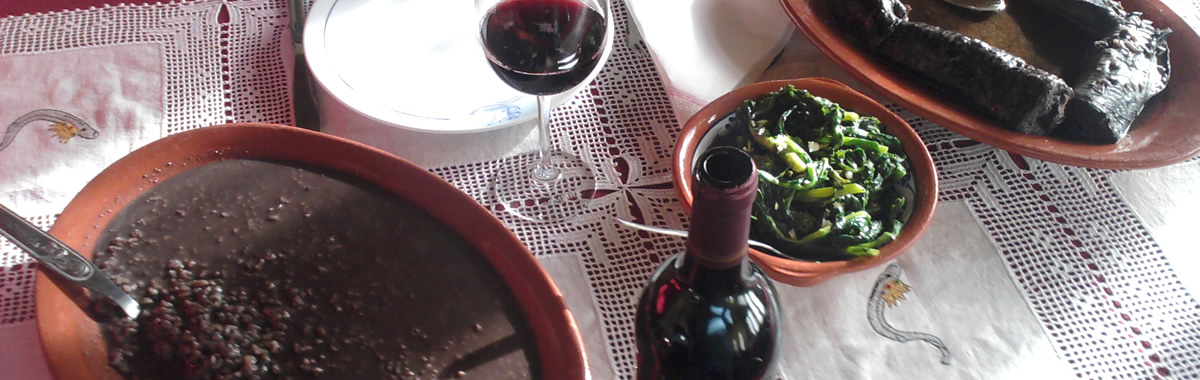
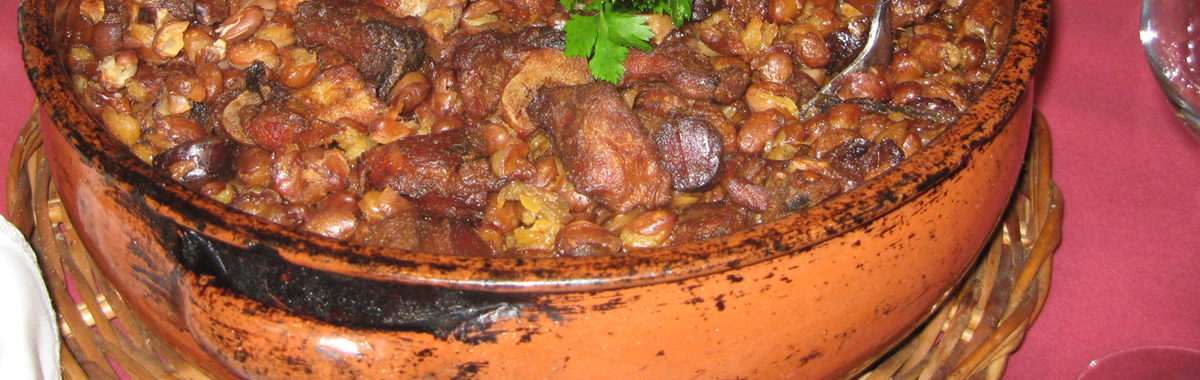
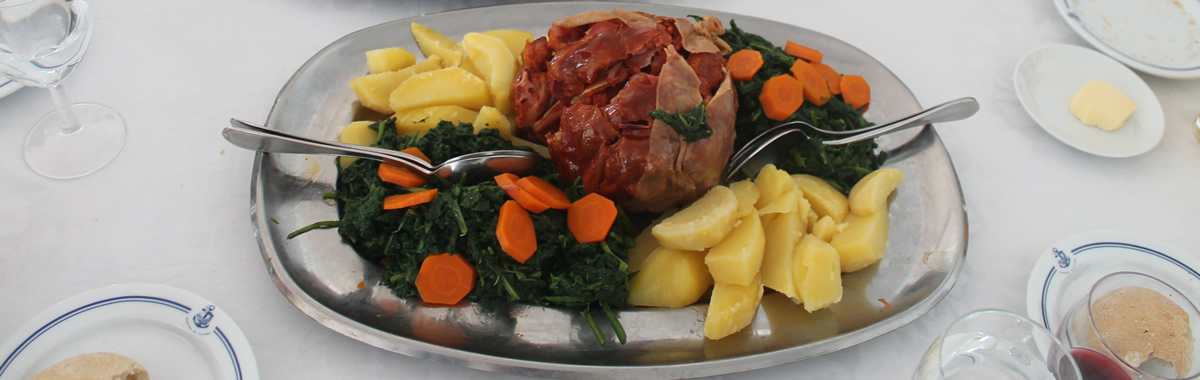
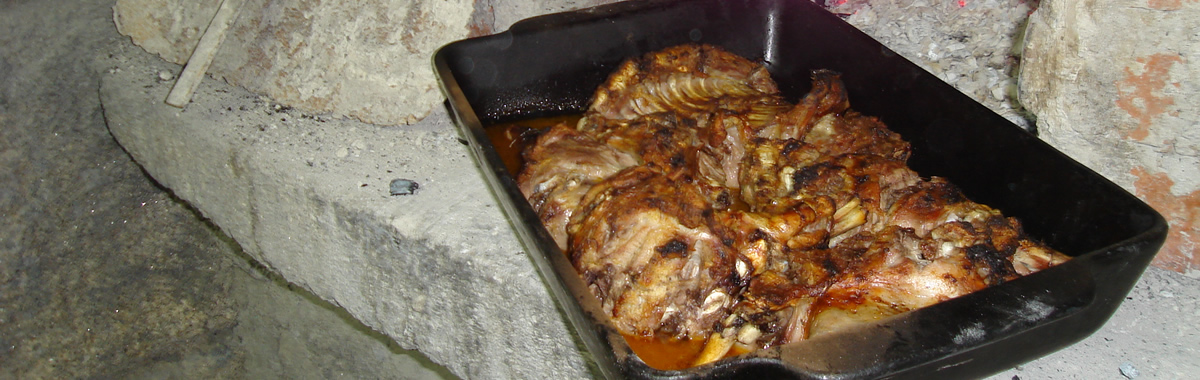
Description: Bucho da Sertã is a bagged made from stuffed pork belly, sewn manually with an appropriate line, filled with a mixture in which pork, pork ham, chicken meat, meat chorizo, egg, wheat bread and carolino rice predominate, and ingredients such as onion, olive oil, orange juice, white wine, salt, garlic and parsley. Optionally, cloves, pepper, chili, bay leaf and nutmeg can be used. The outer coating is greased with a mixture of red pepper paste and vegetable and/or animal fat.
Special characteristics: Bucho da Sertã must be roasted in the oven before being consumed. The exterior color of the Bucho da Sertã varies between reddish (before diaper rash) and brown (after diaper rash). The internal colour is heterogeneous, with the reddish tones of ham and chorizo, the yellow of the egg yolk, the white of the chicken and egg white, and the green of parsley.
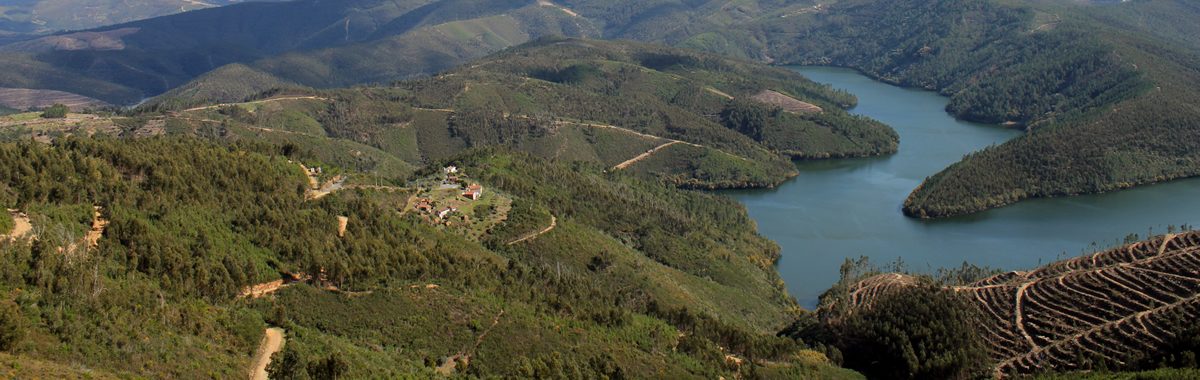
Region: Center.
Ingredients used: Pork, pork ham, chicken, beef chorizo, eggs, wheat bread, carolino rice, onion, olive oil, orange juice, white wine, salt, garlic, parsley, cloves, pepper, chilli, bay leaf, nutmeg and paprika.
Preparation: The belly is selected and prepared (washed, scraped, disinfected and partially sewn with a needle and thread). At the same time, the meat for the filling is deboned, cut and sautéed. The rice is then cooked in the broth in which the meats were cooked. Then add the meat and rice in the same container and add the bread, orange juice, eggs, parsley and other condiments. The filling thus prepared is used to fill the belly to about 3/4 of its capacity, after which it is closed, using thread and needle again. Before going to the oven, spread the Bucho da Sertã with a sauce based on vegetable and/or animal fat and condiments, in order to allow a slow roasting that will result in a crispy "skin".
Know-how: The know-how associated with the production of this product is evident in the various stages of its production, most of which can only be done manually, which makes it impossible to automate it.
Forms of commercialization: Restaurants and various commercial establishments.
Product availability throughout the year: All year round.
Product history: The limited food availability that has occurred in the region over time has led the people of Sertagina to have to look for work outside it. Returning to the region of origin, they sought to reconcile the eating habits brought from other regions (mainly from the Alentejo) with the products available in the region. This resulted in a product that allows the products of the slaughter to be used to the limit (belly and pork) and to take advantage of the other local products (chicken, bread, eggs, oranges, onions, garlic, olive oil, white wine, etc.).
Representativeness in local food: Traditionally consumed on festive days, Bucho da Sertã has been progressively integrating the day-to-day life of Beira cuisine, and is currently recognized throughout the country.
Source: DGADR, based on elements provided by the Association of Producers of the Municipality of Sertã – AProSer
Photo: Sertã City Council
