









 Português
  English (UK)
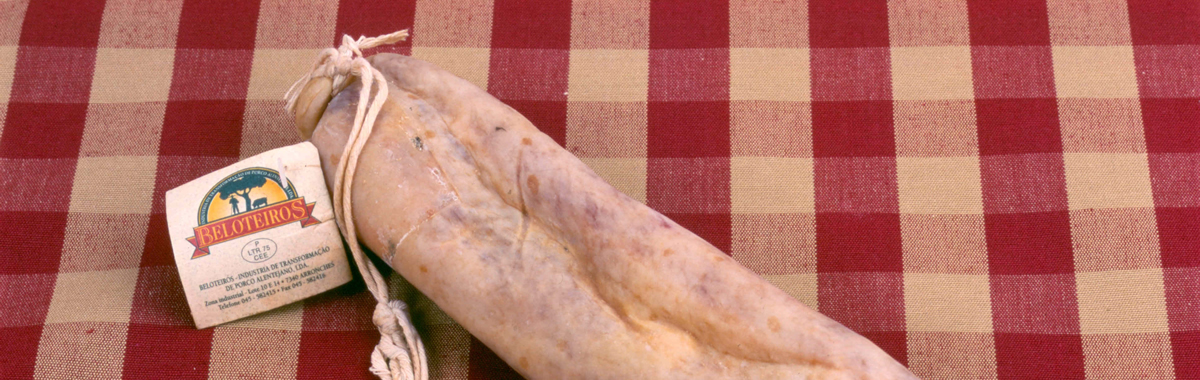
Description: Straight and wide pork casing, stuffed with whole pork tenderloin, seasoned with salt and allspice. The sausage is dried in a ventilated place for a few days. It has a cylindrical shape, with sharp ends and knotted with cotton thread. Weight not exceeding 300 g, with a length of 25 cm and a diameter of 5 cm. It has a very dark red color.
Region: Alentejo.
Particularity: Sausage made exclusively with whole pork tenderloin, using salt and allspice as the only seasonings. It is a non-smoked sausage.
History: The production of sausages in Alentejo lands is lost in the memory of time. Since there are men, pigs and acorns in such lands, there has been an absolute need to ensure the preservation of meat throughout the year, given the importance of this product in the diet. There is a Portuguese proverb that says: «Necessity sharpens ingenuity.» Thus, the populations developed their know-how based on the need to preserve all pork meat and the existing favorable climatic conditions. The quality of Alentejo sausages depends much more on the quality of the meat used than on the complication of the recipe. However, over the centuries the population has been refining the know-how of its traditional sausages. This Paio de Lombinho is proof of this, since it is composed only of meat (the finest and most valuable of the pork), seasoned exclusively with pepper and salt, disregarding other seasonings that would modify its aroma and flavor. This product is considered one of the 'touchstones' for gauging the real qualities of processors, given the exceptional nature of its preparation and the fact that each pig provides only two tenderloins.
Use: Paio is usually eaten raw, not cooked, as a snack, snack, or meal supplement. It is considered sacrilege to cook this type of sausage, given its quality and the commitment to its manufacture.
Know-how: The whole tenderloin is salted for a few hours. It is hung to drain for about 6 hours, place allspice grains in a row, fold the meat slightly over the grains, stick it in the pork casing (the straightest and widest), squeeze and tie. Place in a dry and ventilated place (for example, in a chimney without a fire) to dry. If it is intended for long-term consumption, it is preserved in jars, covered with olive oil or lard.
Source: Produtos Tradicionais Portugueses, Lisboa, DGDR, 2001
