






 Português
  English (UK)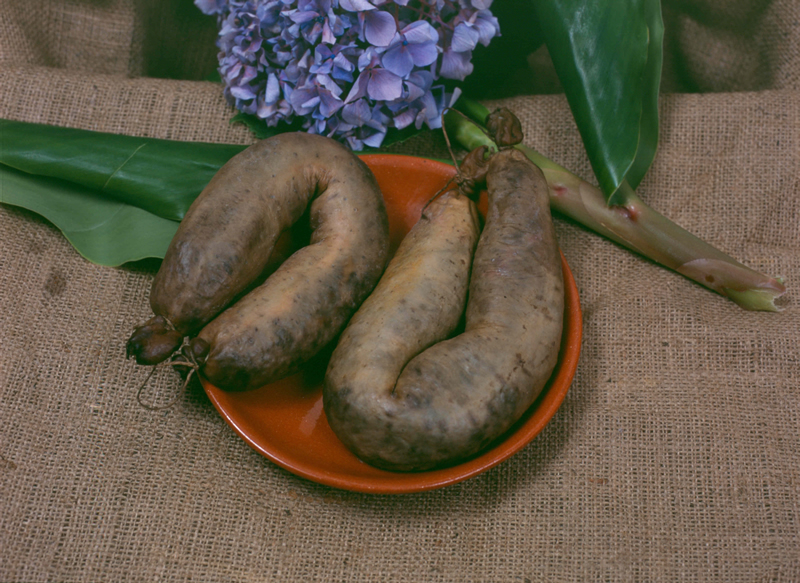
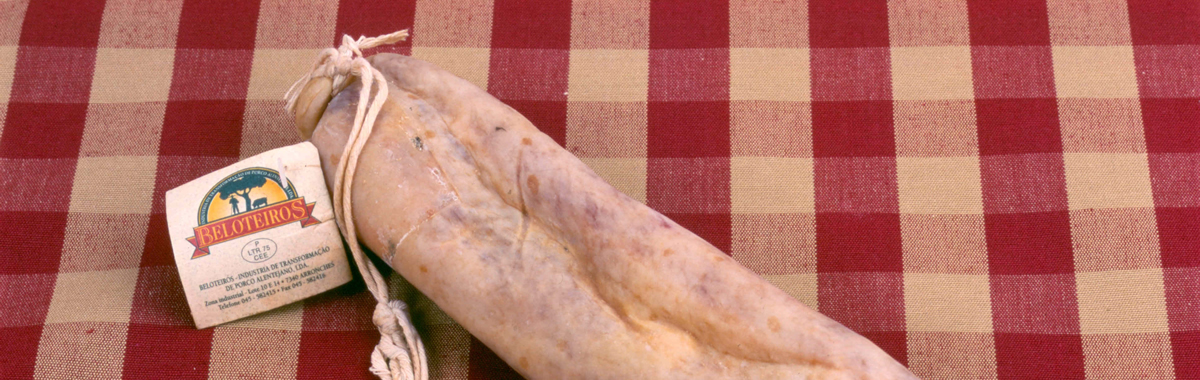
Description: Sausage prepared with blood, parsley, chopped onion, boiled rice or wheat roll, cinnamon powder, ground pepper, pieces of bacon, shreds. corn or wheat flour, intestine fats, garlic, vinegar, salt, paths and cloves. They are smoked and smothered in glass jars or crockery covered with lard. They have a weight that varies between 100 and 300 g, with an average dimension of 20 cm, but can vary between 05, 15 and 443 cm.
Region: Autonomous Region of the Azores.
Variants: Sarapatel, also known as sarapaté (Água de Pau), debilho, serabulho, serrabulha and beleguim de frigideira (Água d'Alto). The difference is to add more onion, parsley and spices to the filling of the black pudding. Black pudding on the other islands has a different seasoning.
Particularity: Filled with blood, smoked, stuffy and with a sweet, very special taste.
History: Black pudding is linked to the festivities of the winter months (Christmas, New Year, Three Kings and Carnival). Families are concerned about having these prepared in their homes to satisfy the gluttony of the Janeiras singers. In the repositories of popular songs that are sung at this time there are many references to black pudding. For example: "'O s'nhor master of the house / 'You are right, it is not crooked, / Here we have had the news / that you have killed your pig!' We come here to sing / a taleigo of songs, / we now want to know / If the black pudding 'is cooked.»
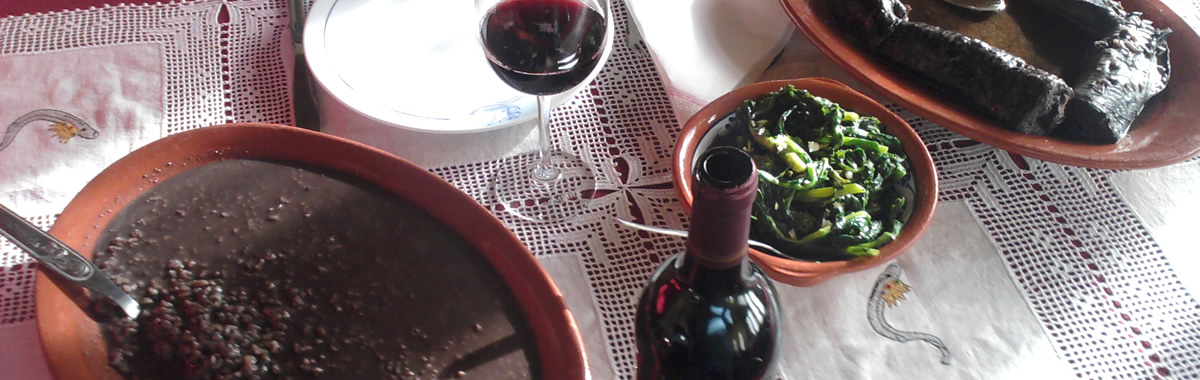
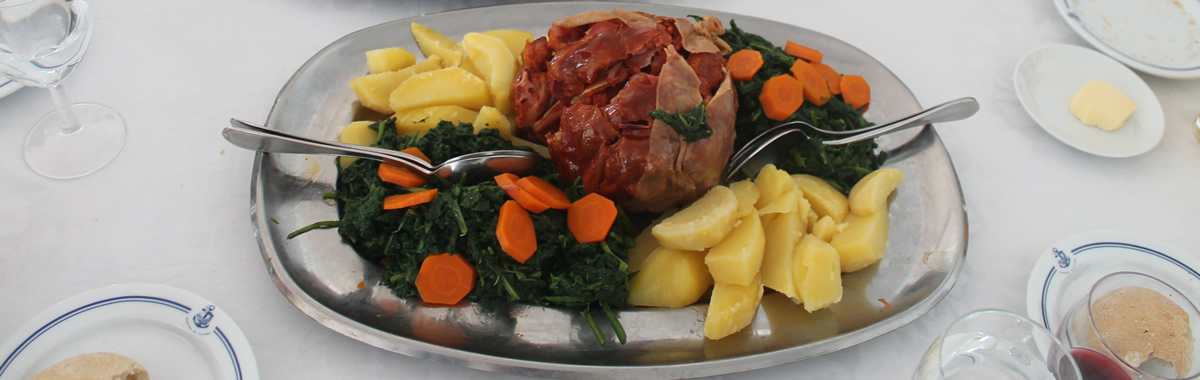
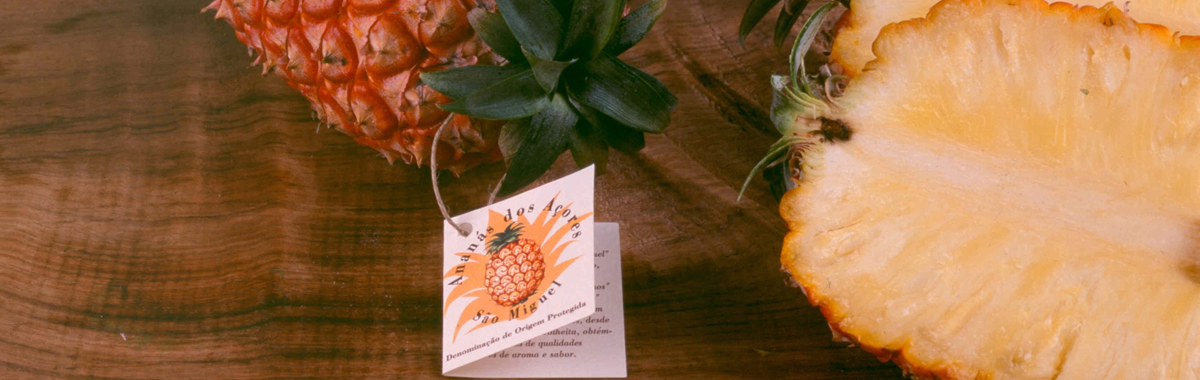
Use: They are usually eaten fried in lard, oil or baked in the oven and accompanied by white rice, sweet potato or boiled yams. In S. Miguel it is customary to serve black pudding with pineapple or orange, which facilitates its digestion and is one of the typical dishes of the island.
Know-how: The preparation mentioned in the description is introduced into well-washed casings with sour orange. Tie the casings and stick four or five at a time in a wicker and cook them in salted water, hanging from the mouth of the pot, aerating them, that is, taking them out two or more times. They then move on to the smokehouse or chambaril placed in the chimney. At the right time, the sausages end up going to the jars, to be covered with the pig's own lard.
Source: Produtos Tradicionais Portugueses, Lisboa, DGDR, 2001
