


 Português
  English (UK)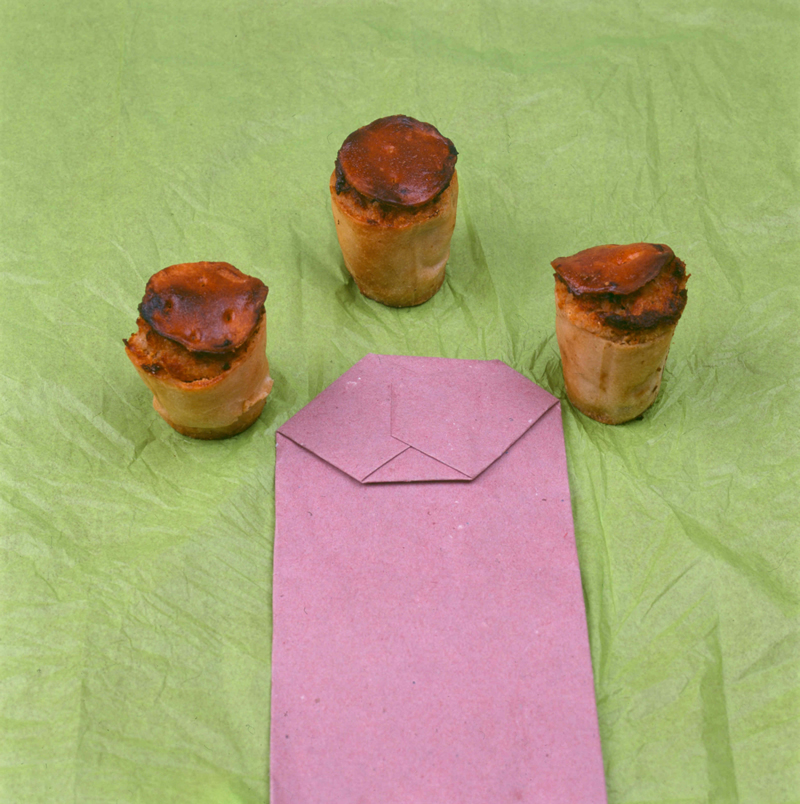
Description: Pastel with about 6 cm in top diameter and 4 cm in height. These dimensions have varied a lot, because initially the pies had a much larger diameter and today (and for decades now) pastries appear with a height (from 6 to 7 cm) greater than the diameter. They are also sometimes made with tender dough instead of puff pastry. The filling is made from chicken, bacon and egg yolks, and seasoned with onion, white peppercorns, parsley, salt, cloves, vinegar and lemon juice.
Region: Alentejo.
Particularity: Pastry in the shape of a puff pastry box, with a conical trunk shape, covered with a slice of the same dough and filled with a chicken-based preparation.
History: Pies are part of the typical Alentejo recipe, especially in the Baixo Alentejo. As early as 1939, during the Universal Exhibition of the Portuguese World, they were cited in response to a survey by the Ethnography Section. Also in the 50s, the contest promoted by Radiotelevisão Portuguesa and the National Secretariat of Information was won by Mrs. Maria Palmira Palmamira (deceased more than a dozen years ago, at about 90 years old) with her recipe for chicken pies.
Use: As a snack or as a main course for a meal.
Know-how: A puff pastry is made, which is reserved, with flour, salt, butter or margarine and water. Cut the chicken into pieces, wash it and cook it (until the meat separates from the bones) with onion, bacon, parsley, cloves, peppercorns, salt, vinegar and enough water to cover the ingredients mentioned. Remove the meat from the bones and chop it well with the bacon. The sauce, from which the condiments have been removed, is taken to be refined and the yolks are added. Let it cook slowly, rectify the seasonings and add lemon juice. Roll out the puff pastry and cut slices with which the molds are lined, previously greased with lard. Fill with the filling, cover with another slice of dough, adhering to the edges, brush with egg and bake.
Source: Produtos Tradicionais Portugueses, Lisboa, DGDR, 2001
