




 Português
  English (UK)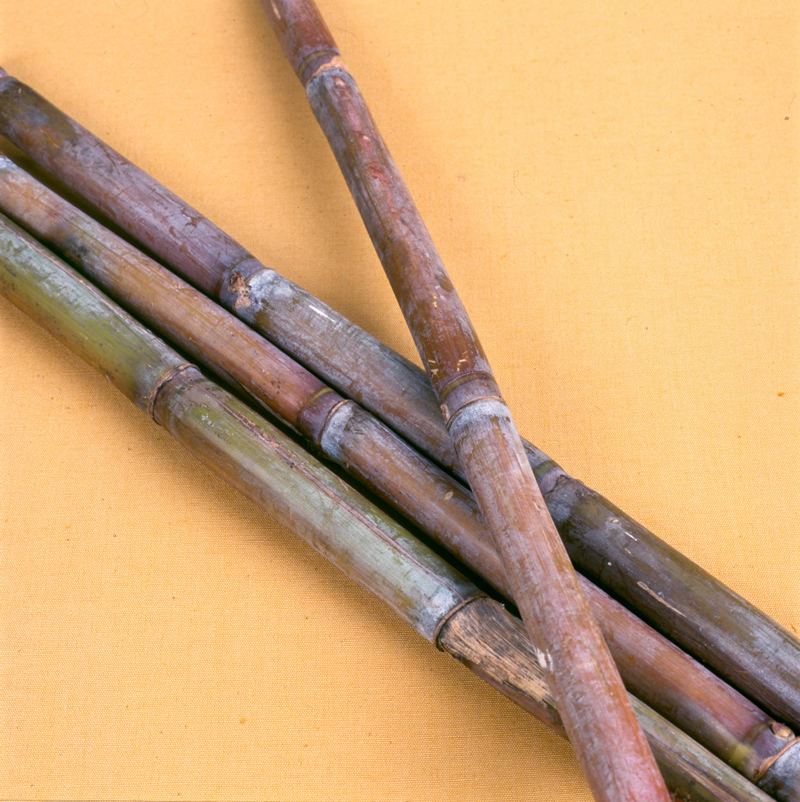
Description: Vivacious grass, belonging to the species Saccharum officinale. It has a solid, purplish culm from which the juice is removed. This, very rich in sucrose, can be concentrated for the pro-duction of sugarcane honey, distilled for the production of brandy or crystallized to obtain sugar. In this crop, vegetative propagation is used.
Region: Autonomous Region of Madeira.
Particularity: Pieces of sugar cane that can be sucked. It is the raw material for sugarcane brandy and sugar cane honey.
History: This is a culture coeval with the first works of colonization. The first stakes were imported from Sicily by order of Prince Henry the Navigator, and were introduced shortly after the discovery of Madeira and, it seems, in 1425. In the second half of the fifteenth century, sugarcane was already cultivated with a methodical character, having developed and prospered until the middle of the sixteenth century. Dr. Manuel Constantino describes the custom that still persists: «... they suck the reeds when ripe and fresh, in the morning and on an empty stomach, just for pleasure, but they do so because they recognize in the supreme laxative virtues... And it is, in fact, something very pleasant...». «This culture developed in 1846 with the manufacture of brandy that became widespread throughout the island... it remained flourishing... until 1882, the date of the appearance of the terrible scourge that caused the greatest damage to the sugarcane fields" (Zargo Islands). Despite the fluctuations in the production of sugar cane, this crop remains because it is the raw material of sugarcane brandy and sugarcane honey, products with a great tradition in the region.
Use: Except for small quantities that are consumed in nature, sugar cane was destined for the traditional industries of brandy, sugarcane honey, sugar and alcohol. Currently, it is only intended for the production of sugarcane honey and brandy. The leaves, while green, are cut off and fed to the cattle.
Know-how: This crop can go up to 300 m and 200 m, respectively, on the south and north coasts of the island. The cane reproduces by a terminal stem cutting. This plant allows harvesting in the second year of vegetation, providing the 'ratoon' or foot, and an annual harvest until it is aged. The periodic replanting of sugarcane fields should occur every 9 years. It is very demanding in fertilization and watering.
Source: Produtos Tradicionais Portugueses, Lisboa, DGDR, 2001
