







 Português
  English (UK)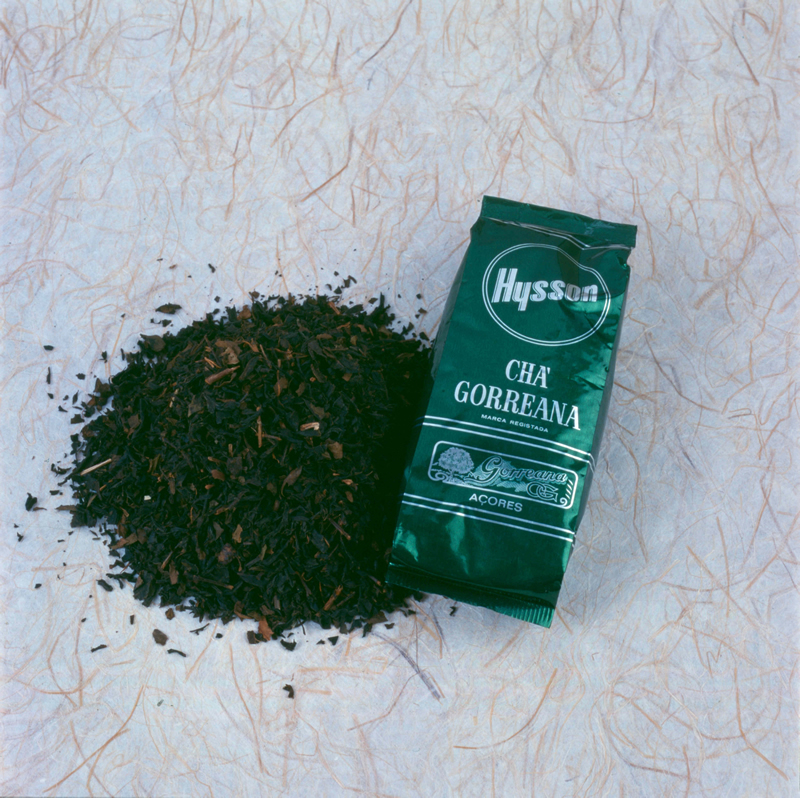
Description: The plantations of S. Miguel are made up of China-type hybrids and some of the Assam type. The harvest is mechanical and begins in April, and can last until September.
Region: Autonomous Region of the Azores.
Special feature: Tea, green or black, has a characteristic taste. It is presented in paper packaging.
History: The first known news about tea in the Azores dates back to 1801, from which it can be concluded that this plant was already known in the Azores at the end of the seventeenth century. This news is the first reference to the presence of the tea plant in Portugal. It is a letter sent by the governor-general, dated June 11, 1801, accompa-nying the shipment of two crates of tea from Angra (Terceira Island) to the Portuguese mainland. It states: "... and in compliance with the first determination of the same august Lord, I now send by the frigate "Swan" 2 crates with the tea plant, whose vegetation is very easy in these places...». However, it was on the island of S. Miguel that tea began to be cultivated for industrial purposes. The Sociedade Promotora de Agricultura Micaelense, of which José do Canto was a member, began to carry out plant trials and voted in April 1874 the sum of 220$000 réis for the cultivation and industrialization of tea and, in 1878, two Chinese masters, Lau-a-Pen and Lau-a-Teng, arrived in S. Miguel, who came to teach the technology of tea preparation. The industry developed and green tea and black tea were produced. In the 1960s, the crop went into crisis, mainly due to the increase in the cost of labor and competition in the national market for tea in Mozambique, produced at cheaper prices. The island of S. Miguel is the only region in Europe that produces tea.
Usage: As a breakfast drink and snack, also used after main meals.
Know-how: The only factory currently existing in S. Miguel produces green tea (Hysson) and black tea (Orange Pekoe, Pekoe, Broken Leaf and Moinha). Practically no chemical fertilizer is used. Most farmers make ironing with lupine at the end of March. The plant grows freely, reaching about 2 m in the China variety. The leaf is 9/3 cm. Pruning is done between January and February 3 times (at 18 months, 2 and 3 years). Harvesting is still sometimes manual by women and girls, but nowadays small machines are already used, in this case the harvest is done by men. The terminal Pekoe and three leaves are harvested, and the third leaf is not used in the preparation of tea. The plant is harvested in spring (April/June) and each woman is in charge of two rows of plants, picking between 30 and 40 kg. Although in S. Miguel you can harvest tea all year round, spring production is the one that gives the best production. This is followed by the 'wilting' of the leaf, an operation that consists of removing part of the water so that the leaf can be rolled up without breaking it. This operation is done at room temperature in very ventilated and dimly lit places. The degree of wilting is evaluated by the weight of 100 leaves. The following sterilization is carried out in S. Miguel either by the traditional method of heating in copper containers or in mechanical drums that are easier to control. The winding of the sheets is also done in two different ways: manual and mechanical. However, the manual is being abandoned. Then winnowing is carried out, an operation that aims to disaggregate the leaves. For black tea, fermentation is car-ried out in rooms called "fermentation rooms" and finally drying to finish fermentation.
Source: Produtos Tradicionais Portugueses, Lisboa, DGDR, 2001
