







 Português
  English (UK)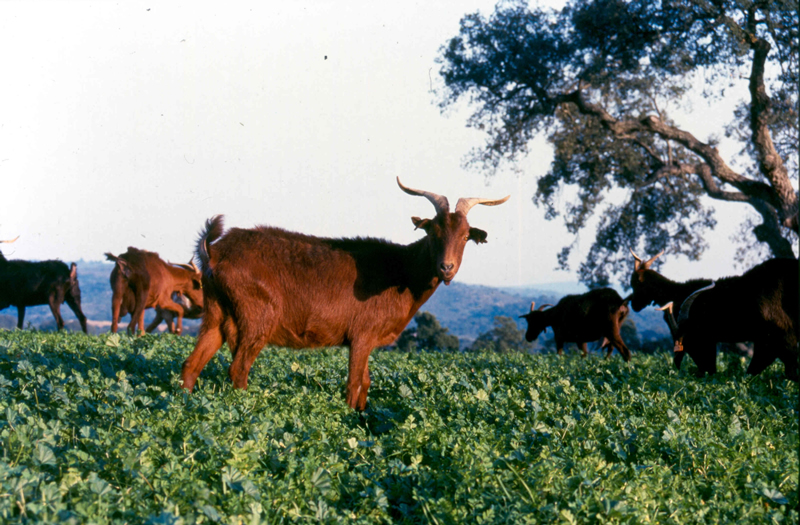
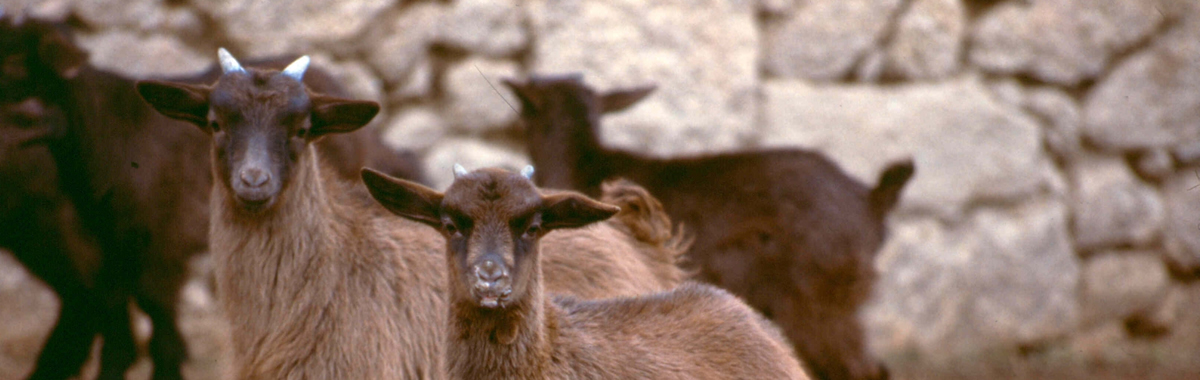
Description: The meat of these animals is very tasty, due to the spontaneous pastures on which the animals feed. The goats of the Charnequeira breed have red coats, short and smooth hair. Head with a straight or sub-concave profile and convex forehead. The horns, when present, are large and slightly inclined back, divergent and twisted at the tips, or sharply spiraled. They have a broad trunk, with a narrow and deep chest, an almost straight dorsal-lumbar line but slightly drooping forward and a well-developed abdomen. The tail is short, horizontal and upturned at the tip. Finally, the limbs are strong, short and with regular uprightness.
Region: Alentejo.
Particularity: The meat of this goat is tender and has a reddish color. The carcasses are obtained from goats of the Charnequeira breed, which is characterized by a large corpulence and corkscrew-shaped horns, slightly inclined backwards.
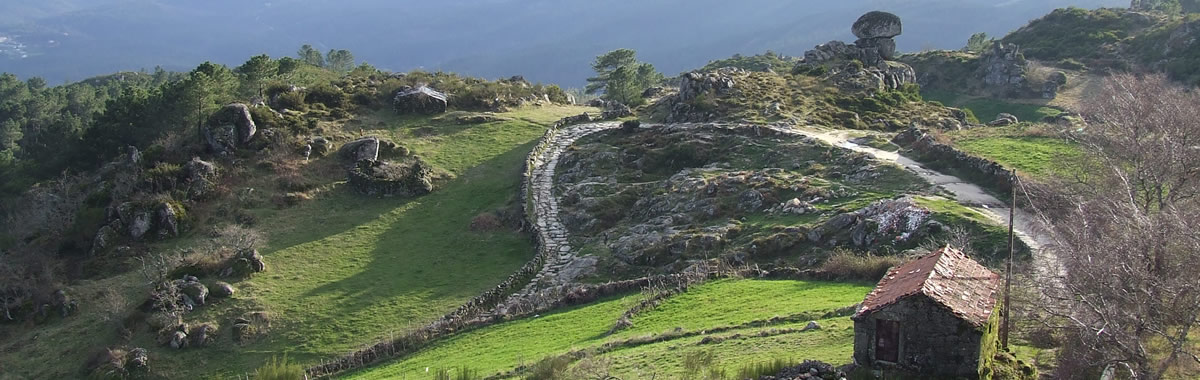
History: References to the Charnequeira goat breed are quite old. In fact, this breed had, in the nineteenth century, its characteristics perfectly defined. Great national zootechnicians, such as Professors Paula Nogueira and Bernardo Lima, described it and highlighted its importance in the South of the country. However, at the end of the nineteenth century, the populations of this breed suffered a great reduction in numbers, as the lands where herds were grazed were converted into land for the cultivation of cereals that were incompatible with goat breeding. This fact led to the almost disappearance of the breed. However, some nuclei remained in the North Alentejo (S. Mamede, Ossa and Portalegre mountains), in Beira Baixa and also in the mountains of the South Alentejo and Algarve. In these regions, the herds had to adapt to new forms of breeding, given the smaller forage resources available, leading to a change in the productive parameters of the breed, making it more rustic and adapted to situations of food shortage. It was only in 1987, when the breed was on the verge of extinction, that its zootechnical register was created by joint order of the Ministries of Finance, Planning and Agriculture. From this moment on, there was an increase in the herd of the breed and a renewed interest of breeders in its breeding, especially in the region of Beira and Norte Alentejo (where the breed has its manor).
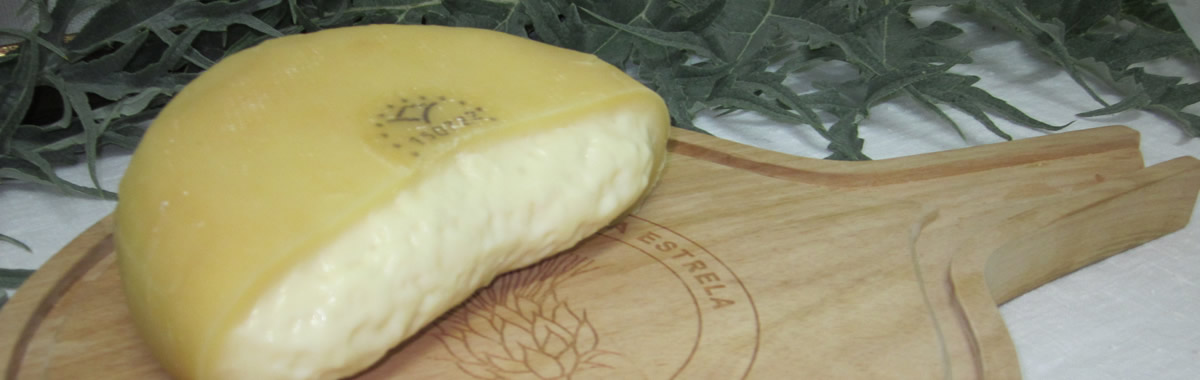
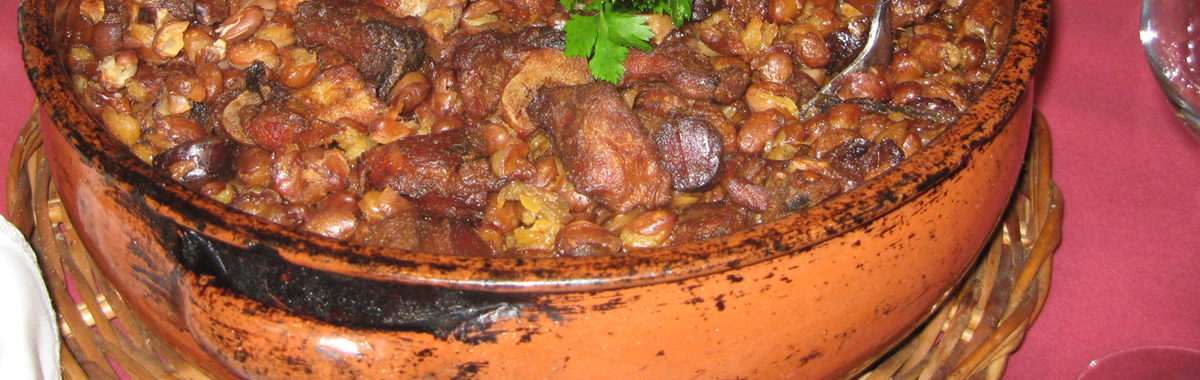
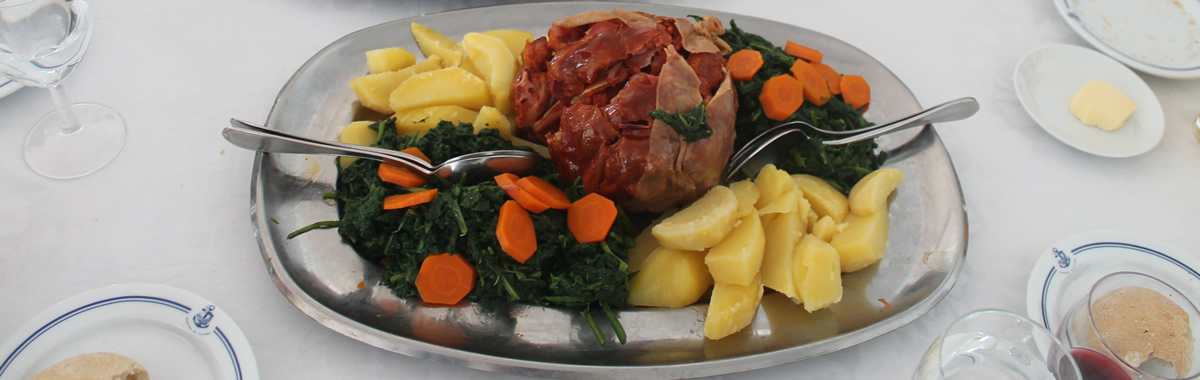
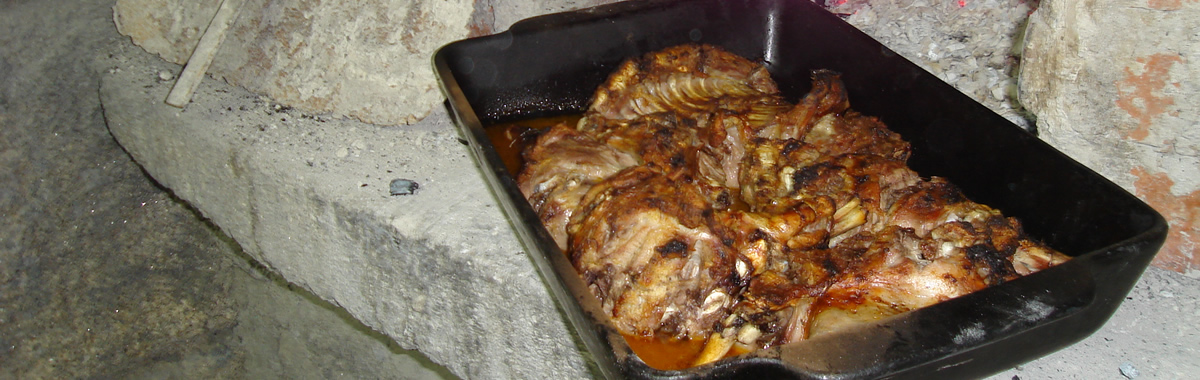
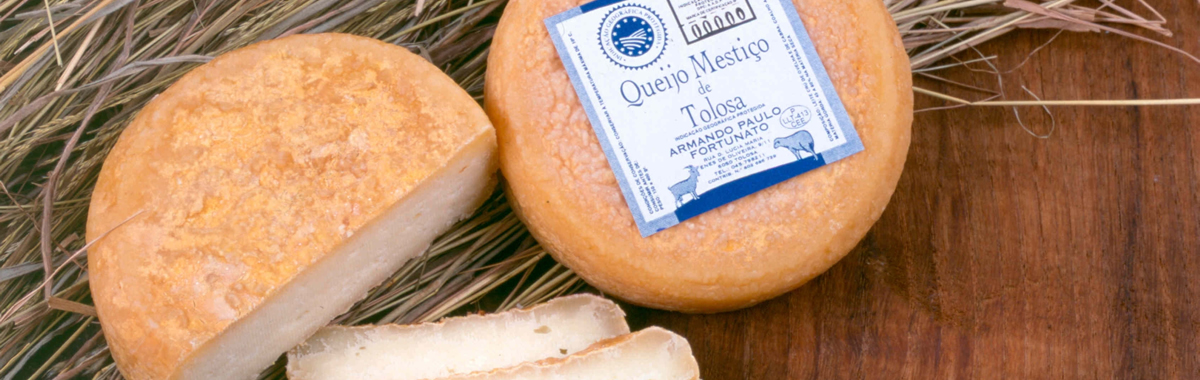
Use: Milk is used from these animals, with which cheese on its own or mixed with sheep's milk is produced, being famous, in the Alentejo, the crossbred cheese of Tolosa. Kid meat is also highly appreciated, being consumed mainly during Christmas and Holy Week parties, with several dishes of the famous Alentejo cuisine such as ovenroasted kid, kid stew, kid stew, etc.
Know-how: These animals are permanently grazing, and their food base is the thin pastures and shrubs, namely the rockrose and heather of the mountains where they continue to be raised. Only the cubs, during the first month of life, are kept in rudimentary and natural shelters, the «malhadas», because they cannot accompany their mothers. Births occur throughout the year, as the females of this breed are polyester. The animals are grouped in herds that reach two hundred animals, being accompanied by a shepherd and one or more dogs. The kids are slaughtered up to 45 days old, with a maximum live weight of 8 to 10 kg, and the milk is used for cheese pro-duction.
Source: Produtos Tradicionais Portugueses, Lisboa, DGDR, 2001
