










 Português
  English (UK)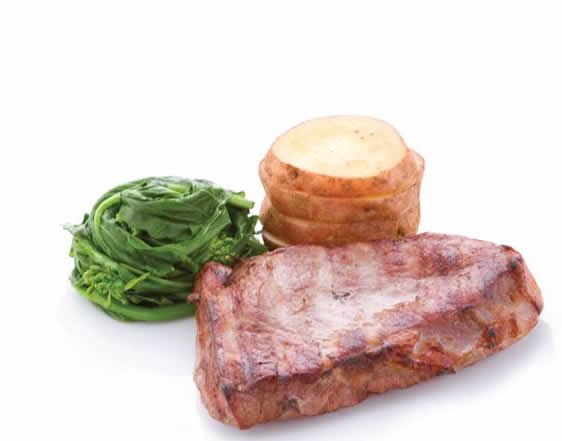
Product name: Posta Mirandesa, Posta à Mirandesa, Posta de Mirandesa.
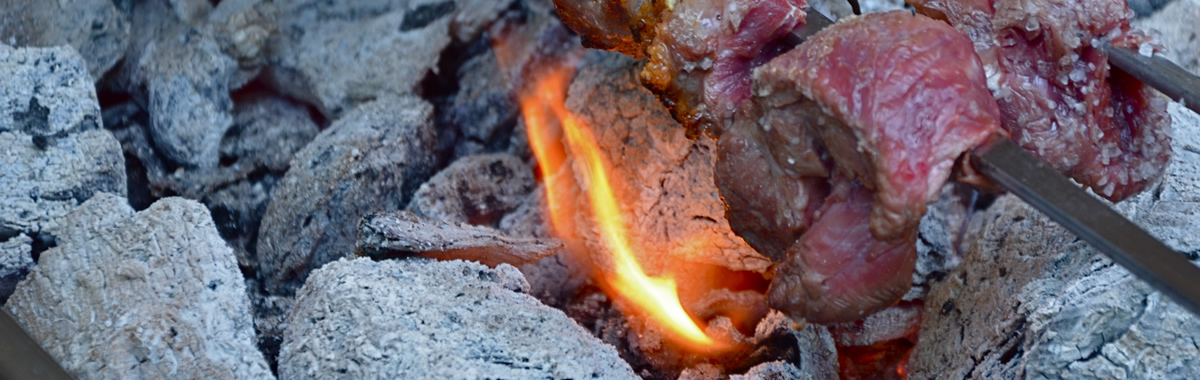
Description: Tall and cushioned steak of Mirandese beef, cut from the leg into chunks, with the approximate dimension of, in popular knowledge, "a palm of the hand a mischievous hand" passed over the coals with salt to taste. Exceptionally tender and juicy, it has aromas and flavors that set it apart from other beef.
Special characteristics: The particularity of the product is in the Mirandese quality of the veal and in the cut of the meat, which must avoid veins and ensure a thickness of at least 2 to 3 centimeters, which must be even higher. Also at the time of roasting on the coals, the wood used plays an important role in the flavor that will give to the meat, advising against the use of resinous woods.
Region: Related to the area of production of Mirandese meat, although the Mirandese Posta, as a dish, is made and consumed throughout the region of Trás-os-Montes and Alto-Douro. Considering that there is a greater incidence in the municipalities of the geographical area of the manor of the breed that encompasses the municipalities of Miranda do Douro, Mogadouro, Vinhais, Bragança, Vimioso and Macedo de Cavaleiros.
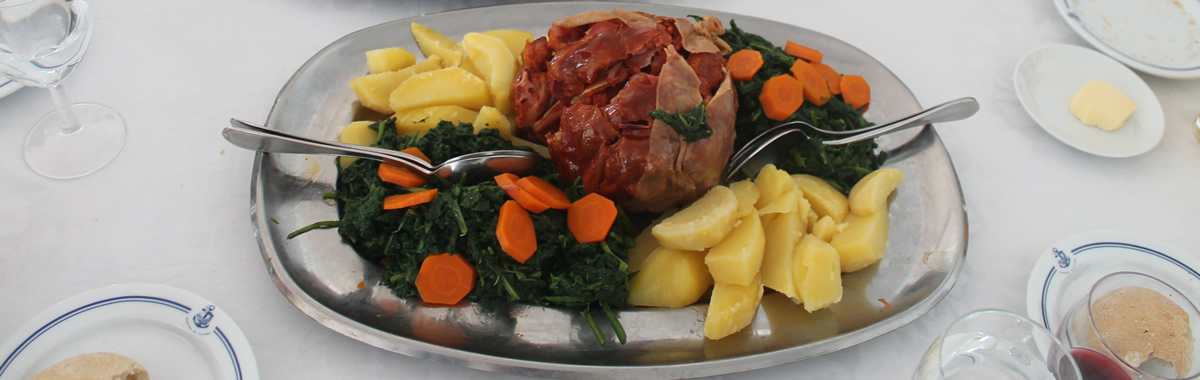
Ingredients used: Mirandese beef steak and coarse salt to taste Often accompanied by potatoes (boiled, roasted or fried), to which you can also add turnip greens or mushrooms or simple salad.
Preparation: The method of preparation is the traditional one, using wood embers. Therefore, the quality of Mirandese meat is privileged, which has a Protected Designation of Origin, obeying a controlled and certified production method that guarantees the genuineness of the meat used in the preparation of the Posta.
Know-how: To make the Posta Mirandesa dish, pieces of Mirandese beef of considerable thickness and between 250 g and 300 g must be used.
The meat is roasted over strong and evenly distributed coals under the grill so that the steak acquires a homogeneous texture and quickly roasts on the outside, keeping the inside tender. According to the reference book Recipes and Flavours of Rural Territories (Federação Minha Terra: 2003), the cooking method follows the following steps: «The grill must be placed at a height of about 10 cm from the coals. The meat should be cut into slices with a thickness of 3 to 4 cm. The meat is placed on the grill without any seasoning. After this operation, and if desired, season with coarse salt. Return the flesh, without skewering, when small pearls of blood appear on the upper surface. The time that the steak is on the grill depends on personal taste, depending on whether you prefer well-done or undercooked meat. To preserve the juiciness of the meat, it cannot be chopped. When the steak is returned, the heat must be strong, so that a crust is created that prevents the juices from leaving. However, this crust should not be thick, because otherwise the heat penetrates the meat in a poor way and the steak ends up being burnt on the outside and badly grilled on the inside. Serve with boiled potatoes with peel or roast, vegetables and salad.»
Forms of marketing: Restaurants, butchers and commercial surfaces.
Product availability throughout the year: Consumed all year round.
History of the product: Just as it is not possible to specify in time the origin of the Mirandese cattle breed from which the essential ingredient for the confection of Posta Mirandesa is derived, it is also not clear in the chronology the origin of the dish that is closely related to the production of Mirandese meat. But, in the same way, that the Mirandese Plateau is identified as the territory where the Mirandese beef breed will originate, from which the production of this native breed expands to other municipalities and even to other regions of the country in the past, that territory is also understood as the origin of the typical dish of Posta Mirandesa. In fact, Posta is considered a family legacy of Miranda do Douro (the recipe of Posta à Gabriela and its transmission from generation to generation, and also of other historic restaurants in that municipality) and is today one of the most identitarian icons of traditional Trás-os-Montes cuisine recognized nationally and internationally.
It is often referred to as a dish from Trás-os-Montes of fundamental consumption, when traveling through the region, mandatory mention in reference tourist guides, for several decades. For example, in The Berlitz Traveller's Guide Portugal 1992 (pp. 436 and 437) and in Cadogan Guides Portugal 2009 edition (pp. 151 and 155).
"Gastronomic flag" of tourism in the Trás-os-Montes region, the origin of this dish is described on the online page of the Porto e Norte Tourism Entity: «The now famous Posta Mirandesa emerged from a humble, instinctive and unique way of throwing a "piece of meat" on top of a hot grill, later adding coarse salt. Mirandesa Breed veal is a product known for complying with the highest quality standards in its production and cooking process.»
In Edition 79 of the Publication of the European Association for Animal Production (1996), the production difficulties of the indigenous Mirandese bovine breed are described, but a brief reference is made to the "fame" of the Posta Mirandesa that encouraged the demand.
Finally, the registration of the Designation of Origin (PDO), considers Sousa (2000:76), had an easy implementation in the market «obtaining great receptivity from the main commercial circuits, large distribution, butchers and restaurants». Adding that «For many years, the meat of this breed has been famous, having even originated a specialty that is one of the ex-libris of the gastronomy of Trás-os-Montes, the Posta Mi-randesa».
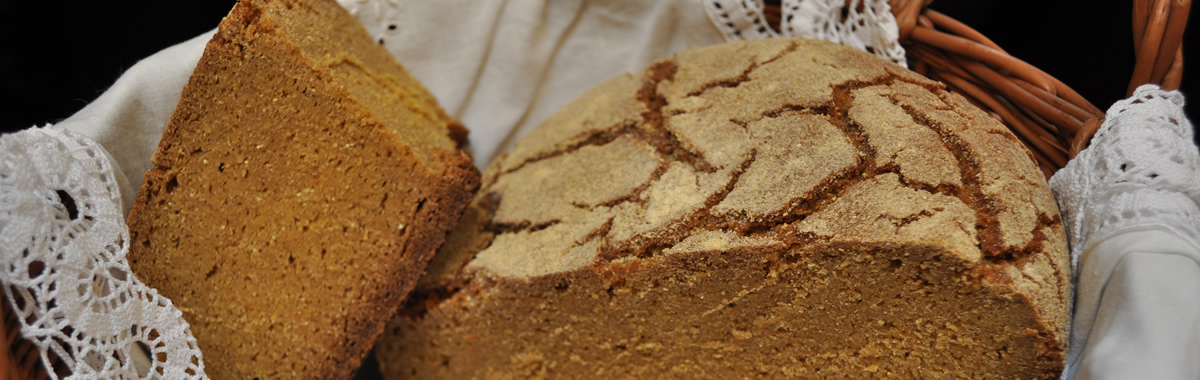
Representativeness in local food: Formerly associated with cattle fairs and private homes, where it was frequent to consume grilled meats accompanied by homemade bread, today it is possible to find it in any typical Trás-os-Montes restaurant throughout the year.
Other documentary elements (written, photographic, videographic, etc.): ACBRM, (2007), http://www.mirandesa.pt, Associação de Criadores de Bovinos de Raça Mirandesa, July.
FRAGATA, António; SOUSA, Fernando; MENDONÇA, Álvaro (1995). A valorização da carne de bovino de raça Mirandesa. Revista de Ciências Agrárias. ISSN 0871-018X. 18:2, p. 3-7.
RIBEIRO, Maria Isabel; Matos, Alda; Fernandes, António (2008). Análise estratégica da denominação de origem protegida carne mirandesa. Revista Portuguesa de Estudos Regionais. ISSN 1645-586X. 17:1, p. 45-60.
SOUSA, Fernando (2000). Mirandesa. In Yanes García, José Emílio (Coord.) Catálogo de raças autóctones de Castilla Leon - Região Norte de Portugal - Espécies bovina e equina. Zamora: Fundacion Rey Afonso Henriques. p. 65-76. ISBN 84-89981-14-0.
SOUSA, Fernando; Sanchéz, Luciano (2009) – Mirandesa. Miranda do Douro: Associação dos Criadores de Bovinos de Raça Mirandesa. ISBN 978-989-96373-0-6.
Guia Terra Fria Transmontana: Viagem à Natureza Ed. Associação de Municípios da Terra Fria do Nordeste Transmontano.
Source: DGADR, based on the Book Receitas e Sabores dos Territórios Rurais (MINHA TERRA – Federação Portuguesa de Associações de Desenvolvimento Local, 2013), Carta Gas-tronómica do Alentejo - Monumenta Transtaganae Gastronómica (Confraria Gastronómica do Alentejo, 2013) and Rei, António (2016), A Açorda. Uma sopa de pão, da Alta Idade Média à atualidade, IEM /FCSH – Universidade Nova de Lisboa.
Photo: Courtesy of MINHA TERRA – Portuguese Federation of Local Development Associations.
