








 Português
  English (UK)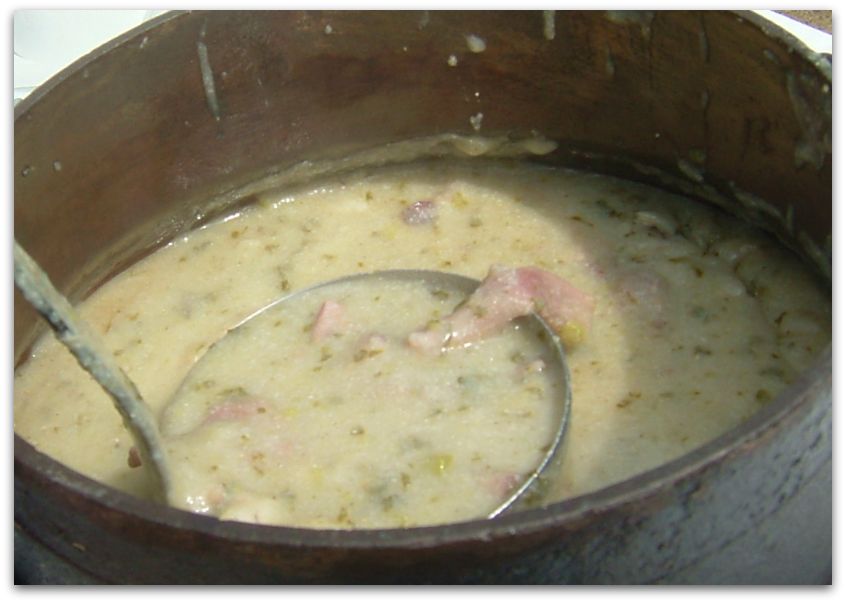
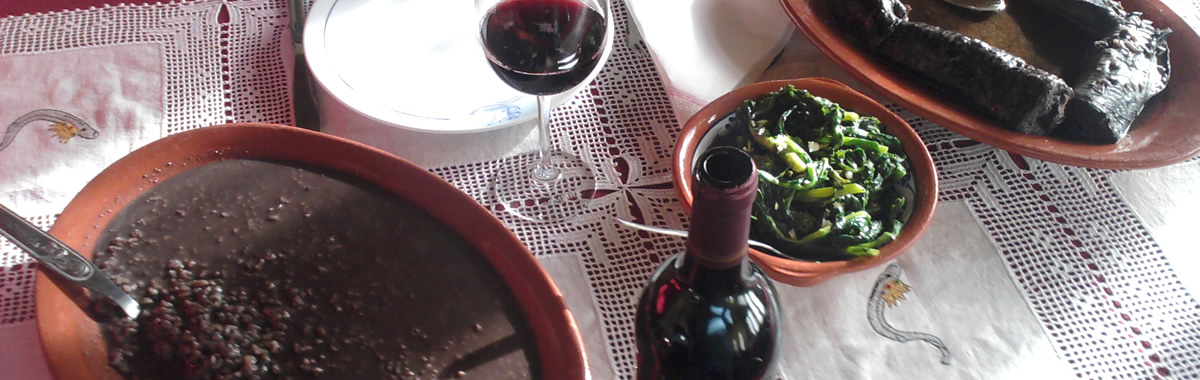
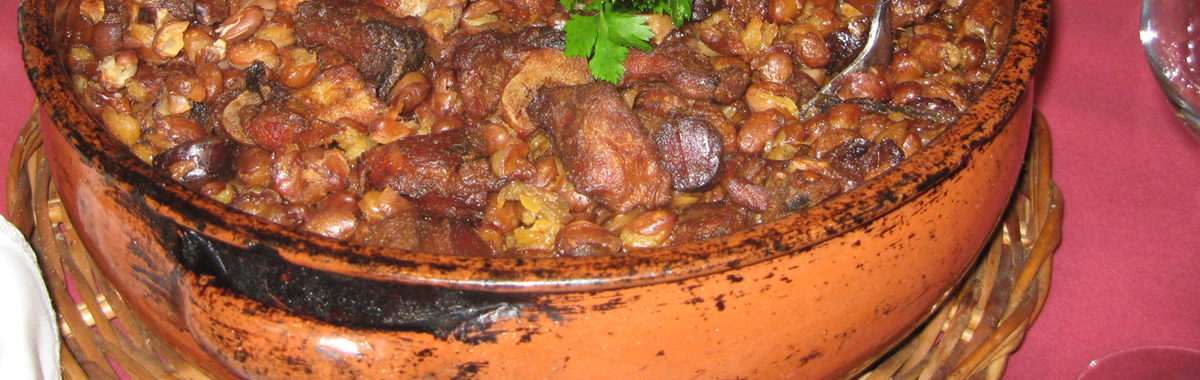
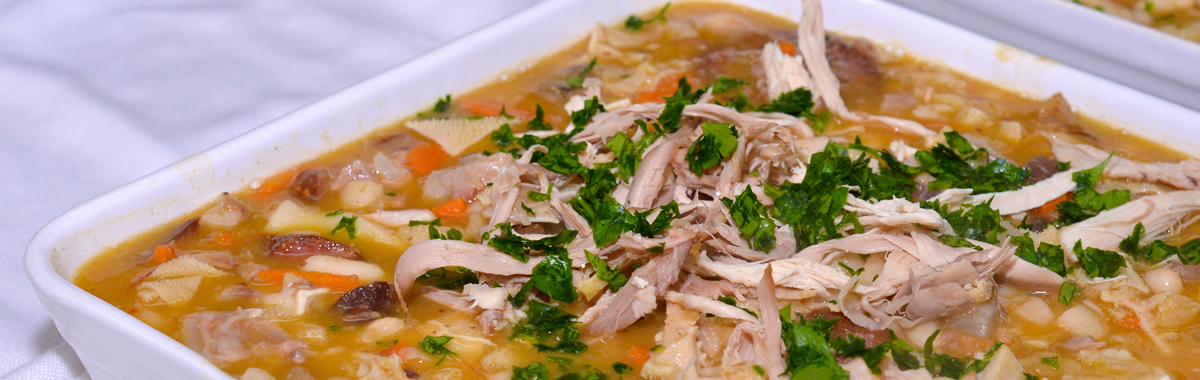
Description: It is a thick delicacy, beige in color, with a soft aroma of spices.
Particular characteristics: The use of Vinha-d'alho.
Species, varieties or breeds: Pork predominates.
Additional information: Vinha-d'alho, (pork coirates in red wine, salt and garlic for 2 days), how to use it and how it is cured.
Delimitation of the geographical area of production: Municipality of Oliveira de Azeméis.
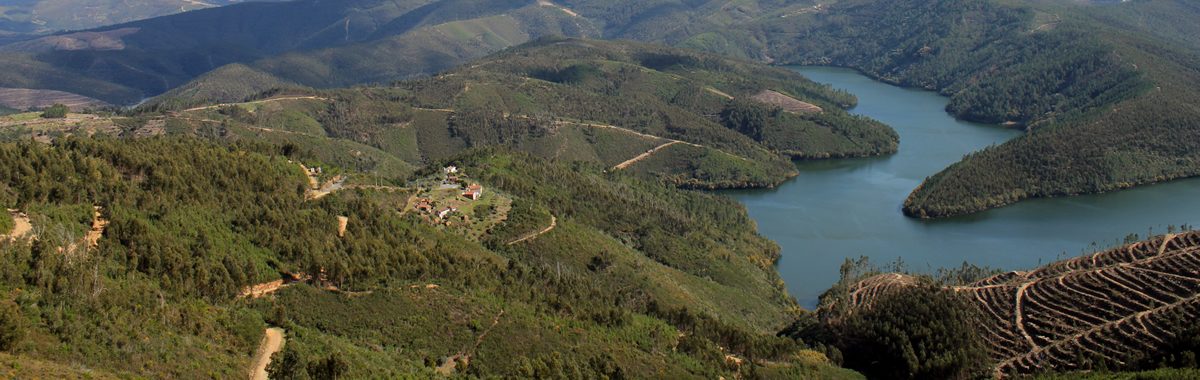
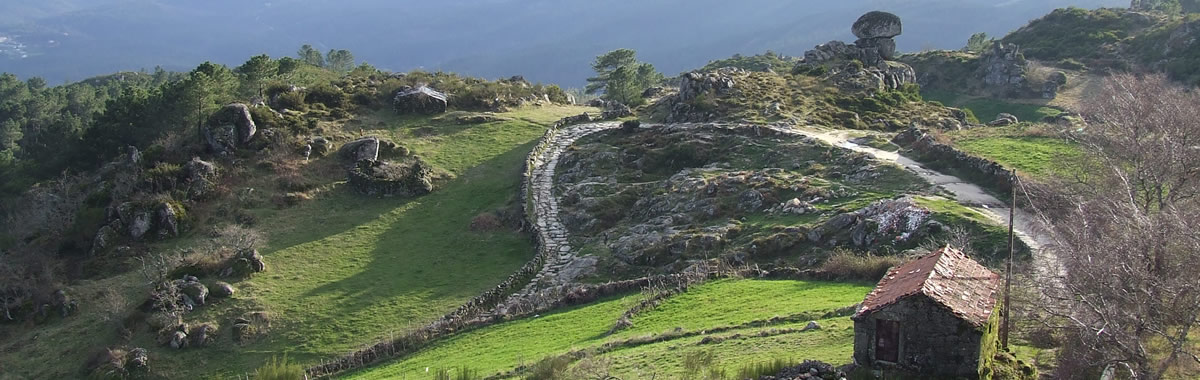
Connection to the natural landscape: All the cultivation of the in-gredients of this dish is directly linked to traditional agriculture.
Ingredients used: White beans or butter, corn flour, turnip greens, suã bones (bones of the pig's spine), garlic vine, salt to taste.
Preparation: Two days before, soak pork with salt and a few cut garlic cloves in red wine. On the same day, the beans are cooked (soaked since the day before). Meanwhile, the turnip greens are cut as if they were for caldo-verde. When the beans are cooked, they are added to the drained coirates and the suã bones. Let it cook well, then add the turnip greens.
Using the cooking water (in part or in full), thicken with corn flour, un-til the desired thickness is obtained, as these porridges can be either thin (leinas) or thick, according to the taste of each one, not forgetting the salt seasoning. Once the flour is cooked, it is served in clay bowls. You wait 5 to 10 minutes before eating them, in order to gain a bit of a hard cover.
The porridge is made in a three-legged iron pot.
Know-how: Almost everyone in every farmhouse or people linked to traditional agriculture knows how to make this dish.
Forms of commercialization: It is not commercialized due to the ease of making and acquiring products.
Product availability throughout the year: It is available all year round.
Product history: Garlic vine porridge was made and eaten in almost all houses in Oliveira de Azeméis, on September 29, the day of our patron saint S. Miguel.
Many, many years ago, the farmers and their caretakers who had rent land, paid the rent or the maquia (tribute for the use and possession of the leased land), on the day of St. Michael, their Patron Saint. Traditionally, on that day, Papas de Vinha-d'alho were eaten, which were made with the first flour of new corn, the first beans and turnip greens, as well as the vinha-d'alho, (coirates of the last pig, killed during the harvests, placed in red wine, lots of garlic and pepper).
Representativeness in local food: In its history it has never represented great value in commercial terms, on the contrary, it was indispensable in the post-war period 1914/18, constituting the basis of the diet of the local population.
Product availability: Garlic vines with traditional curing are starting to become scarce.
Source: Confraria das Papas de S. Miguel
