


 Português
  English (UK)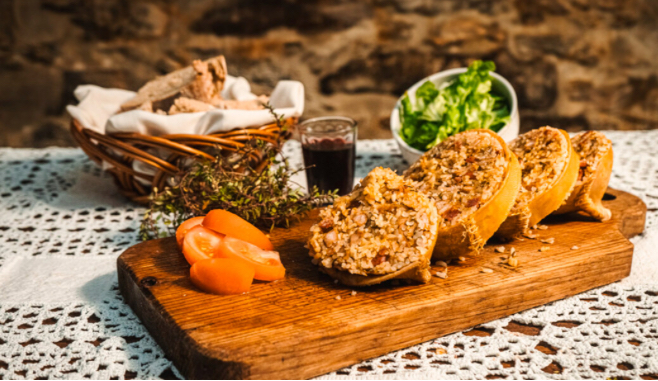
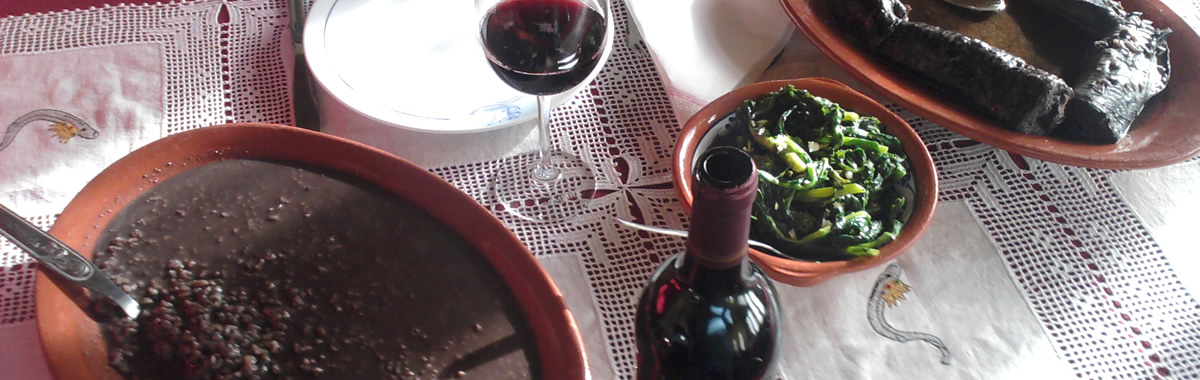
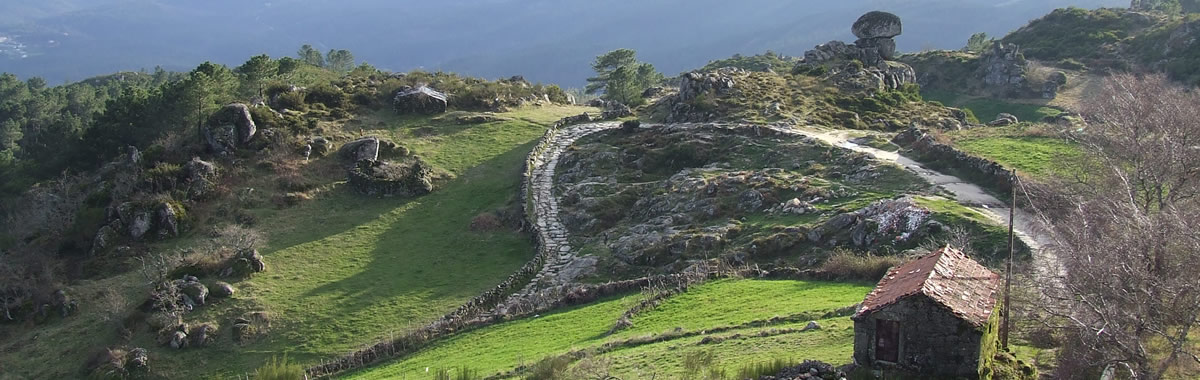
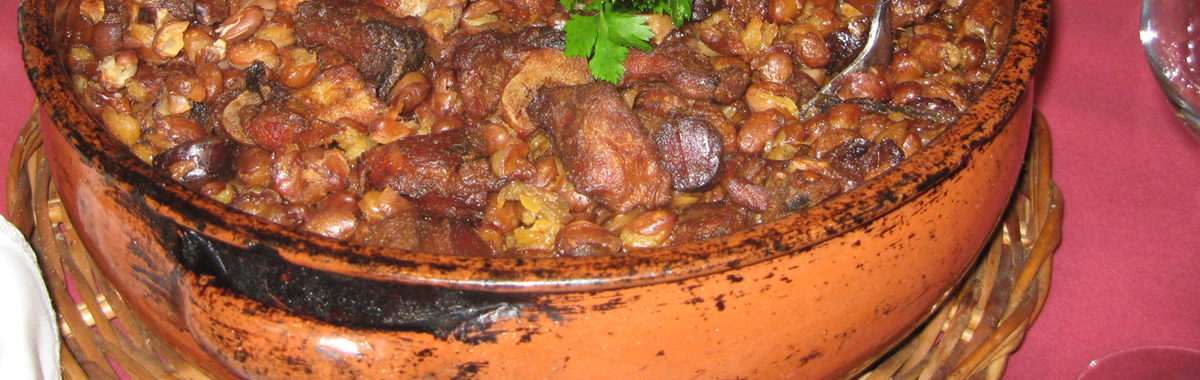
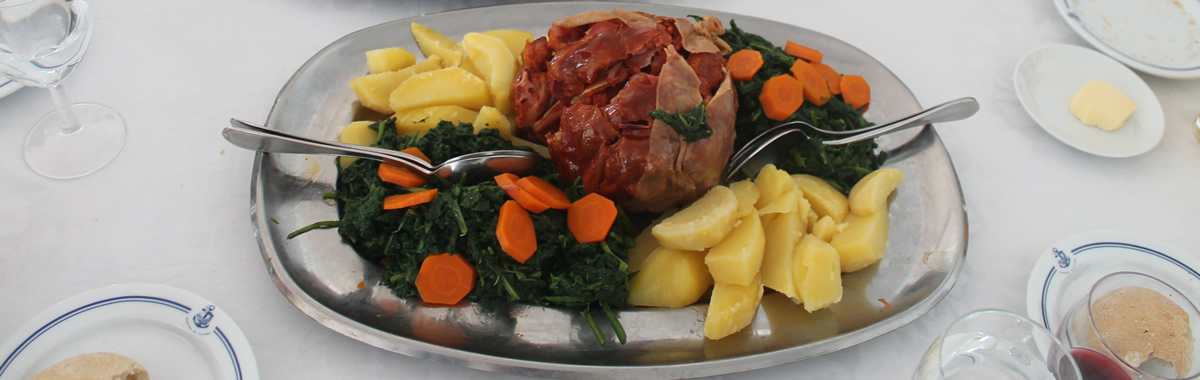
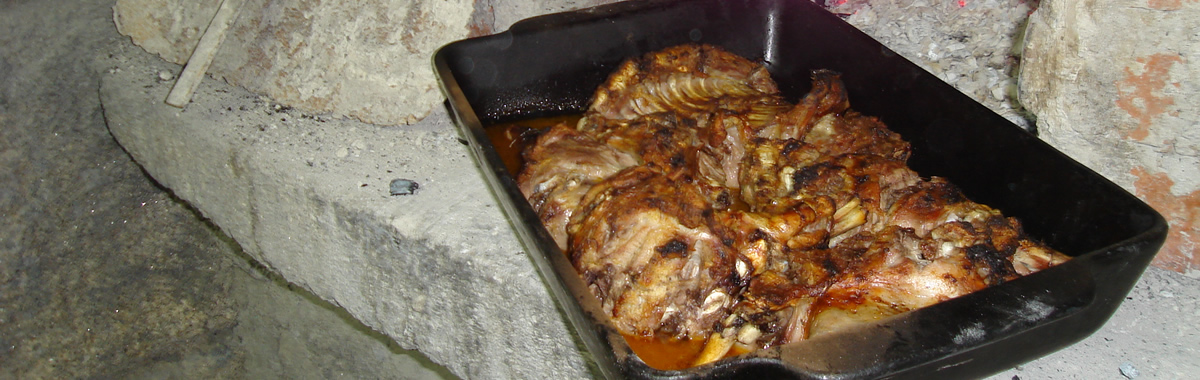
Description: It is a traditional dish from the Parish of Vales do Rio, located in the Municipality of Covilhã, in Beira Interior, characterized by the mixture of rice cooked with pork and sausage, combined with the unique aroma of the serpão, traditionally served in the goat's belly. It is a community preparation associated with parties and gatherings, with a consistent texture and intense aroma, which inte-grates knowledge of healing, seasoning and confection transmitted in the village of Vales do Rio.
Region: Center.
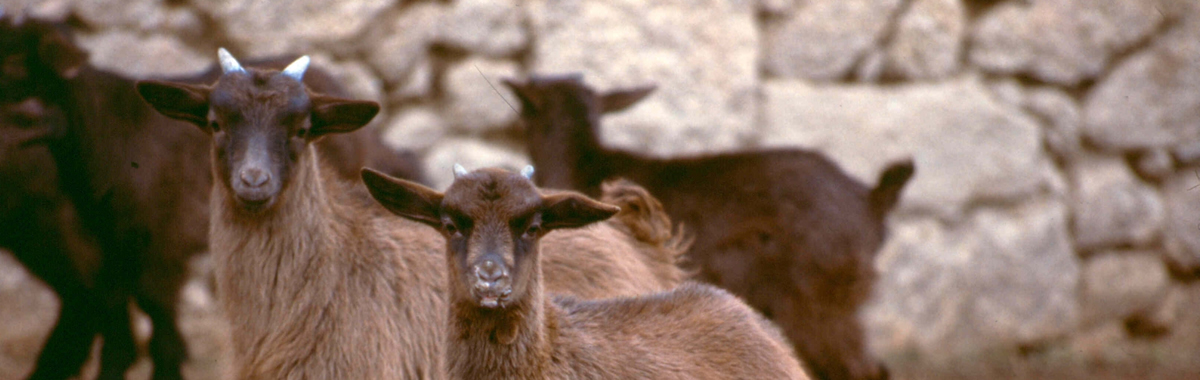
Particularities: The Brulhão de Vales do Rio is distinguished by be-ing traditionally placed and served in the goat's belly, which gives it a characteristic aromaand anidentity presentation. Brulhõesaremade exclusively with pork, from the salting or smoked meat, which is mixed and seasoned before cooking. At the village festivals, the meat of the cowswas treated separately: prepared in bowlsand taken to the oven, while the chaff (estomago) of the goat was used in the sacks that served as wrappers for the brulhões. It was from this combination of conservation techniques, full use of the pieces and the use of the bucho as a container that this delicacy was born, today a symbol of local know-how and a central element of the gastronomic identity of Vales do Rio.
History: The brulhão was born from the subsistence cuisine of Beira Interior, where the full use of meat and conservation were common practices. Over time it has consolidated itself as a festive dish in Vales do Rio, preservingtechniques and oral recipes. In recent years it has been the subject of local initiatives forcultural and tourist en-hancement, with events andinterpretation spaces that document and promote tradition.
Use: Festivals and pilgrimages: central dish in local festivals and community gatherings.
Tastings and tourism promotion: served at events such as FestiVales and in activities at the local Interpretive Center for visitors.
Family meal: in simpler versions, prepared on family occasions for sharing between several generations.
Know-how: The older ones remember that the brulhões were already made by their grandparents, who passed on the knowledge from hand to hand, preserving recipes, techniques and flavors over the generations. Know-how involves not only proportions and cooking times, but precise gestures: the selection and cutting of meats, the curing and mixing of the pieces of the salting or smoked meat, the point of sautéing and the right time to add the rice so that it is well refined. The transmission is communal: cooking the brulhão is a shared practice in which young people learn by observing and helping their elders, repeating gestures and tasting until they internalize the flavor. This keeps alive the culinary memory of Vales do Rio, where the dish continues to be a link between generations.
Preparation: Cleaning the chaff - Carefully clean the chaff (thisgoatmagician), removingresiduesand washing them until it is ready for use as aprofit.
Making the bags - From the clean debris, the bags are made, which aresewn leaving an opening for filling.
Meat preparation - Crush the chorizça and cut the remaining pork into small cubes, standardizing the sizes for a homogeneous cooking.
Preparation of the thyme - The thymeth is prepared by delicately separating the leaves from the stem, taking advantage of only the tender and aromatic parts.
Mixture of ingredients - In a bowl, mix the crumbled chorizo, the cubed meats, the rice, the sea bass, and the remaining traditional seasonings and spices until you obtain a homogeneous mixture.
Filling the bags - Fill the bags with the mixture, compressing slightly to eliminate air pockets and ensurean even distribution of the ingredients.
Closure and finishing - The opening is closed by sewing, ensuring that the bag is tightly closed and ready for cooking.
Cooking and clearing - The brulhõs are cooked until the meats and the filling are fully cooked and the flavours are well refined; the cooking time and the whole monthofcooking followsthe traditional local practice. Aftercooking, it is cooled and possibly final cleared before serving.
Sources:
Documentation and local memory of River Valleys (oral records, community practices).
https://brulhao.pt/
https://www.instagram.com/brulhao.pt/
https://jf-valesdorio.pt/
https://facebook.com/Brulhao/
https://facebook.com/freguesia.vales.do.rio/
