









 Português
  English (UK)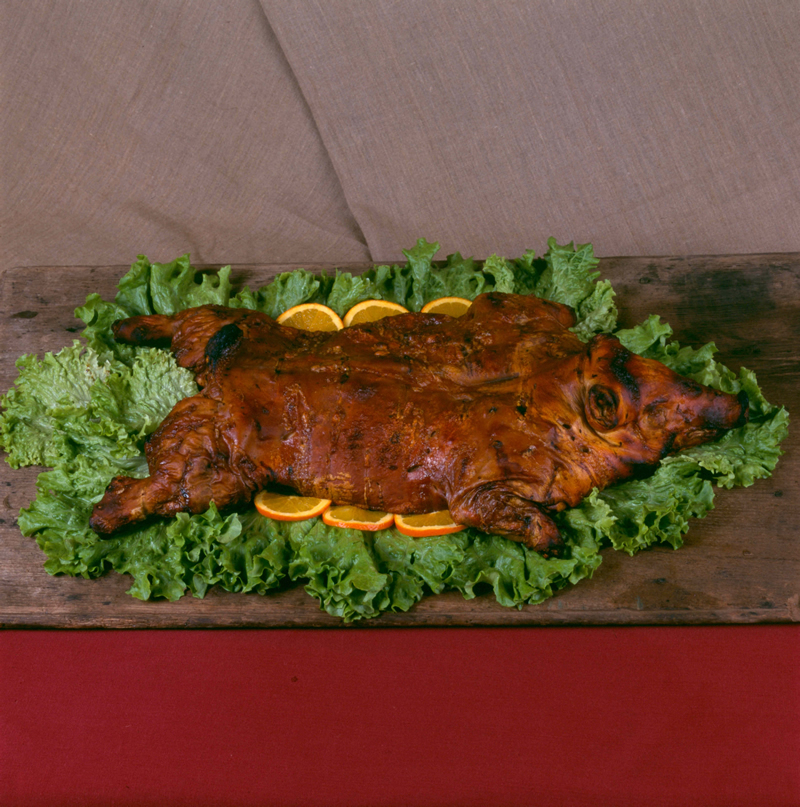
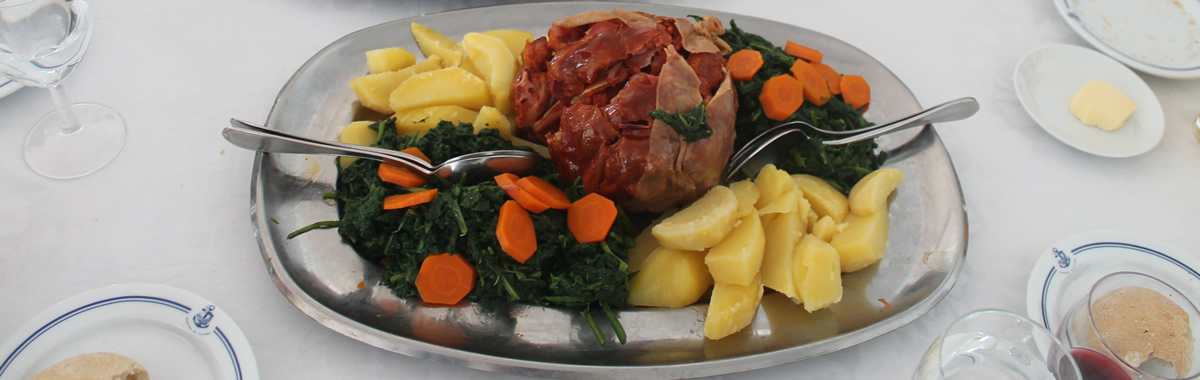
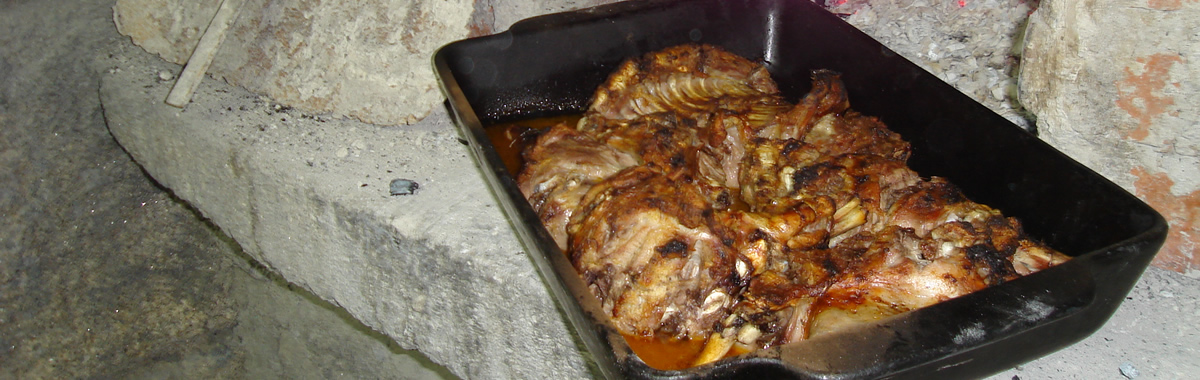
Description: Slaughtered piglets weighing between 6 and 11 kg, roasted in a wood oven, with the feet and ears cut off. They are presented in the trade packaged in cardboard boxes.
Region: Lisbon and Tagus Valley.
Other denominations: Roasted Suckling Pig of Negrais.
Particularity: Roast suckling pig in a wood oven, flattened.
History: The hustle and bustle of the arrangement of the roast suckling pig of Negrais is lost in time. Perhaps at the end of the eighteenth century it was already possible to inscribe some names of the first roasters of Negrais. Manuel and António Joaquim Pacheco, Sabino, Domingos Silvestre, Caneira and Luís Feliciano are big names of the old roasters. Some were at the same time piglet roasters, farmers, cattle shearers and hackers. They attended religious fairs around Lisbon, such as those of N.ª Sr.ª do Cabo Espichel, N.ª S.rª da Nazaré, N.ª Sr.ª da Luz, Feira das Mercês, Caneças and N.ª Sr.ª da Rocha. The Negrais Piglet is thus closely linked to the traditional fairs of the region. In a newspaper from 1921 there was an article referring to the Feira das Mercês, complaining about the low demand that the piglet had had and whose reason was its excessive price. In 1943, also in a newspaper article, there is a reference to roasted gilts that were at a more affordable price. Currently the roast suckling pig is in great demand, queuing for its purchase in the stalls that sell it at the fairs.
Use: Appears in all wedding banquets, parties, pilgrimages, fairs and markets. It is also a luxury dish in all restaurants.
Know-how: Live piglets were sold at the Malveira Fair and after being purchased they were fattened in cuts. When they reached the required weight, they were slaughtered, using all the blood. After death, they were scalded and singed to remove their bristles. They were then gutted, washed, flattened and immersed in water for 1 hour. They were then drained (hanged). The next operation was salting (they were salted for 3 to 4 hours). After removing the excess salt, they were seasoned with a special sauce of ground garlic and pepper and roasted in a very hot wood oven for a period of 2 to 2.5 hours, depending on the size. The little feet and ears, as well as the tongue, liver, bofe and arregada went to the oven together with the suckling pig, in a bowl placed underneath to trim the roasting sauce, and then used to make rice or cook with potatoes. Nowadays this habit is no longer maintained, given the fact that the suckling pig is no longer sold in the roasting place and has a greater expansion. The roasting is carried out in two phases: in the first, the suckling pig, placed on a tray, on the socalled canoe (slats placed on the tray), roasts with the loin facing up for 20 to 30 minutes in a very hot oven. This operation is extremely important since it is here that the suckling pig gains its toasted color. In the second phase, the animal is turned on its back, then the process of total roasting takes place, which takes about 1 hour to complete. In the past, the piglet was sold at fairs or door to door. Currently, as it is already a small industry, the piglet is trans-ported in isothermal carts, although it continues to be roasted in ovens.
Source: Produtos Tradicionais Portugueses, Lisboa, DGDR, 2001
