





 Português
  English (UK)
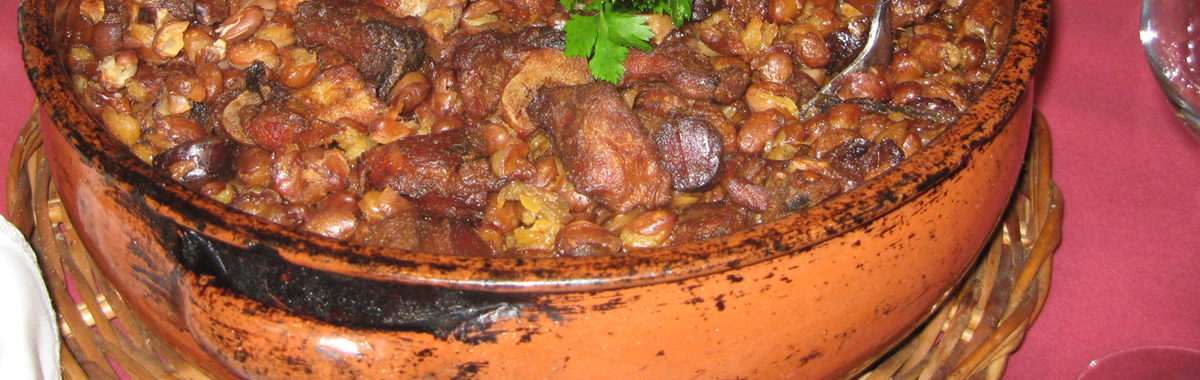
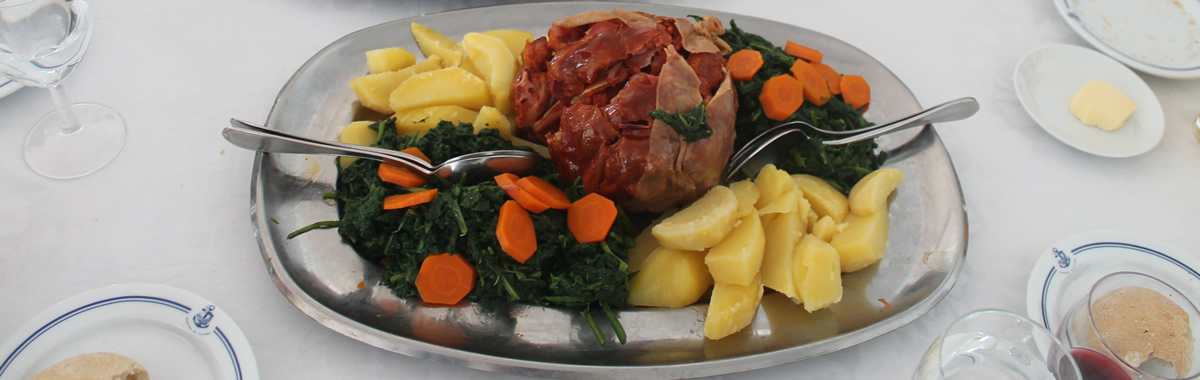
 Description: Typical Alentejo dish made from boiled potatoes wrapped and cooked in part of the fat resulting from the frying of pork, until a very dry and consistent ball is obtained, with a lightly browned outer crust. Served with fried meat.
Particular characteristics: Potato migas are one of the many versions of this typical Alentejo recipe. Instead of bread, they are made with boiled potatoes, crushed and wrapped in pingo, fat resulting from the frying of meats.
Region: Alentejo.
Ingredients used: Potatoes, pork (pork ribs and streaky belly), garlic, red pepper paste and salt.
Preparation: Season the spare ribs with crushed garlic and red pepper paste the day before. Cut the meats and fry them over low heat in order to melt as much fat as possible. Remove and, in the same fat, fry a clove of garlic. Add a little water. Separately, boil the potatoes and peel them or pass them through a sieve. Add the mashed pota-toes to the drippings and stir with the wooden spoon, giving it the shape of a ball. Shake off the migas, browning the potato migas in rolls. Serve with the meat around.
Know-how: There are variants of this recipe: you can add tomato syrup to the dripping.
Forms of commercialization: Restaurants.
Product availability throughout the year: All year round.
Product history: With the arrival of Muslims to the Iberian Peninsula at the beginning of the eighth century, açorda also arrived, both among its cultural and gastronomic habits of the Arabs, and even as a custom disseminated in the emulation of the Prophet Mohammed. In the two known treatises on Spanish-Arab cuisine of the time, there are several recipes for dishes classified as thurûd, açordas. In some of these recipes, the bread is treated in order to produce a kind of migas, that is, the bread is cooked in order to produce a paste (Rei, 2016).
Representativeness in local food: Dish of the vast family of migas, present in any home in the region.
Source: DGADR, based on "Cozinha Tradicional Portuguesa", Maria De Lourdes Modesto, 1982, Verbo Editora, “Cozinha Tradicional do Alentejo - a memória dos temperos", Maria Antónia Goes, 2014, Colares Editora, Carta Gastronómica do Alentejo - Monumenta Transtaganae Gastronómica (Confraria Gastronómica do Alentejo, 2013), e Rei, António (2016), A Açorda. Uma sopa de pão, da Alta Idade Média à atualidade, IEM /FCSH – Universidade Nova de Lisboa.
