



 Português
  English (UK)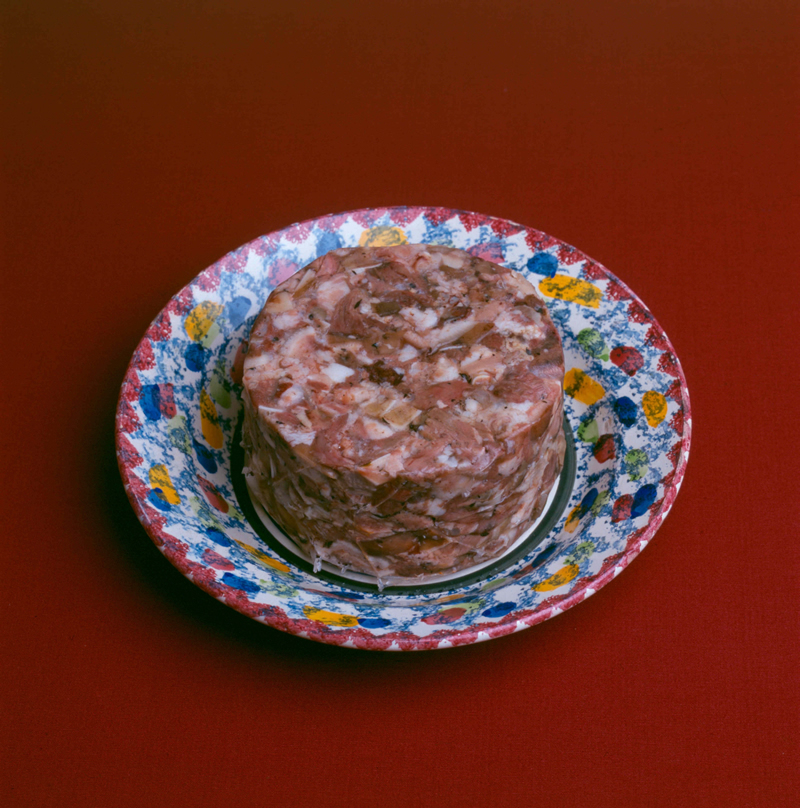
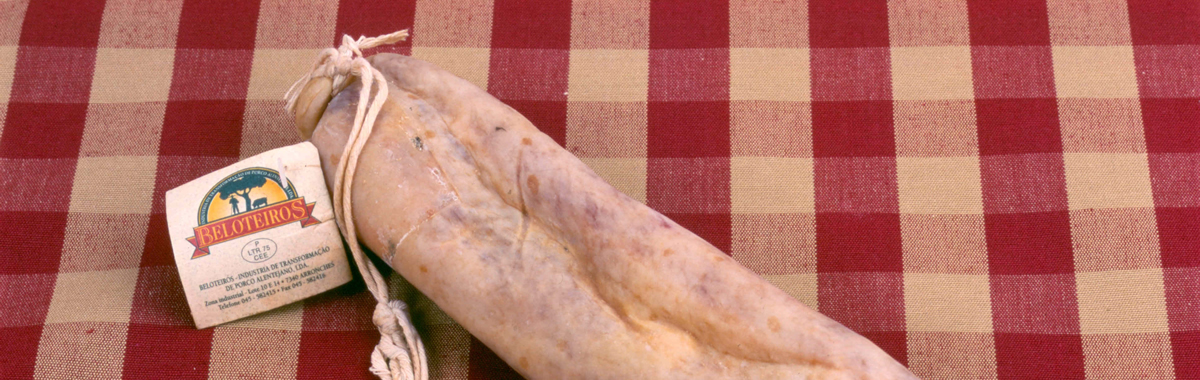
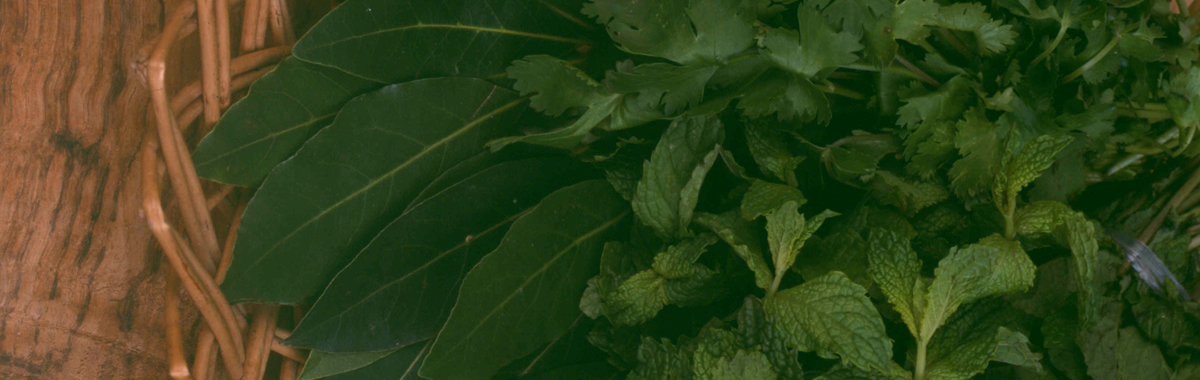
Description: Made with pig's head cooked with onion, garlic, vinegar and water, seasoned with salt, pepper, parsley and other aromatic herbs. Vinegar, wine, and water are typically employed in 1:7:2 ratios.
Region: Alentejo.
Other denominations: Pig's Head Cheese.
Special feature: Snack in the form of cheese, which has cartilage, skin and pieces of meat and is eaten in slices.
History: In the Alentejo, the café and the tavern are the main places of conviviality. In general, the owner of the establishment sells the snack, but it is also common for each one to bring it from home. The snacks are usually rich, exist all year round and are always varied. The Cabeça de Xara, also known as Pig's Head Cheese, is one of them. In many Alentejo houses there is a good size stone (slab) that is used, as weight, in its preparation. The origin of the Xara Head is the subject of disagreement. For some authors, it has its origin in the French tête d'achard. For others, it will have Arab origins. It is known, however, that one of the oldest recorded recipes dates back to 1788, being evident in the book Modern Cook or New Art of Cooking, by Lu-cas Rigaud, «... one of the chefs of their Most Faithful Majesties D. Maria I and D. Pedro III».
Use: As a snack, consumed in slices with bread and washed down with a good wine from the region.
Know-how: Salted the head, well cleaned and shaved, and left to rest for 2 days. Clean of salt and cut into pieces. It is cooked seasoned with sliced onion, garlic, pepper, parsley and other aromatic herbs and covered with vinegar, wine and water, until the meat separates from the bones. All the bones are removed and the meat and cartilage are cut into very small pieces. Bring it back to the heat, in the broth, for a while. It is removed to a white cloth that is tied with a thread. Place a weight on meat tight in the cloth and let it rest for at least 24 hours.
Source: Produtos Tradicionais Portugueses, Lisboa, DGDR, 2001
