


 Português
  English (UK)
Description: Large fruit (3 to 5 kg), elongated or oblong, with more or less fibrous pulp and greenish, yellowish or reddish color (since it is not a stabilized variety), not very sweet and with the indispensable characteristic of a peppery flavor with gas release.
Region: North.
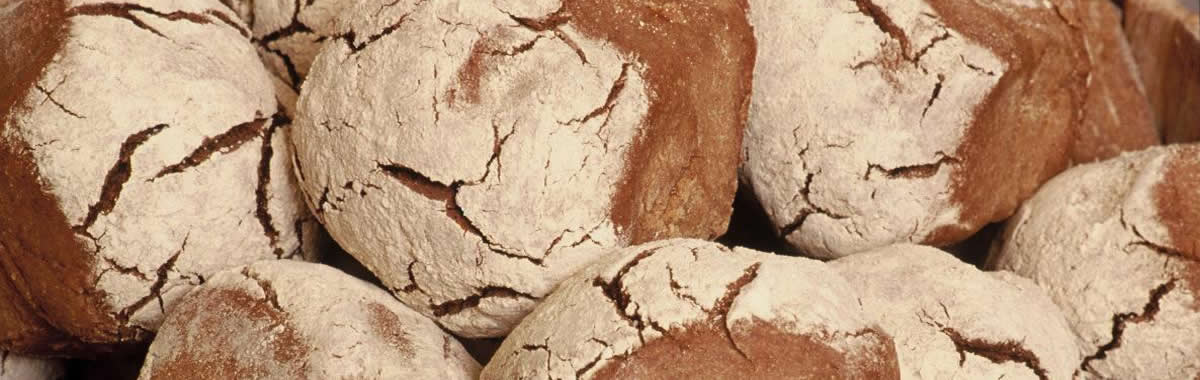
Particularity: Fruit that is not very sweet, spicy and releases carbon dioxide. The bark has the appearance of oak bark (reticulated and cracked), hence the name by which it is known.
History: Traditional culture in the region and with enormous demand in the market where it reaches prices three to four times higher than other melons. The first reference to this melon comes, somewhat negatively, from J. Vieira Almeida when he refers to a weed, Fusarium Oxysporum, which infects this melon. It is therefore a high-risk crop, which leads many farmers to lose interest in it. However, it has a wide consumption because it is a melon completely different from all the others in the country.
Use: Extremely appreciated as an aperitif or refreshing after meals.
Know-how: Although there is no real crop rotation, all farmers try to distance the places intended for their crop as far as possible in time, to avoid possible contamination by Fusarium. Land preparation begins with a tillage, and in some cases, bottom fertilization and liming are incorporated with harrowing. Then the trenches are opened, about 40 cm wide and 40/50 cm deep. The mixture of soil and manure that is very well tanned should fill the trench so that it leaves only 5 cm free, a thickness intended to lay the seed. Sowing extends from mid-April to mid-May. The harvest, which is done twice a day, runs from August to mid-September. The degree of ripeness is checked by one touch. It is said that this melon has its own day and time to be consumed. The reason for this saying refers to the fact that they are only good when they are well ripe and if they are overripe they burst due to the internal pressure exerted by carbon dioxide. Its bursting at harvest time is a sign of its excellence. If it bursts before it is fully ripe, it is a huge loss for the farmer.
Source: Produtos Tradicionais Portugueses, Lisboa, DGDR, 2001
