





 Português
  English (UK)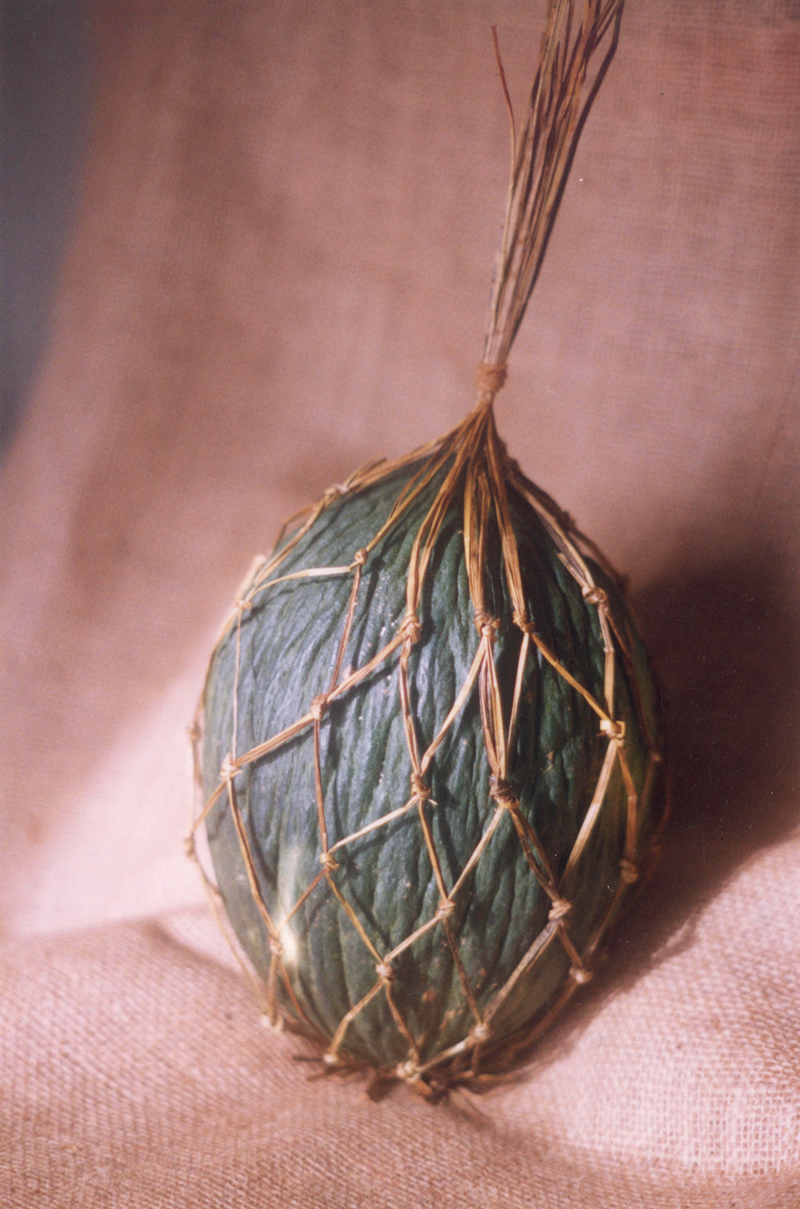
Description: Fruit (Cucumis melo L.) oblong or spherical in shape, with smooth skin, with slightly marked roughness. It has a semi-hard/hard consistency, with yellowish or whitish pulp.
Region: Alentejo.
Special feature: Fruit with a pronounced aroma, with a fresh and sweet taste, with an average weight of 2 kg. Its consistency allows it to be preserved (hanging) in cool and dimly lit places for 3 to 4 months after harvest, being one of the most appreciated fruits at Christmas.
History: The North Alentejo is known for its quality products, one of which is the Melon from Campo Maior and Elvas. Originating in the hot valleys of Iran and the Northwest of India, its introduction in Portugal is linked to the travelers who, in caravans, traveled through the Peninsula. The rich lands, easily mobilized, but with a certain consistency (clay loam), the luminosity of the Alentejo sun — which makes the melon sweeter — led our ancestors from Campo Maior and Elvas to persist in their culture, not allowing its replacement. For years and years the income of many Alentejo families was (and is) associated with melon, through the cultivation of small plots (crops) that they were able to rent to large landowners. Even today there are these families who see melon as a source of income, as it provides good production, with storage possibilities and, at the same time, with a minimum occupation of the land, giving way to other crops.
Use: Melon stands out for its strong aroma and delicate flavor. The nutritional value is low, having an energy value of only 20 to 40 calories per 100 g and a very low protein content. It is only worth noting its richness in vitamins A, B, B2 and C. It is used as a dessert or as an appetizer, especially when accompanied by ham. Its flavour ensures its use in juices, sweets and fruit salads and its consistency makes it one of the melons sought after for the decoration of the famous «fruit tables», always present at birthdays, weddings and other parties.
Know-how: It is necessary that the soil is rich in organic matter. The preparation of the land almost always involves carrying out a summer bushel (ploughing). Before sowing, a new crop is carried out to bury the manure that has already been well cured, followed by the necessary harrowing to leave the land well scrutinized. The framing of the land should be done in "ridges" (beds) that are wide, but not too high, or just leaving the land shallow. Melon sowing is usually carried out in a permanent location. The spacing depends on the sowing system, but varies from 1 x 1 to 1 x 2 m, originating, respectively, stands of 10,000 to 5,000 plants per ha. The sowing season usually runs between March and May, when the danger of late frosts or intense cold is lower or nil. Fields should be found whenever necessary. Pruning, also commonly called "capação", can be short or long. The first accelerates fruiting and ripening and stimulates the formation of large fruits, the second is used to obtain medium fruits and lead, in a balanced way, very vigorous varieties. The melon must be harvested in the precise state of ripeness, so that the fruit has the maximum dose of sugar and the best texture, maintaining quality and resistance to transport.
Source: Produtos Tradicionais Portugueses, Lisboa, DGDR, 2001
