










 Português
  English (UK)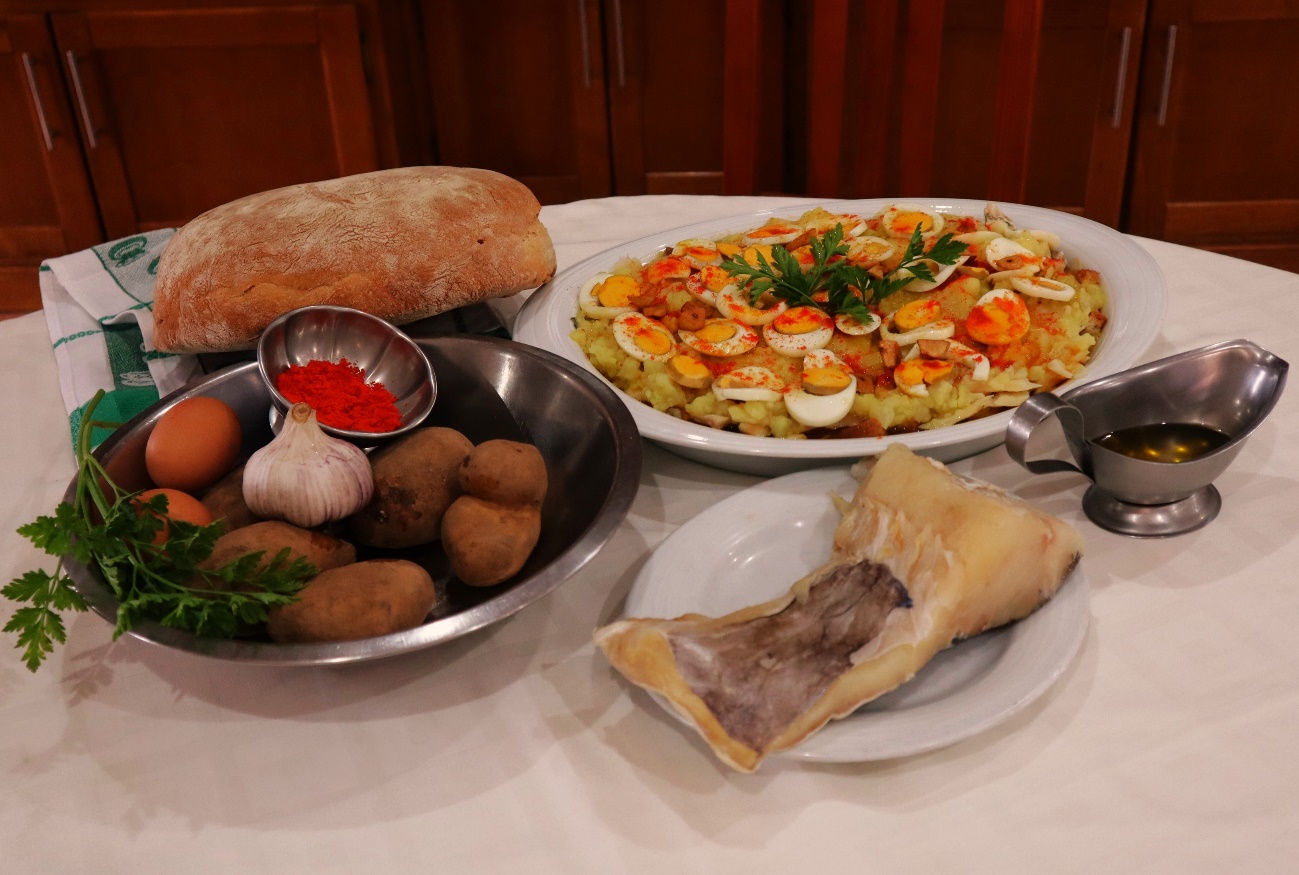
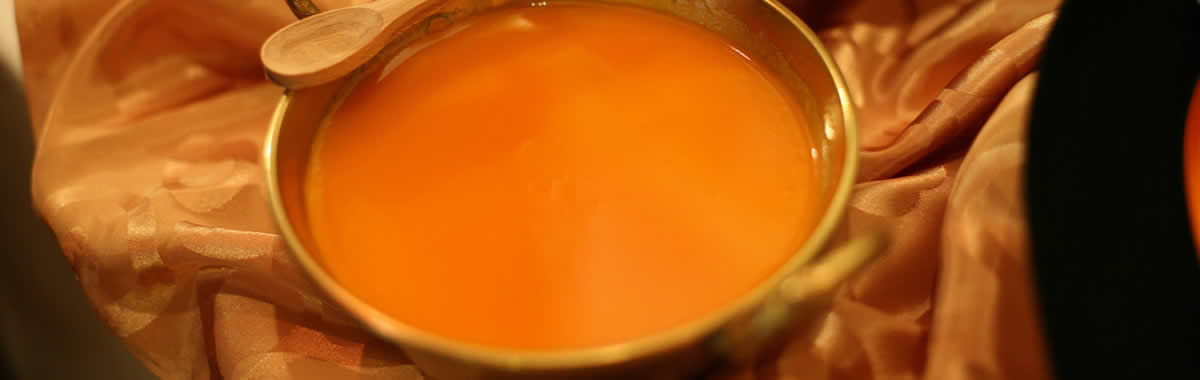
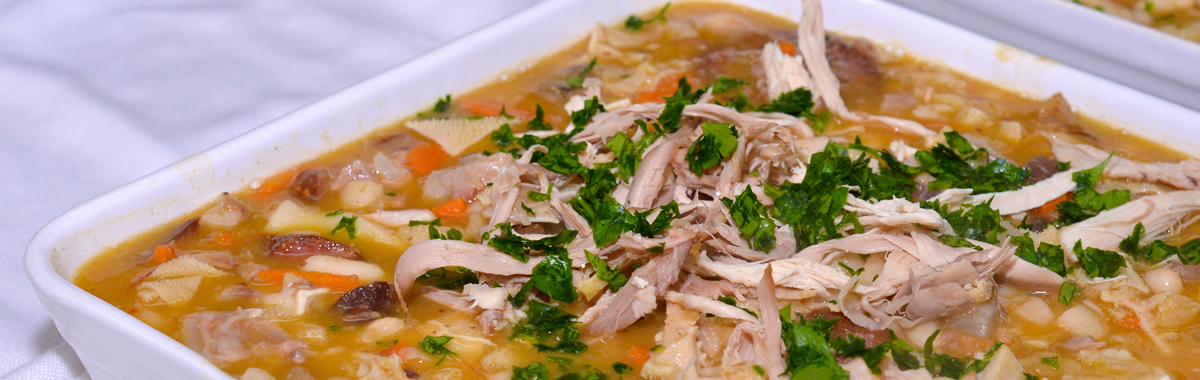
Description: The soups of the harvest are prepared with sliced bread, olive oil, paprika and sliced eggs, and may also include shredded cod. The dish is usually presented in tureens or bowls.
Special characteristics: The name of this dish is associated with the cereal harvest period. The working days that characterized the Segadas or Ceifas, were accompanied by a characteristic menu particularly rich in proteins and carbohydrates in order to reward the prolonged physical effort of the harvesters. The so-called soups of the segadas, were usually eaten at lunch. Thus, it can be said about this dish that it is in its historical uniqueness that the main characteristic lies.
Region: Trás-os-Montes and Alto Douro.
Ingredients used: Water, garlic cloves, olive oil, paprika, sliced bread, boiled eggs and salt to taste, sometimes shredded cod.
Know-how: Cut the bread into thin slices for a bowl and wet with boiling water. In some regions of Trás-os-Montes where cod is used, the boiling water will be boiled from it, which will later be shredded and placed on top of the slices of bread. Bring the olive oil with the paprika to the heat and fry the crushed garlic cloves. Drizzle the soups with the boiling olive oil.
Forms of marketing: Local Catering.
Availability of the product throughout the year: It can be consumed throughout the year. It is presented on the menus of the typical local restaurant at different times, during events and gastronomic fairs.
Product history: This particular recipe is intrinsically linked to agricultural work, namely the harvests and the menus of the harvesting days in Trás-os-Montes.
As it was a harvest resulting from the long agricultural work of the year, although physically demanding, the segadas were festive days, almost comparable in their social importance and in the context of the small rural communities of Trás-os-Montes, to Christmas and Easter.
António da Eira describes these works well in Velhas Canções Transmontanas (2005), with a first-person description of the rural context of Castanheira, a village in the municipality of Alfândega da Fé:
"Primitive peoples lived by the "collection" of fruits. They were collectors. And after all, we too today harvest and store food, albeit in a different way. Feast of the recollect, one reads in old chronicles of its existence, in very ancient times. Its celebrations were fully justified, due to the stability they generated so that throughout the year they could count on the absence of penury. When in my childhood I observed the daily pilgrimage of the poor from the doors, I took care of some outbursts that were heard, with the strength of prayers like this: may we never lack bread and broth. (...)The harvests, such as the harvests, in Castanheira, were actually a party.
Every single day the "Cantigas da Segada" were sung, hand-picked, by the traditional norm, from dawn to evening. The day was long, one of the biggest of the year, but with countless dimensions.
The master of the harvest was making his calculations, worried about the passing of the hours and the number of lands to harvest, because he did not like the work to be left over for a second day.
And the housewife had to look at the divisions of her task, considered as a long and worrying journey, because the reapers were respected as guests to be honored at that New Year's party.
And to treat the reapers well, there was "breakfast", very early, at the beginning of the work; but the first big meal was lunch, around eight o'clock in the morning, after a work of about three very profitable hours.» (This report can also be consulted online at As segadas – Atividades agrícolas em Trás-os-Montes on the website folclore.pt.).
At that time, the bread-based recipe was part of this morning lunch of the harvesters, as described in the Collection of Ma-ria de Lurdes Modesto and consultable in Sopas das cegadas or dos cegadores (acpp.pt).
Representativeness in local food: It can be found in some restaurants as a traditional dish from Trás-os-Montes. Currently, some municipalities, particularly Alfandega da Fé and Freixo de Espada-à-Cinta, have promoted this dish as the identity of the municipality in the region.
Other documentary elements (written, photographic, vi-deographic, etc.): Eira, António (2005), Velhas Canções Transmontanas, Pub. De Autor.
Troca, Armando (2018) - Dissertação de Mestrado - Gastronomia e Culinária da Terra Quente Transmontana-Património Identitário e Recurso Turístico (O Caso do Concelho de Mirandela).
As segadas – Atividades agrícolas em Trás-os-Montes / https://folclore.pt/as-segadas/
