















 Português
  English (UK)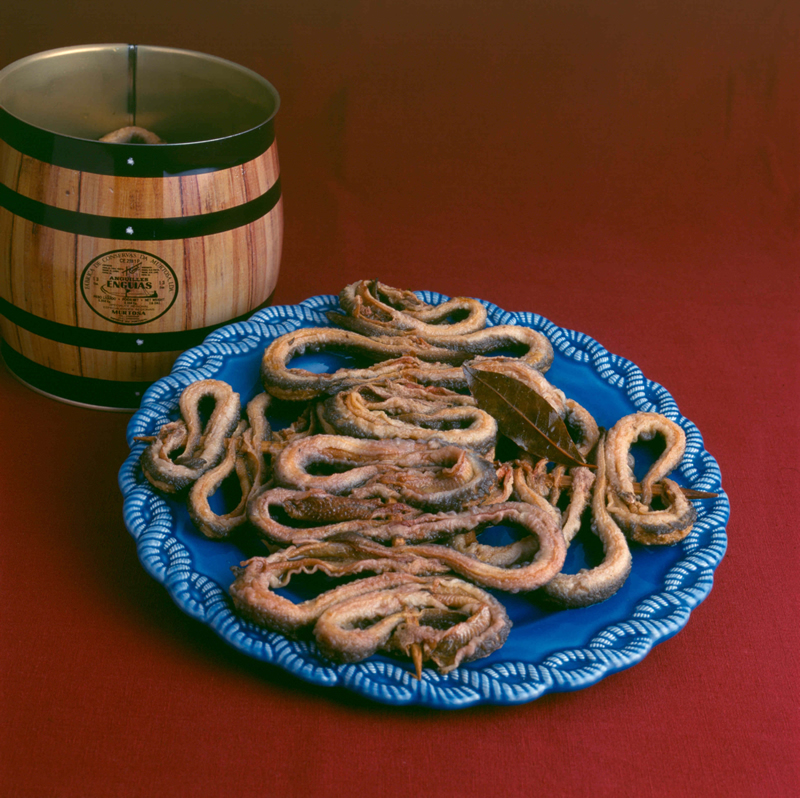
Description: Eels (sp. Anguilla anguilla) fried, preserved in pickle sauce, presented in barrels.
Region: Center.
Special feature: Fried eels, preserved in pickle sauce.
History: As the sands of the coast were settling, so did the population that, in order to survive, resorted to agriculture and fishing. Eels have always been abundant in the arms of the Aveiro estuary, which would lead the inhabitants to make the surpluses a way to improve their meager incomes. Thus, the «Fritadeiras» or «Frigideiras» appeared at festivals and pilgrimages, women who fried the eels and sold them. In the 40s, with the problems aggravated by the Second World War, the interest and consequent demand for fried eels intensified, which led to some «Fryers» organizing themselves and, in a second phase, with the interference of third parties, an eel factory appeared for the first time in Murtosa. In this factory, which is still maintained today, all operations continue to be carried out manually, excluding the sterilization and closing of the barrels in which the eels are packed. The municipality of Murtosa is the only one in the whole country that has this form of preparation of eels.
Use: Despite being an expensive product, it is still in high demand today, namely as a snack.
Know-how: The eels are made and washed well. Season with salt. They are fried in oil (formerly in olive oil) and as they are fryed, they are placed in a covered container. Leave a little oil in which they fried the eels in the pan, to which are added plenty of cloves of cut garlic, bay leaf, cloves and vinegar. Heat to a boil and pour over the fried eels. The eels are packed with the respective pickled sauce. Currently tin barrels are used to replace the originals, which were made of wood and raised some problems, especially with regard to sterilization and consequent conservation of the product.
Source: Produtos Tradicionais Portugueses, Lisboa, DGDR, 2001
