


 Português
  English (UK)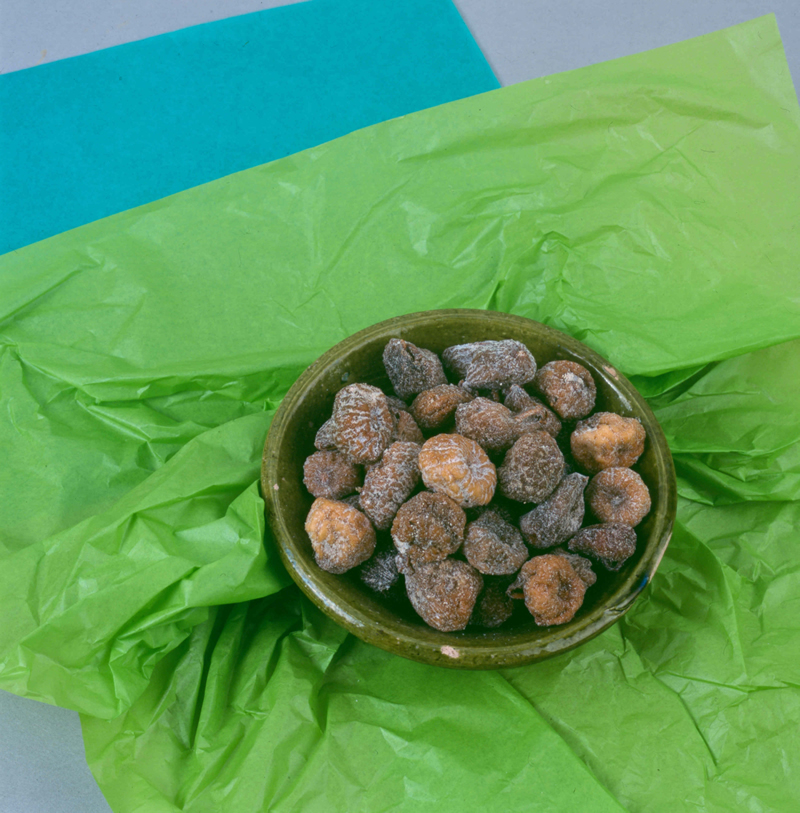
Description: Fig produced in stand-alone orchards or scattered trees, but always in rainfed conditions, without recourse to phytosanitary treatments and without the application of herbicides. They have a high sugar content and weigh about 10 g.
Region: North.
Other denominations: Figo das Chãs. Warm Earth Fig. Fig of Vilariça.
Particularity: Sundried fig, oblong in shape and black or white in color.
History: It is unknown when figs began to be part of the diet in Trás-os-Montes. However, according to the description of a medieval fair, figs were already consumed in 1286: «... the muleteers of Trancoso and Foz-Côa also bie, some with the news of D'El Reo's wedding, others with the figs and almonds of Terra Quente». In 1959, Canon Marrana, regarding a legend, tells that «... In the meantime he looked at the fig tree, which at the time boasted beautiful and ripe figs... however, she feared that the fact that she did not satisfy the desire she felt for figs, would put an obstacle to a happy birth... he found on the stone of the threshold of the main door, a few figs, beautiful and appetizing, which Our Lady sent him as a gift».
Use: In the past, dried figs served as a "peguilho" (conduit) to accompany bread. They were also used to kill the animal (breakfast), accompanied by a glass of bagasse. Today they are eaten as a dessert or snack, accompanied by other nuts.
Know-how: Once harvested, ripe figs are left to dry in the sun for 3 to 4 days, after which they are subjected to a sunburn. They are allowed to drain and spread out in the sun to finish drying, eliminating all moisture. They can also be mixed with wheat flour, in order to absorb some moisture that the figs still contain.
Source: Produtos Tradicionais Portugueses, Lisboa, DGDR, 2001
