



 Português
  English (UK)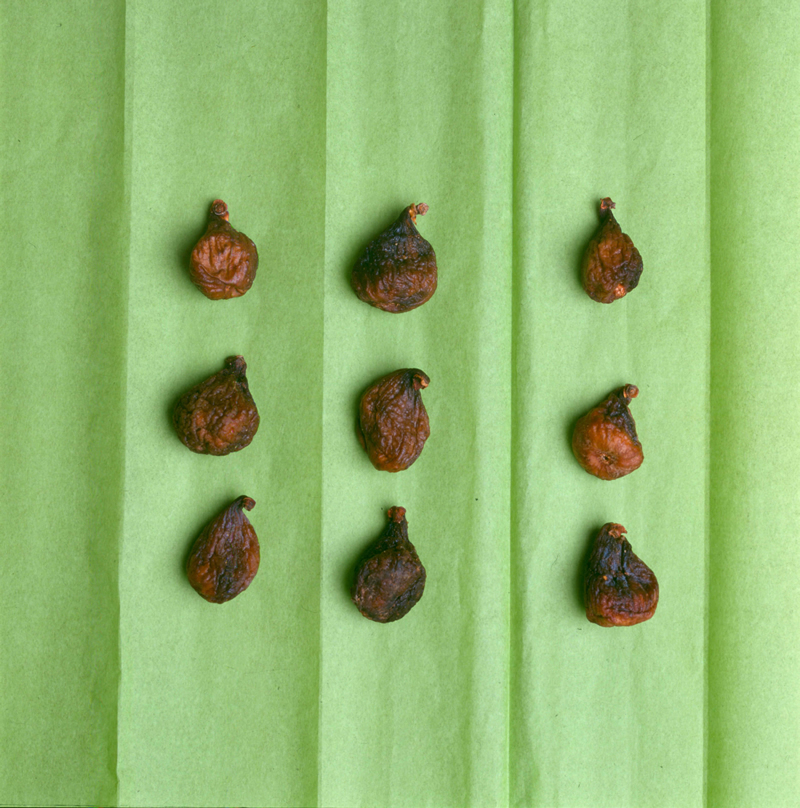
Description: The dried fig is rich in vitamins B and C and contains high levels of mineral salts, especially calcium, phosphorus and potassium. It is an excellent energy food with a high caloric value (274 calories/100 kg). Associated with this nutritional richness is its peculiar flavor, very characteristic and appetizing.
Torres Novas Black Fig — It is the most representative variety. The fruit is globose, with a small caliber (100/110 figs/kg), with a high sugar content. This variety, the most representative, has, in dry, the following characteristics: moisture content 22 to 24%, sugar content 50 to 55%, cellulose 5.8% and ash 3.2%.
Pingo de Mel — Pyriform fruit of medium caliber, with the number of dried figs per kg being between 70 and 80 (23 fresh figs/kg). Yellowish epidermis. Very clear and very sweet pulp.
Region: Lisbon and Tagus Valley.
Particularity: The varieties of dried fig, characteristic of this area of the country, are the Black Fig of Torres Novas and the Pingo de Mel. These varieties, well adapted to soil and climatic conditions, together with the production technique rooted in the Torrejo people, testify to the unequivocal relationship of this fruit with the region.
History: Fig production is a traditional activity that dates back to the beginning of the century. It was around this time that the massive planting of fig trees in Torres Novas began, as an alternative to the vineyard. This was severely affected by phylloxera, a disease that decimated large areas of this crop, a fact that boosted its reconversion. Thus, vast fig trees appear, with a predominance of the Black Fig variety from Torres Novas which, well adapted to the existing soil and climatic conditions, has gained new terrain.
Use: Usually consumed as an aperitif, alone or in combination with other nuts, namely walnut and almond.
Know-how: The first harvests begin in mid-August, when the fruits are ripe or in a half-paste state. Wooden trays are used for drying, properly protected from dew, as well as moth. After natural drying, the fig is removed, and at this point a first choice is made, which consists of separating the fruits according to their size and quality, removing the defective or parasitized ones.
Source: Produtos Tradicionais Portugueses, Lisboa, DGDR, 2001
