






 Português
  English (UK)
Special characteristics: It is common to believe that a sweet of this caliber can only be obtained by the fact that it is made with this high quality almond kernel, from old varieties that have been improved over the years by farmers in the region.
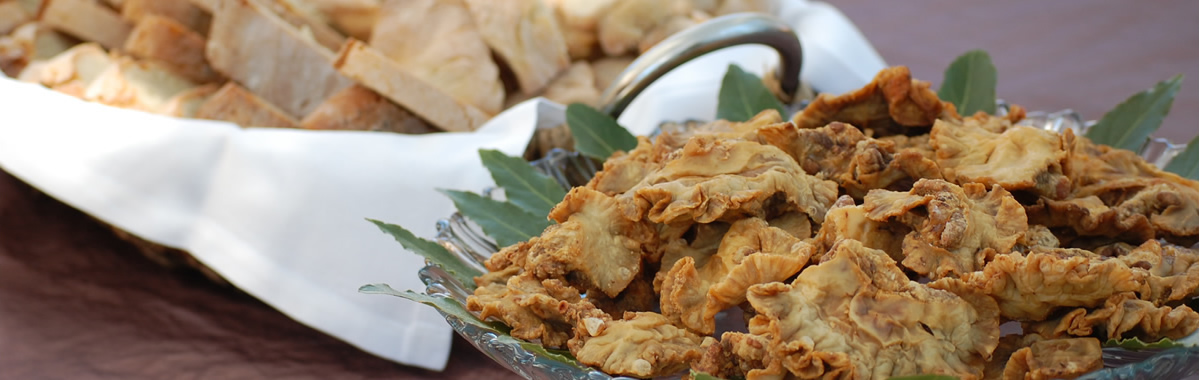
In Mosense sweets, Almond Sweets are considered the ex-libris of Mós do Douro, as high mastery is required for the confection of the sweet. When a family offered almond sweets to someone, it was a sign of deep gratitude and/or recognition (even today). Traditionally, sweets are accompanied by a glass of fine or fortified wine (better known as Port Wine).
The thickness of the laminated almond should be as thin as that of an orange blossom. There are many sweets made with almonds. However, the proper name of these sweets is "Almond Sweets".
Region: Trás-os-Montes and Alto Douro. Specifically in the municipality of Vila Nova de Foz Côa.
Ingredients used: Egg whites (preferably homemade), Almonds (high category) and Sugar.
Preparation: Artisanal preparation method, according to the traditional recipe.
Know-how: The preparation of this jam involves several careful phases until reaching the exquisite final product, obeying a series of quality standards: from homemade eggs, high category almonds and skilled hands for manual confection.
The secrets of its confection pass from generation to generation in the family nucleus.
In the know-how of these Almond Jams, several processes stand out in the manufacturing process:
Almond harvesting
The harvesting of the almonds, through the typical sweeping carried out by the men's manual strength, with the use of a long stick and the women collected the almonds that fell on the litter canvases previously placed under the almond trees;
From the almond
The almond departure that the women of the village gather in long evenings, using a moisão (small block of stone, usually granite) on which a scapula is resonated in the nutshell of the almond to release the kernel. The scapula is a railway tool that allows the rail to be fixed. It should be noted that the Douro Line was fundamental for the development of this village that still maintains the Douro Grinding Station in operation. The departure of the almond, on the other hand, is an important social moment to which it is almost always associated with a context of community life;
The almond skin
The next process involves removing the skin that surrounds the core, called "almond skin";
The Drying of the Almond Kernel
This is followed by the process of drying the core (no longer skinned), which will depend on the type of almond, atmospheric humidity and other aspects that only Mós specialists will be able to gauge when it is at the optimal drying point. The drying point is essential for the next step to be successful;
Laminating the Almond Kernel
The kernel of the almond is laminated manually, in very thin films. It is a process in which only trained hands will be able to perform perfectly;
Finally, the preparation and confection of the Almond Jam
At this stage, after beating the egg whites, add the sugar until the desired "point" is obtained. To this preparation is added the sliced almonds. Subsequently, this mixture of ingredients is placed in small mounds on a tray previously sprinkled with flour and goes into the oven.
Forms of Commercialization: These sweets are usually made at festive events, such as weddings, baptisms and communions.
Product availability throughout the year: For hundreds of years, the tasty Almond Jams of Mós do Douro have been prepared by families mostly in three special moments: Easter, Christmas and in the Grand Festivities of Nossa Senhora da Soledade on the 3rd Sunday of September.
Product history: Almonds, wine and olive oil are considered the three pillars of the Douro Superior table, undoubtedly conferring the landscape and consequently gastronomic excellence of the municipality of Vila Nova de Foz Côa. The almond tree in the Douro Superior is a cultural, economic and landscape heritage of enormous importance in the region. Its organoleptic qualities and the characteristic Douro flavor of this dried fruit must be preserved and transmitted worthily to future generations. The confection of the Douro Mós Almond Jams is an example of this.
Mós do Douro is, ancestrally, one of the locations with the most hectares of almond trees, which is why it is one of the routes of choice to observe the Almond Trees in Bloom with their white or pink veil, along the numerous hills and slopes of this village, between February and March, with the municipality of Vila Nova de Foz Côa being known as the Capital of the Almond Tree in Bloom. For more than 250 years, the markets of the region were supplied by this locality and, it is deduced that, as a result of this high production, the creativity of Mosense women was decisive for the invention of Almond Jam.
The almond tree (Prunus dulcis) is a species that originates from the hot and arid regions of Southeast Asia. It was spread through the Middle East, Turkey and Greece via the Silk Road, reaching Italy and Spain more than 2000 years ago. Culture was established around the Mediterranean basin, but it was only from 1850 to 1900 that it was possible to establish local varieties, formed by natural selection.
The almond tree is adapted to stony, thick, sloping soils, with reduced water retention capacity, subject to active erosion processes. It is in Trás-os-Montes and Alto Douro that the largest almond grove area in the country is currently located, more precisely in Mirandela, Alfândega da Fé, Torre de Moncorvo and Vila Nova de Foz Côa.
The almond produced in the Douro Superior proudly boasts the international recognition of Protected Designation of Origin (D.O.P.) "Douro Almond", classified in 1994 by the European Union. It is a natural product, endowed with unique organoleptic properties, originating in traditional Mediterranean agriculture, constituting one of the identity marks of this region.
Vila Nova de Foz Côa claims for itself the fair title of "Capital of the Almond Tree", for being the Municipality that in Portugal has the highest density of almond trees... ... It is dried fruits, especially almonds, that provide the raw material for the most exquisite culinary specialties: almond jams, supplications, egg lampreys and also "coscorões", folars and rough, freed and chopped balls.
In 1758, in the Parish Memoirs of Marquis of Pombal, the almond is mentioned as one of the fruits of the land that at that time the residents of the following parishes of Fozco gathered: Almendra, Castelo Melhor, Mós do Douro, Murça do Douro, Santo Amaro, Seixas do Douro and Vila Nova de Foz Côa.
The importance of the almond in the Mediterranean diet has always been secondary, since, as it is not a cereal, meat or fish, it has never been the staple food of any Portuguese rural community. However, the almond is considered the main nut on the tables of the Douro Superior and, therefore, a complementary product of the family diet.
Representativeness in local food: Almond Sweets or Almond Sweets from Mós de Douro are found all over the region, mainly in the parish of Mós do Douro, belonging to the municipality of Vila Nova de Foz Côa, in the district of Guarda.
Other documentary elements (written, photographic, videographic, etc.): M.A. Rodrigues. Amendoeira: estado da produção. [Bragança]: CNCFS. ISBN 978-989-99857-9-7
Rodrigues, M.A. (2017). Manual Técnico - Amendoeira: estado da produção. Projeto "Portugal Nuts", Norte-02-0853-FEDER-000004 Centro nacional de Competências dos Frutos Secos, Bragança. Páginas 98 e 109.
Câmara Municipal de Vila Nova de Foz Côa (s.d.).
Ladra, L. (2013). A Cultura da Amêndoa no Douro Superior – História, Tradição e Património. Páginas 37,53 e 54. Ed. 19019, Âncora Editora: Lisboa.
Source of registration: Municipality of Vila Nova de Foz Côa.
