

 Português
  English (UK)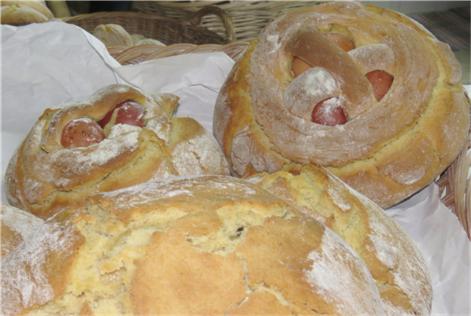
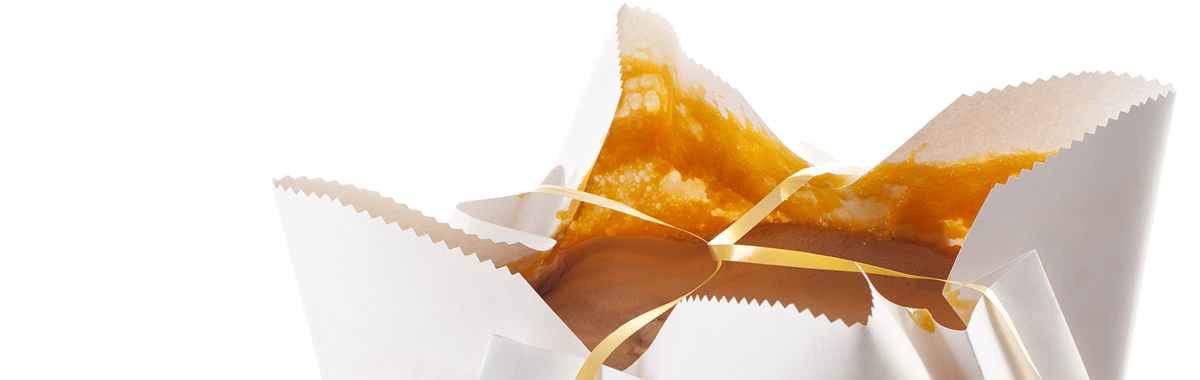
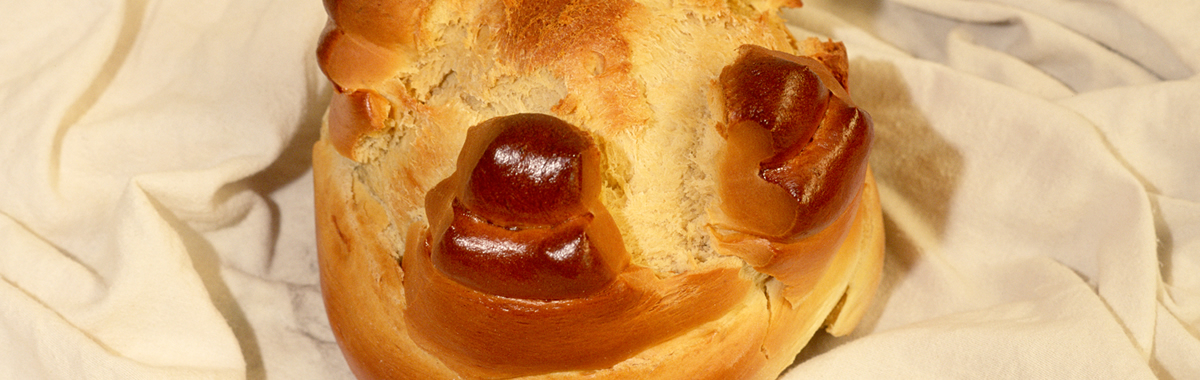
Description: The Folar de Vale de Ílhavo is a sweet yeast dough cake. It has a characteristic, round appearance, with dough "straps" that cross over whole hard-boiled eggs in their shells. Its size depends on the number of braided eggs per cake. It can also be presented in an egg-free version.
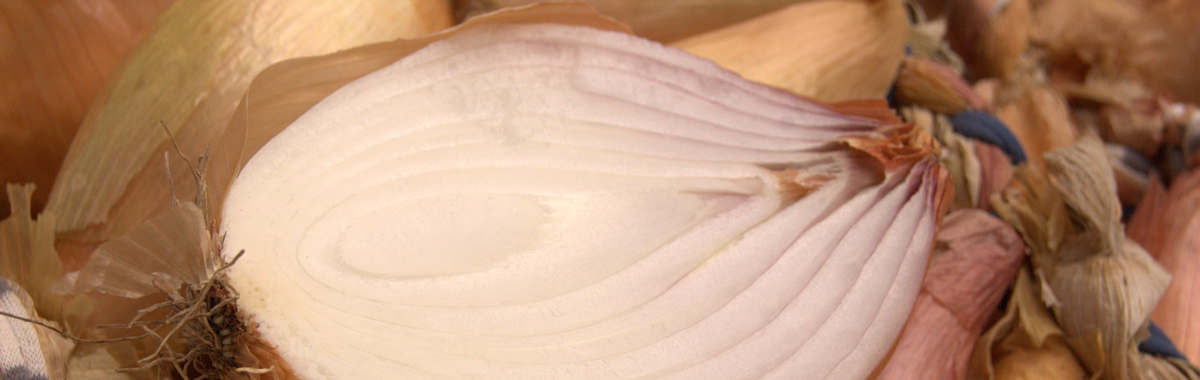
Special characteristics: It fits into the family of sweet folars, with a strong tradition at Easter time. On top of the cake, whole eggs are placed, previously cooked with onion skin, surrounded by "belts" of the folar dough itself.
Region: Vale de Ílhavo.
Ingredients used: Wheat flour, sugar, eggs, baker's yeast, butter, water, salt, cinnamon and lemon zest (optional).
Preparation: In a bowl, place half of the flour with salt and baking powder (previously diluted in warm water). Knead everything, mixing it with warm water and let it rise. When the dough has doubled its volume, add the sugar, eggs, butter and cinnamon and knead again. Add the rest of the flour and knead again. Leave to rise again, in a covered container and in a warm environment. When the dough is risen, it is tended and given the shape of folar, holding the eggs, previously cooked, with the "straps" made with the dough itself. The brown color of eggs is acquired by cooking in a pan with onion skins. Then, the folars will be baked in a wood oven.
Know-how: Artisanal manufacturing process, being kneaded man-ually and baked in a wood-fired oven.
Forms of marketing: Traditional bakeries in Vale de Ílhavo and other places supplied by them.
Availability of the product throughout the year: Throughout the year, with a greater incidence at the weekend and at Easter, when they are mostly sold with eggs.
Product history: The Ílhavo Valley stands out geographically for its proximity to the Bôco River (Ria de Aveiro Channel). During the seventeenth to nineteenth centuries, this region was characterized by having many levadas and watermills, and being conducive to the cultivation of cereals, so it is not surprising its deep-rooted and famous tradition of producing bread and folares.
The production of Folar de Vale de Ílhavo, essentially developed by female elements, is an ancestral knowledge, transmitted from mother to daughter, over several generations, and the respective utensils used in its artisanal confection are also transmitted.
Representativeness in local food: Much sought after at Easter time, being a traditional offering from the Godparents to their godchildren.
Source: DGADR, based on elements provided by the Municipality of Ílhavo.
Photo: Provided by Câmara Municipal de Ílhavo.
