









 Português
  English (UK)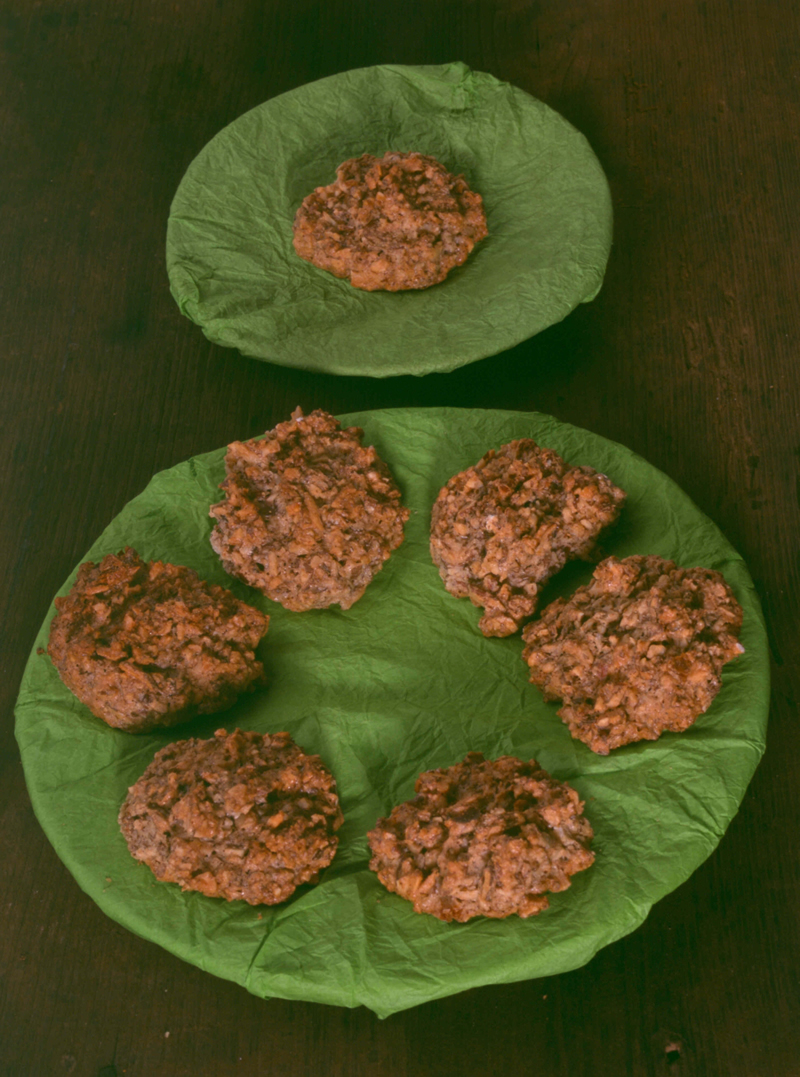
Description: Irregular almond cakes, made with almonds and sugar in equal parts and egg whites to bind, and whose surface has nozzles. Its shape is round, 8 cm wide and 2 cm high, and has an irregular surface, hence the name Arrepiado. It has a light brown color.
Region: Lisbon and Tagus Valley.
Particularity: Rough configuration with the appearance of goosebumps.
History: The Arrepiados were created in the monastery of Almoster, founded in 1289 by D.ª Berenjária or Berengueira, a Bernard nun. Al monasterium (the monastery) is the toponym that combines Arabic with Latin and evokes Christian religiosity. From the nuns today we have the recipes of the Celestes and the Arrepiados. The name of the nun or nuns who conceived it is unknown, but an old story by Al-moster tells us that the rivalry between the nuns of Santa Clara and the Bernardas over sweets was so great that one day a Bernard nun, hearing that they were going to be visited by a high ecclesiastical dignitary, exclaimed: "I am going to make a sweet so good that they even get goosebumps!". Hence the name of Arrepiados. Initially they were distributed in the pilgrimage of S. Bernardo, but they were so appreciated, because they were not very sweet and, therefore, not at all cloying, that their recipe is now widely disseminated. They are traditionally included in the desserts of the National Gastronomy Festival and are included in the tourist itineraries of the Ribatejo Tourism Region.
Use: They are consumed at any time of the day, and are also includ-ed in party menus.
Know-how: The toasted almond, cut into thin slices, is added to the egg whites beaten with sugar. Form the dumplings on a baking tray and bake in the oven.
Source: Produtos Tradicionais Portugueses, Lisboa, DGDR, 2001
